
The Changing Face of Tennis: From an Old Generation's Legacy to the Rise of a New Era
टेनिस में पीढ़ीगत बदलाव से तात्पर्य उस संक्रमण से है जिसमें रोजर फेडरर, राफेल नडाल और नोवाक जोविकोविच का युग समाप्त हो रहा है और जैनिक सिनर तथा कार्लोस अल्काराज जैसे खिलाड़ी शीर्ष स्तर पर स्थापित हो रहे हैं। तीनों ने मिलकर 66 ग्रैंड स्लैम जीते; जोविकोविच के 24 खिताब पुरुष टेनिस में सर्वाधिक हैं और नडाल के 14 फ्रेंच ओपन खिताब क्ले पर अब तक के सर्वश्रेष्ठ हैं। फेडरर 2022 में और नडाल 2024 में संन्यास ले चुके हैं। नई पीढ़ी में अल्काराज ने 2022 अमेरिकी ओपन जीतकर सबसे कम उम्र में विश्व नंबर एक का स्थान पाया और 2024 में फ्रेंच ओपन तथा विंबलडन दोनों जीते; सिनर ने 2024 में ऑस्ट्रेलियाई ओपन, अमेरिकी ओपन और एटीपी फाइनल्स जीते तथा 2025 की शुरुआत में ऑस्ट्रेलियाई ओपन का खिताब बचाया। इस बदलाव के साथ खेल तकनीकी रूप से अधिक आक्रामक, डेटा-आधारित और शारीरिक हो गया है, जिससे चोटों की दर बढ़ी है। प्रमुख चुनौतियाँ हैं: लगभग ग्यारह महीने लंबा टूर कैलेंडर, निचली रैंकिंग के खिलाड़ियों के लिए आर्थिक असमानता, महिला टेनिस में पुरस्कार और कवरेज का असंतुलन, तथा भारत और एशिया में कोर्ट उपलब्धता और प्रायोजन की सीमाएँ। आगे की दिशा स्पष्ट है — कैलेंडर और खिलाड़ी स्वास्थ्य के बीच संतुलन, निचले स्तर तक सहायता का विस्तार, और खेल की पहचान को व्यक्तियों से आगे ले जाकर प्रतिस्पर्धा पर केंद्रित करना।
Tennis is passing through one of those rare inflection points where an entire era of completeness ends and a new set of energies, styles and priorities takes its place. With Roger Federer retired and Rafael Nadal having left the court, Novak Djokovic is in the final phase of his career. The trio that shaped men's tennis for nearly two decades is slowly receding, and in its place Jannik Sinner and Carlos Alcaraz have not merely won major titles — they have redefined how the game is played, how demanding its fitness requirements have become, and what audiences expect from it.
This is not simply a change of names. It is a restructuring of an entire system: racket technology, ball quality, court surfaces, the tour calendar, data analysis and the distribution of prize money. Tennis has become more physical, more data-driven and more commercial than ever before. A player today competes not only against an opponent but against the limits of his own body, the fatigue of constant travel and the persistent pressure of social media.
The Legacy of the Big Three: An Era That Will Not Return
Roger Federer, Rafael Nadal and Novak Djokovic won 66 Grand Slam titles between them. That statistic alone defines an era. From 2026 to 2026, almost every major men's title revolved around these three names. So deep was the dominance that an entire generation came to be called the 'Lost Generation' — players who reached the top level, played semi-finals and finals, but could not win the biggest titles.
Federer gave the sport beauty and effortlessness. His one-handed backhand, a movement that looked easy at first glance, and a court-side grace helped tennis reach an audience that had previously stayed away. Nadal redefined physical resilience and defensive play; his fourteen French Open titles on clay are a record widely considered unbreakable. Djokovic modelled flexibility, the ability to come back, and professional discipline; with 24 Grand Slam titles he became the most successful men's player in history.
But this legacy has another side. The constant presence of the three built a mental wall in front of the next generation. Players of the calibre of Stan Wawrinka, Andy Murray, Juan Martín del Potro and Marin Čilić reached the doorstep of major titles but often could not step out of the trio's shadow. The result was a paradox: the level of play rose, but competitive diversity fell. Audiences also sensed that new faces were emerging slowly.
On the other hand, that dominance gave tennis global recognition. The rivalries drove audiences and broadcast rights for major tournaments to record levels. The irony is that the moment the trio began to fragment, tennis was forced to prove whether its appeal rested on individuals or on the game itself.
The New Generation: Sinner, Alcaraz and a Changed Pace
As the 2020s progressed, two names rose fastest — Italy's Jannik Sinner and Spain's Carlos Alcaraz. Both won titles, but more importantly they showed that variety is still possible in modern tennis.
Alcaraz won the 2026 US Open and became the youngest player to reach world number one. His game is a rare blend of drop shots, spin and aggressive net play. He brought a kind of creativity to the court whose absence had begun to be felt in the later years of the Big Three. In 2026 he won both the French Open and Wimbledon — a double no other men's player achieved that year.
Sinner's story is different. He came from professional skiing, which gave him an exceptional understanding of balance and body mechanics. His game is flat and relentlessly fast. In 2026 he won the Australian Open and the US Open, and added the ATP Finals title. In early 2026 he defended his Australian Open crown. His hallmark is that he plays every shot at the same intensity, whether it is a first-round match or a final.
Their rivalry differs from the Big Three era in being more open and more unpredictable. Compared with Federer, Nadal and Djokovic, these players change tactics faster and win in different ways. Meanwhile Daniil Medvedev, Alexander Zverev, Stefanos Tsitsipas and Holger Rune have shown that competition at the top is now spread across several fronts.
Yet the new generation has exposed a weakness. After Sinner and Alcaraz, a stable third name has not yet emerged. Many young players shine for a tournament or two and then lose consistency. The reason is not only technique but the physical demand of a long season and mental fatigue. The old generation earned maturity gradually; the new one is expected to achieve a great deal in very little time.
The Changing Technique: Beyond the Baseline
The defining technical feature of modern tennis is that baseline play is no longer defensive — it is aggressive. Once, the baseline meant keeping the ball alive in long rallies. Now it means gaining an advantage on the very first shot. Players step inside the court immediately after serving, and average rally length keeps falling.
The serve's role has grown, but its character has changed. Speed used to be the priority; now placement and variation matter more. Players do not repeat the same serve but build a mix of toss, slice and kick that defeats the opponent's anticipation. The effect on the return game is direct: the return is no longer merely a way to put the ball back but a strategy to apply pressure on the first shot.
The forehand's evolution is the most visible. In the modern forehand, the sequential rotation of hips, torso and shoulder forms a chain that adds both spin and pace. This is why today's players hit a heavier ball than those of earlier eras. Alongside this, sliding, court coverage and footwork have gained importance. Sliding on hard courts is now treated as a normal skill, something rare two decades ago.
The revival of net play is also worth noting. The growing use of drop shots and slices has pulled players towards the net. For those who play only from the baseline, this is a new challenge. Tennis is slowly returning from a one-dimensional game to a multi-dimensional one.
There is a negative side too. Heavy dependence on intensity and power has raised injury rates. Wrist, elbow and shoulder problems have become common. A sport that has become technically more advanced has also become physically riskier.
Data, Science and a New Face of Training
No top player today plays without a data team. An opponent's serve directions, his favourite spots in a rally, his behaviour under pressure — all of it is collected and analysed in advance. Statistics are available in real time during matches, allowing tactical adjustments.
But data does not mean the game has become mechanical. Its real value is that it makes a player aware of his own patterns. Many players are startled to learn that under pressure they deviate from their preferred direction. That awareness becomes the first step towards improvement.
Training has also taken a scientific turn. Sleep quality, nutrition, heart-rate monitoring and load management are now routine topics for a team. Several players work with sleep coaches and nutritionists. This is a large departure from the older belief that more practice alone was the road to success.
This level of analysis makes competition harder. When everyone has the same information, the difference comes from technique and mental toughness. This is why players who look physically similar today can end up with very different results.
The Weight of the Calendar and the Player's Body
The tennis season runs for about eleven months. Four Grand Slams, nine Masters events, the ATP Finals and many other tournaments — the calendar is demanding both physically and mentally. Changing continents, switching surfaces and shifting time zones are constant.
In recent years, top players have spoken openly about this. Injuries have repeatedly forced players out of major tournaments. Experts have long recommended shortening the calendar, but organisational and commercial factors make this difficult. Tournament revenue, local economies and broadcast contracts complicate the decision.
Mental fatigue is now discussed far more than before. Players are affected not only by physical injury but by constant competition, public expectations and social media reactions. Some players have taken breaks for mental health reasons. Acknowledging that the burden of the sport is not only physical is a significant shift in tennis culture.
Another issue is the distribution of money. Prize money at Grand Slams has risen, but the situation differs for players competing in smaller tournaments. Those ranked lower often cannot cover travel and coaching costs. This inequality limits the development of new talent.
The Economics of Tennis: Prize Money, Broadcast and Sponsorship
Tennis today is a global business. All four Grand Slams rank among the world's biggest sporting events. Broadcast rights, sponsorship and ticket sales generate billions. A share reaches players as prize money, while another share stays with organisations, promoters and associations.
The sponsorship structure has changed too. Apparel and racket companies once dominated; now financial institutions, technology firms and brands from Asian markets are active as well. A player's brand value is determined not only by ranking but by social media presence and market reach.
One consequence is that tennis's attention has shifted rapidly towards markets where audiences are growing. Asia, especially China and the Middle East, is becoming a hub for new tournaments and exhibition matches. This expansion brings opportunity, but it also raises the question of how balance will be maintained between traditional tennis centres and new markets.
Economically, the biggest challenge is that tennis's appeal is still concentrated in a few big names. When a major player retires or is out injured, ticket sales and attendance show the effect. Sustainable growth requires that the sport's identity move beyond individuals and rest on competition and story.
Women's Tennis: Slow Progress Towards Equality
Women's tennis has made major progress on both technical and competitive fronts. Iga Świątek has established dominance on clay and won multiple Grand Slams. Aryna Sabalenka has won titles built on power and aggression. Coco Gauff, Elena Rybakina and Jasmine Paolini have broadened the field further.
Yet women's tennis still faces structural challenges. The prize money gap has narrowed but has not disappeared. Coverage and sponsorship remain uneven. Many tournaments give women's matches less prominence, even though audience interest suggests the opposite.
One positive shift is that women players now speak openly about issues beyond the court — maternity leave, travel safety and media representation are part of the conversation. This makes the culture of the sport more inclusive.
India and Asia: Potential and Barriers
Tennis has expanded rapidly in Asia. Players from Japan, China and South Korea have secured places at the top level. The number of tournaments in the region has grown, along with investment.
India's position is mixed. Historically India has contributed significantly to tennis, especially in men's doubles. Players such as Rohan Bopanna achieved international success. But the emergence of consistent international-level singles players has been slow.
There are several reasons. Tennis is an expensive sport — courts, coaching, equipment and travel all cost a great deal. Compared with cricket, sponsorship and media coverage are limited. Court access is concentrated in large cities. As a result, talent exists but does not reach a structured pathway.
The direction of reform is clear: increase the number of public courts, build training centres at district level, and provide competitive opportunities at a young age. Some private academies are working in this direction, but their reach is limited. If these efforts receive institutional support, change over the next decade is possible.
Courts, Rackets and Balls: Small Changes, Large Effects
It is often assumed that tennis changes only through its players. But equipment and surfaces matter no less. Grass courts have slowed, reducing the effectiveness of serve-and-volley. Clay court quality has improved, producing longer rallies. Changes in hard-court surfaces and ball quality have influenced the nature of injuries.
Racket technology has increased ball speed and spin. Lighter frames and better strings have allowed players to hit with more power. The result is that physical strength has become as essential as technical skill. Players who relied only on cleverness have found less room.
Debate continues over control of these changes. Some experts argue that standardising balls and surfaces is necessary so that the character of the game does not shift too much between tournaments. Others argue that variety is the identity of tennis and should not be limited.
Conclusion: Beyond Individuals, Towards the Game
Tennis finds itself in an unusual moment. On one side, an era that gave the sport global popularity is ending; on the other, a new generation has the chance to give the game its own identity. Sinner and Alcaraz have signalled that competition can be open again. But it is also true that no stable trio has yet formed, which adds excitement while leaving a gap in long-term narrative.
Three things will be decisive going forward. First, the balance between the calendar and players' health. Without it, the sport will face repeated injuries and incomplete careers. Second, a solution to economic inequality. Without sustainable support for lower-ranked players, a large share of talent will never reach the sport. Third, the rebuilding of the game's identity — stories that move beyond individuals to focus on competition, struggle and development.
Tennis history shows that the sport redefines itself in every generation. The Big Three did so in their time. Now it is time to see how the new generation defines its own era. And that depends not only on who wins how many titles, but on how much the sport allows itself to change.
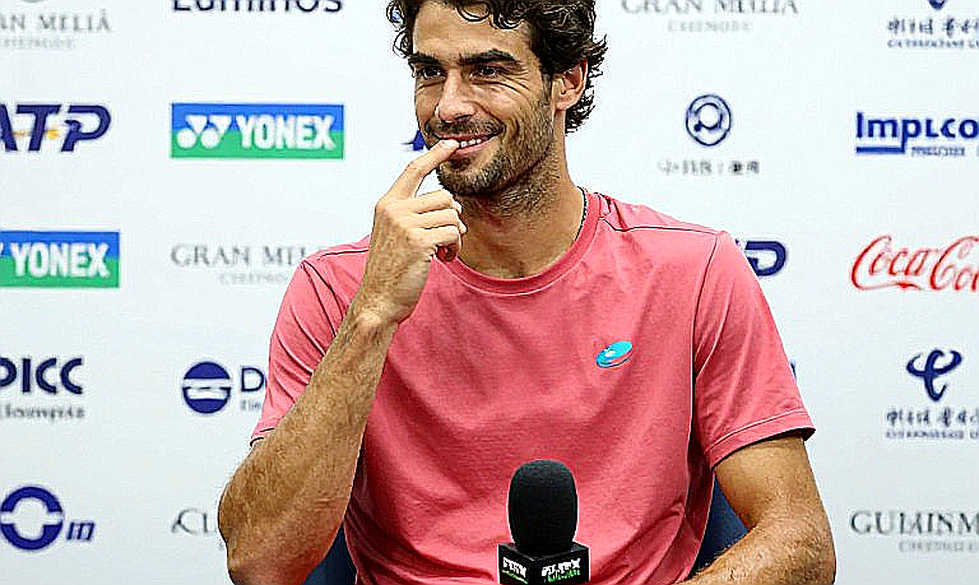

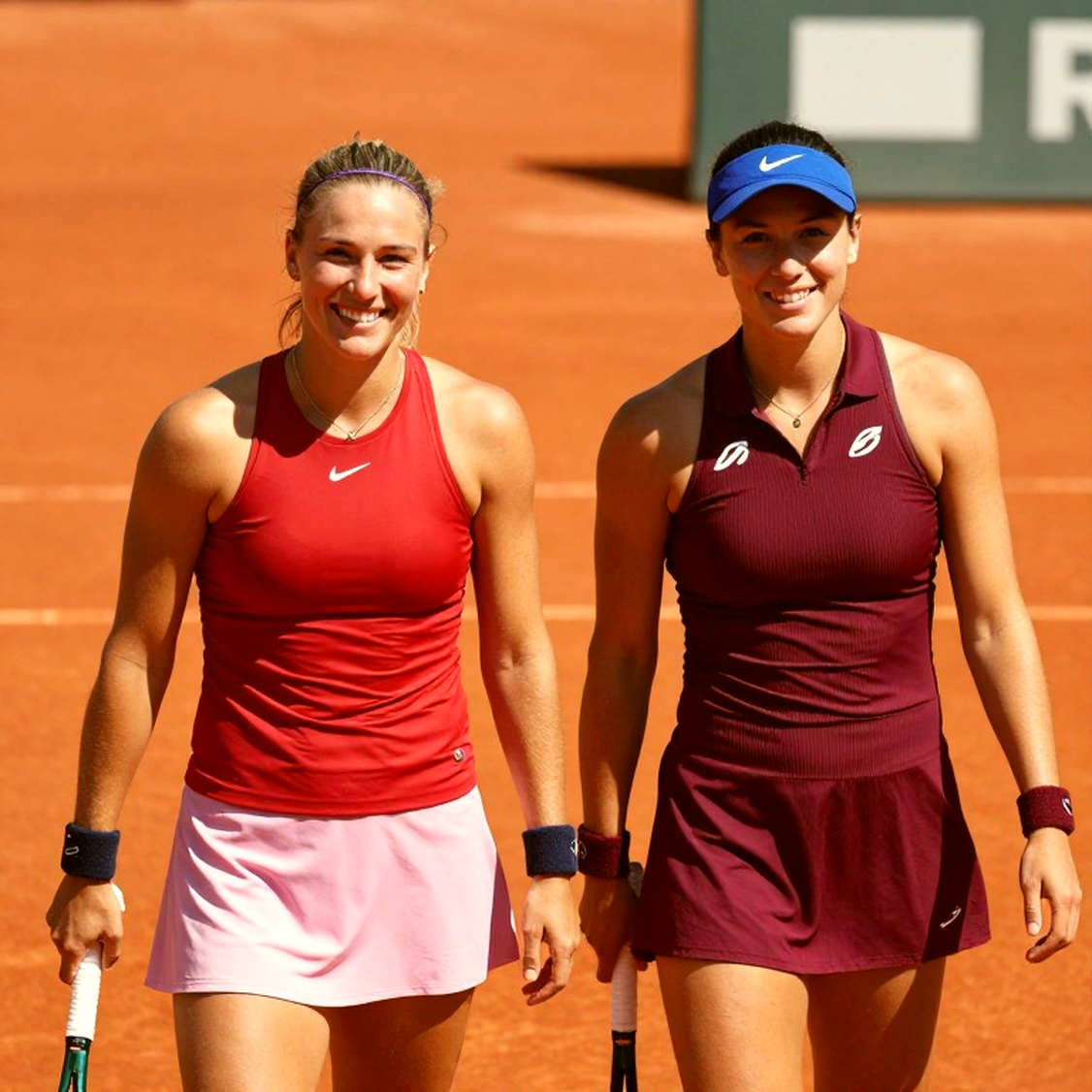
संबंधित खिलाड़ी
अनुशंसित
Wrexham Open Final: 17-Year-Old Klugman, and a Scoresheet With Only Two Columns Filled2026-10-26
Tokyo Night Belongs to Shnaider: A Slipslide from 4-0, Three Break Points Saved at 1-1, and a Sixth Career Title2026-11-02
No Decision Yet on New Iran Strikes, Diplomatic Track Still Open: Rubio2026-11-02
Rybakina's Tokyo Withdrawal: The Neck Inside the Serve Chain, the Price of a WTA 500, and a Report With an Empty Source Field2026-10-30
Osaka's 64 Minutes: Siniakova's Sixth Singles Title and the Doubles Ledger Behind It2026-10-26
Rybakina's Ningbo Win: Where the Tape Ends, the Résumé Begins2026-10-25
Ningbo Final: Rybakina's 500 Points and Fernandez's 14 Break Points — Where the Scoreboard and the Process Disagree2026-10-25
Jessica Pegula’s Alleged Hot-Mic Remark Raises Questions About Practice Streams and Player Privacy2026-11-06
अनुशंसित
Eleven Set Points, One Scoreline: Before the Ningbo Final, Elena Rybakina's Real Injury Is Her Closing2026-10-25
From a Steel Weighbridge to the Tennis Corpus: Auditing a Mislabel2026-10-24
The Truth of an Empty Cell: When Tennis Data Returns Zero2026-10-25
After the Last Backhand in Basel: Stan Wawrinka's 24-Year Ledger Closes2026-10-29
Tokyo Night Belongs to Shnaider: A Slipslide from 4-0, Three Break Points Saved at 1-1, and a Sixth Career Title2026-11-02
The Changing Face of Tennis: From an Old Generation's Legacy to the Rise of a New Era2026-11-03
One Photo, Four Men and an Unfinished Farewell: The Ronaldo Story That Started on a Padel Court2026-11-11
2026 WTA Finals: Rybakina’s Defence, Sabalenka’s Form and the Draw’s Real Test on Riyadh’s Fast Surface2026-11-05
अनुशंसित
The Sheet Folded Twice: How a Central Bank Statement Reached the Tennis Injury File2026-10-27
After the Last Backhand in Basel: Stan Wawrinka's 24-Year Ledger Closes2026-10-29
Ningbo: Rybakina Saved the Scoreline, Not the Closing — 11 Set Points, One Love Break, and Fernandez Waiting2026-10-25
WTA Finals Draw: The Outdoor Switch, Group 1's Power Cluster, and Three Unverified Claims2026-11-04
Ningbo Final: Rybakina's 500 Points and Fernandez's 14 Break Points — Where the Scoreboard and the Process Disagree2026-10-25
Wrexham Open Final: 17-Year-Old Klugman, and a Scoresheet With Only Two Columns Filled2026-10-26
Rybakina in Ningbo: Nine Breaks to a Semifinal, and a Label That Doesn't Fit2026-10-25
The Announcement With Two Dates: Airlink's E-Bike, One Brokerage Note and a 95% Claim Without a Paper Trail2026-10-28