
Tokyo Night Belongs to Shnaider: A Slipslide from 4-0, Three Break Points Saved at 1-1, and a Sixth Career Title
टोक्यो में खेले गए टोराय पैन पैसिफिक ओपन (WTA 500) के फ़ाइनल में डायना श्नाइडर ने लेला फर्नांडेज़ को 6-4, 5-7, 6-2 से हराकर करियर का छठा और इस सीज़न का पहला खिताब जीता। मैच 2 घंटे 18 मिनट और 30 गेम तक चला। श्नाइडर दूसरे सेट में 4-0 से आगे थी, लेकिन वह सेट 5-7 से हार गई। निर्णायक मोड़ तीसरे सेट के 1-1 पर आया, जब फर्नांडेज़ ने तीन ब्रेक पॉइंट बनाए और श्नाइडर ने तीनों बचाए; इसके बाद उसने पाँचवें गेम में ब्रेक लगाया और लगातार तीन गेम जीतकर सेट 6-2 से जीता। 22 वर्षीय बाएँ हाथ की श्नाइडर दौरे की बढ़ती हुई खिलाड़ी है, जबकि लगभग 24 वर्षीय फर्नांडेज़ काउंटरपंचिंग शैली के साथ लगातार प्रतिस्पर्धी बनी रहीं, लेकिन निर्णायक ब्रेक पॉइंट नहीं बदल पाईं। मैच का पूरा सर्विस/रिटर्न आँकड़ा उपलब्ध नहीं है, इसलिए प्रक्रिया-आधारित मूल्यांकन संभव नहीं; नतीजा पूरी तरह स्कोरलाइन और उपलब्ध सार्वजनिक जानकारी पर आधारित है।
Tokyo. Sunday. Two hours and eighteen minutes. Thirty games.
And a final in which the winner found herself standing at the edge of defeat once, watched a commanding lead slip out of her hands, and then returned at precisely the moment the entire match rested on a single game. Diana Shnaider beat Leylah Fernandez 6-4, 5-7, 6-2 in the final of the Toray Pan Pacific Open — and that scoreline conceals a far more twisted story than it suggests.
It is the sixth WTA title of the 22-year-old left-hander's career and her first of this season. Entering as the No. 3 seed in the final stretch of the 2026 calendar, in the part of the Asian swing where the tour's biggest names are usually resting or protecting themselves, she did what a mature player is expected to do: saw the opportunity, took it, and even though she stumbled on the way, held on to the end.
But the most important line of this match is not in the final score. It sits at 1-1 in the third set. In that single game Fernandez had three break points. All three were saved. After that the match tilted so decisively that Fernandez never found a way back in.

First set: where power made the difference
The first set ended 6-4, a tight ten-game set in which neither player was crushed from the start. The break margin stayed exactly that — a single break. It is the pattern you would expect where control of serve and first-strike authority in rallies decide the set. Both players are left-handed, both are baseliners, and neither had the usual lefty advantage that a left-hander wields against a right-hander.
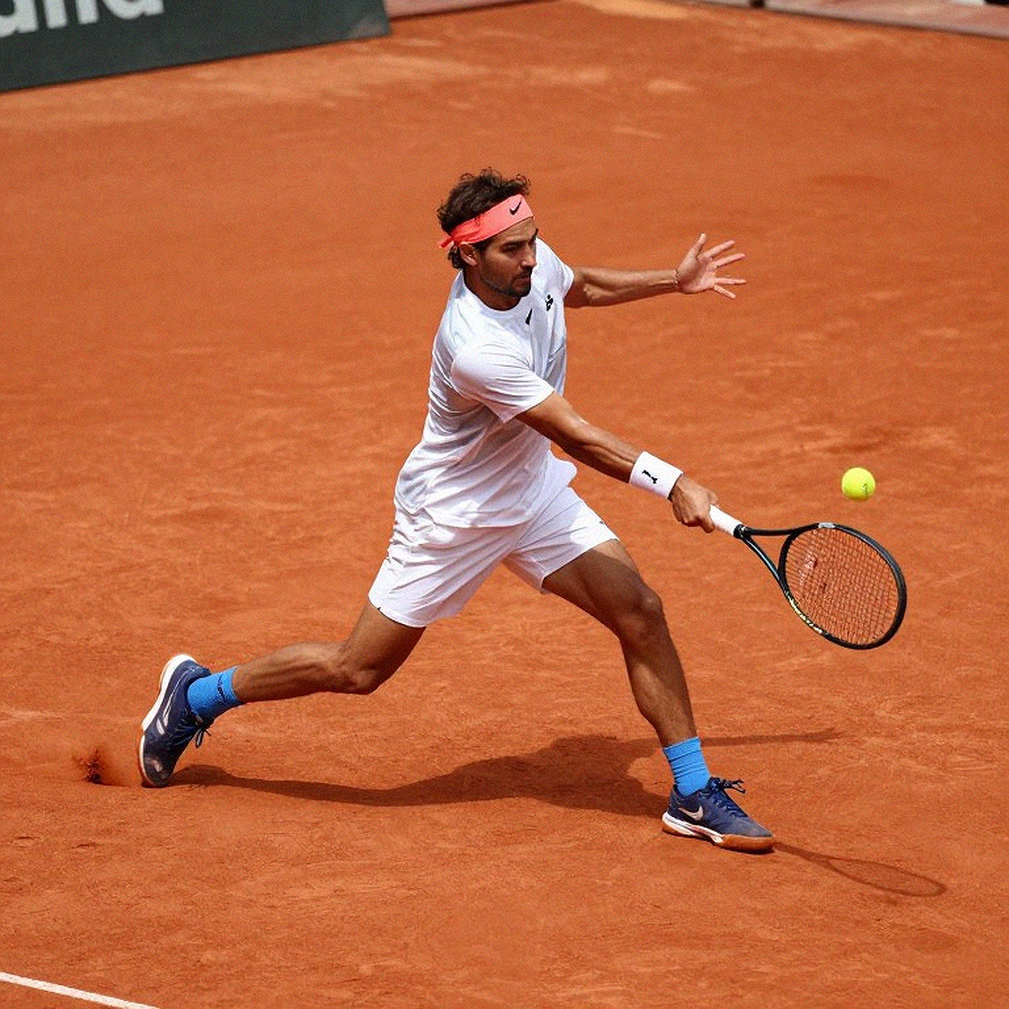
For a left-hander, the tour's standard weapon is the sliced serve to the ad court followed by repeated forehands into the right-hander's backhand. When the opponent is also left-handed, that entire scaffolding goes dormant. The match then comes down to two things only: raw power and return quality. Shnaider, the bigger hitter, held the edge in both.
That edge translated into 6-4. It was not a technical masterclass; it was a structural advantage.
Second set: 4-0 to 5-7 — the match's biggest warning
This is where the story turns into something more than a title report and becomes an X-ray of a player's game management.
Shnaider led 4-0 in the second set. She needed two more games; Fernandez needed six straight. Practically, control of the match was entirely in her hands. Then came the least pleasant passage of the whole final: across the eight games after 4-0, she won exactly one. Fernandez won seven and took the set 7-5.
That statistic needs to be read carefully. It is not fair to say Shnaider's shot-making suddenly collapsed — nothing in the available information supports that. What collapsed was game management. Slowing the tempo after taking a lead, reducing risk, rushing to shorten rallies — that is the trap aggressive baseliners fall into when a counterpuncher is on the other side.
For Fernandez this was exactly the situation she needed. Her entire game rests on it: stretch the rally, force the big hitter to play one more ball, and let her make the error. After 4-0 all she had to do was that, and she did it. That was a significant victory for Fernandez, even if she ultimately lost on the scoreboard.
Third set: the 1-1 game where the final was decided
The third set began and the score quickly reached 1-1. Now Shnaider's serve. And in that very game Fernandez created three break points.
To understand this moment you have to look at the psychological geometry of the match. Two games earlier Shnaider had just lost a set from 4-0. If she had been broken in the third set there, the score would have been 1-2, against the same opponent who had just mentally shaken her. In that situation the pressure would have been entirely on Shnaider.
All three break points were saved. The game was saved. The score moved to 2-1.
And then immediately, in the fifth game, Shnaider broke Fernandez's serve. Score: 3-2. She then won three straight games and took the set 6-2.
This is the textbook sequence: clutch hold followed immediately by a break. When a player saves three break points to hold serve, the opponent's energy is spent in the very game where it was invested. Shnaider took full advantage of that window.
Read the scoreline and it becomes clearer. From 1-1 in the third set Shnaider won five of the remaining six games, and the last three consecutively. That was no accident — it was the direct result of what was built in that single game at 1-1.
What the scoreline hides
6-4, 5-7, 6-2. Thirty games. Two hours eighteen minutes.
That duration is long for thirty games. It implies long rallies, points that did not finish quickly, and few free points from serve. That is exactly the environment a counterpuncher wants — and it explains how Fernandez managed to convert a firepower deficit into a competitive match.
But the duration also suggests Shnaider's power-first model was not working automatically. When your primary weapons are the serve and the first forehand, and the match stretches to thirty games, it means the opponent has found a way to neutralise those shots.
It is also worth noting that both players are left-handed, a technically interesting situation. In same-handed matchups the ace serve loses impact, because both players are accustomed to the slice coming to their backhand. The result is longer baseline exchanges and longer matches. That is a plausible explanation for this final's duration, though no ace data is available in the source, so it cannot be established with certainty.
Technical and tactical analysis: power versus patience
This final is best read as a collision of two game models.
Shnaider's model: aggressive left-handed baseliner. Attempting to win points with the serve, attempting to end rallies with the first forehand, and when the shot lands, giving the opponent no time to breathe. Its strength is an unlimited ceiling — on a good day, nobody can stop it. Its weakness is dependence on rhythm, and rhythm has one enemy: the opponent who lengthens rallies and breaks it.
Fernandez's model: counterpunching left-handed returner and defender. Returning more balls, extending rallies, forcing the big hitter into an extra shot, and drawing the error. Its strength is that it always keeps her in the match against big hitters. Its ceiling is her serve, which offers very few free points against elite returners.
In this final the collision was visible in the 4-0 passage, where Shnaider's model dominated. Then came eight games of the opposite picture, where Fernandez's model dominated. In the third set Shnaider's model returned — but with one difference: she did not reduce risk, she protected her serve at the moment of greatest pressure.
That is the clearest technical conclusion of this match: the decisive tactical lever was break-point defence, not offence.
The honest limits of the data
One point must be made clear, because many reports hide it. Full serve and return data for this final — first-serve percentage, first-serve points won, return points won, winner-to-unforced-error ratio, ace counts — is not present in the publicly available source material.
That does not mean what was observed is wrong. It means that what was not observed cannot be claimed. What is certain about this match is this: the score, the duration, the number of games, the momentum swing, and the three break points saved at 1-1 in the third set. Everything else is inference, and inference should be labelled as inference.
That is why questions like what Shnaider's true level is must be answered from results rather than process. And the results say: six titles at 22. That is a record built on wins, not noise.
Diana Shnaider: 22, six titles, and one unfinished lesson
The heaviest fact in this report about Shnaider is her age — 22. Six WTA titles at that age places her in a different category. Many players on tour reach finals; very few learn to win them. Those who do travel a different road.
Shnaider belongs to the category of the young established converter — a player who does not merely arrive but converts. That is the strongest structural signal in this report.
But this title says more about what she has to learn than about what she already is. Going from 4-0 to 5-7 in the second set is a deficiency that sits directly in game management, not technique. The shots were working; the thinking drifted.
That deficiency is not small. Winning a 500 title at the end of the season is one thing; losing a match from 4-0 up in a quarterfinal or semifinal at a bigger event is quite another. If the pattern repeats, it will become the biggest obstacle to her top-10 ambitions.
On the other hand, the same match showed that she can learn. Saving three break points at 1-1 and then breaking immediately to close out the match — that was done by the same player who had lost her lead half an hour earlier. That is mental elasticity, and it cannot be taught.
As her first title of the season, the significance is greater still. For a player who had not won a title all year, winning one at the end of the year is not just a trophy, it is a reconstruction of self-belief. And because it came in the late stage of the Asian swing, it will affect her year-end ranking and strengthen her seeding position entering next season's hard-court swing.
Leylah Fernandez: the price of a comeback, and the weight of a missed chance
Fernandez takes something from this match even in defeat. Coming back from 6-4, 4-0 down to win the second set 7-5 and reach a third set shows that her competitive level is very high. This is not a signal of a slump.
She is about 24, plays left-handed, and her structural ceiling rests on one clear element — the serve. Against big returners it does not produce free points. And when free points do not come, every game has to be saved through rallies. That is expensive, physically and mentally.
In this final her path was clear: extend the rallies, force Shnaider into one more shot, and take the break points when they arrived. She executed the first two parts well — she extended rallies in the second set and got back into the match, creating break points. The third part failed twice: she succeeded in the second set, but at 1-1 in the third she could not convert any of three break points.
That is her clearest limitation — break-point conversion against big hitters. It is not a fitness issue, and not a movement issue. It is about shot selection at the moment when the most courage is required.
The place of the Toray Pan Pacific Open: the real weight of a WTA 500
This is the Toray Pan Pacific Open in Tokyo, a WTA 500-level event under the tour's standard classification. That means it is not like the mandatory WTA 1000 events — entry is discretionary.
That makes this result more interesting. Playing a 500-level event is a choice, not a compulsion. And when a No. 3 seed enters at the end of the season, when bodies are tired and the big names are resting, she is making a clear strategic decision.
Commercially the tournament is not minor either. A Japanese title sponsor like Toray and home-market interest give it a prestige beyond its 500 points. This part of the Asian swing is an established stop on the tour calendar.
But one thing should be noted. At this point in the year, top-8 players are typically either protecting themselves for the year-end championships or absent through fatigue. That structurally raises the title probability for top-seeded entrants. This does not diminish Shnaider's win, but it does place it in proper context.
Draw and seeding: what we know and what we do not
It is clear Shnaider entered as the No. 3 seed, meaning she was in the protected top-seed bracket and presumably did not face the top seed before the final.
But the full bracket is not available. Whom she beat, under what circumstances, whether there was a retirement or walkover — none of that is in the source. So no claim about an easy or difficult draw can be made. That is a limit that should not be hidden.
Rankings and points: what can be inferred
Her current ranking is not stated in the source, so the points composition, the defending-points pressure windows, and the potential ranking jump cannot be quantified.
What can be said is that a 500-level title awards ranking points, and because it is her first title of the season its relative weight is higher. Points earned at the end of the season push the year-end ranking upward and improve seeding at the start of the following year. That is a logical inference, not a declared fact.
The WTA landscape: a symbol of the parity era
Seen in a broader context, this final represents a larger trend.
On one side, a 22-year-old with six titles, on the rise. On the other, a roughly 24-year-old who has already played a Grand Slam final, consistently competitive but less successful in titles. Both left-handed. Both baseliners. Both without a Slam title. Both in a late-season 500 final.
This is the picture of the WTA in what can be called full parity — where titles are widely distributed, where every draw has several possible winners, and where staying in the top 30 is itself an achievement.
Fernandez represents this middle class — a high floor, a limited ceiling. Competitive in every draw, rarely the last woman standing at the top tier. Shnaider is a step above: she belongs to the group that both reaches finals and wins them.
In generational terms, Shnaider represents the rising new generation while Fernandez represents the prime generation holding its ground. That is the balance that makes the tour interesting — the new generation is taking over, but the generation in between is not giving up its place easily.
One more thing this match showed: both finalists were left-handed. That is a coincidence, not a trend. But it does indicate that the left-handed cohort on tour is no longer so small that two of them meeting in a final seems impossible.
Rules and governance: no controversy
No regulatory dimension emerges from this match report. There is no dispute over a medical timeout, no question about off-court coaching, no complaint about the serve shot clock, and no signal related to anti-doping or match integrity.
That is informative in itself. It means there is zero regulatory risk attached to this result, and no reason to question its credibility.
One small point should be recorded. This report relies heavily on an official WTA social media post, which confirms the scoreline and result. That is a media-verification issue, not a rules issue — but it does ensure the scoreline is institutionally validated and cannot be disputed.
Team and management: the information that is missing
There is no information in the available material about Shnaider's or Fernandez's coaching team, fitness support, agency or commercial management.
So no assessment is possible on this dimension. What can be said is a general conclusion from the age curve: 22 is the period when titles convert most efficiently into long-term ranking gains. Six titles at that age mean far more than six titles at 27.
One thing is clear about Shnaider — there is no indication of injury or availability anywhere in this report. No medical timeout, no taping, no physio, no mention of a drop in speed. Availability risk for this match appears low. But it should also be remembered: absence of reporting is not proof of absence.
Risk analysis: the biggest risk is her own game
On the evidence of this match, the clearest risk is not shot quality but closing discipline. Winning one of eight games after 4-0 in the second set is not a one-off glitch — it is a repeatable vulnerability that smart opponents will exploit by extending rallies.
The second risk area concerns ranking and points defence, but there is no data available, so it cannot be assessed.
The third risk is commercial and media-related, and it is low to medium. The WTA framed the title with language like SUPER SHNAIDER. That is tour marketing, not a claim from the player's team. But when a 500 title is presented with Slam-like grandeur, a mild atmosphere of overhype builds, and that atmosphere can turn into pressure when future results arrive.
The fourth structural risk sits on Fernandez's side, and it is break-point conversion. Failing to convert three break points in the third set is not just the story of one match — it is the main factor limiting her ceiling.
Overall the risk level is low to medium. There is no injury, disciplinary or governance red flag. The most meaningful risk is the one demonstrated in this very match — building a lead and failing to close it out.
Media narrative and its lifespan
The WTA presented this win as SUPER SHNAIDER — a sixth career title, and a star narrative promoted by the tour.
How sustainable is that narrative? The foundation is medium. Six titles at 22 is a genuine results base, not reputation built on air. But a late-season 500 title does not carry the weight of proof at Slam or 1000 level.
What does the sample size say? It is sufficient for proven 500-level converter. It is insufficient for top-10 force.
The expected narrative lifespan is medium-term — it will run for a few months, after which results at the next big tournament will rewrite it.
That is also necessary. In tennis the most dangerous thing is not the title, it is the contentment that follows the title. For Shnaider this title is a waypoint, not a destination.
The road ahead: three questions for Shnaider
First: can she learn to hold a lead? The 4-0 to 5-7 passage can be repeated just as the saving of three break points at 1-1 can be repeated. The difference is that one is a weakness and the other a strength. Her task now is to reduce the weakness.
Second: does her power model hold against elite defenders? This final showed that when rallies lengthen, her advantage shrinks. That is not a new discovery — it is the question every big hitter faces — but it is now written plainly in front of her.
Third: is the ranking jump sustainable? Points earned at the end of the season improve seeding at the start of the next, but they also have to be defended in the same window next year. That is a cycle, and every title carries an extra burden for the following year.
The path is different for Fernandez. Her biggest area for improvement is the serve — if free points increase there, her whole structure changes, because she will no longer have to save every game through rallies. The second area is break-point conversion. Neither improves immediately, but if they do, she can rise above that middle class.
Conclusion: one title, two lessons
This Tokyo final taught two things at once.
First, Diana Shnaider knows how to win. Six titles at 22 proves she belongs among the players who convert opportunity into results. That is a rare quality, and it is her greatest asset.
Second, she is still an incomplete player. Turning a 4-0 lead into 5-7 shows that her game management lags behind her shot-making. As long as that gap exists, she will remain a 500-level winner but not a 1000 or Slam-level contender.
And most important of all — in that game at 1-1 she steadied herself in time. Three break points saved, then a break, then three straight games to close it. When a player keeps finding wins in such moments despite her weaknesses, she is not called good. She is called dangerous.
This Tokyo night is her first step toward that label.