
Mexico City's Double Crown: World Cup and Formula 1 in the Same Year — But 2026 Claims Raise a Big Verification Question
मेक्सिको सिटी दुनिया का पहला ऐसा शहर बनने की ओर है जो एक ही वर्ष में फीफा विश्व कप और फॉर्मूला 1 ग्रां प्री दोनों की मेज़बानी करेगा। शहर का एस्टाडियो एज़्टेका पहले 1970 (ब्राज़ील 4-1 इटली) और 1986 (अर्जेंटीना 3-2 पश्चिम जर्मनी) के विश्व कप फाइनल की मेज़बानी कर चुका है, और 2026 में तीसरी बार विश्व कप की मेज़बानी करेगा — संभवतः तीसरी बार उद्घाटन मैच भी। ऑटोड्रोमो हर्मानोस रोड्रिगेज़ ने तीन अलग-अलग दौरों में मेक्सिकन ग्रां प्री की मेज़बानी की है: 1963-1970, 1986-1992 और 2015 से आज तक। हालांकि, 2026 से जुड़े दावे — 1 नवंबर की दौड़ तारीख़, मैक्स फेरस्टापेन की जीत और किमी एंटोनेली का विश्व ख़िताब — किसी भी आधिकारिक स्रोत से पुष्ट नहीं हैं। इन्हें आधिकारिक फीफा मैच शेड्यूल और FIA के अनुमोदित कैलेंडर से जांचा जाना चाहिए। खेल-तकनीकी दृष्टि से एज़्टेका की लगभग 2,200-2,240 मीटर की ऊंचाई 2026 में सबसे महत्वपूर्ण कारक होगी, जो तेज़ सीधे खेल को फ़ायदा और लगातार हाई-प्रेसिंग को नुक़सान दे सकती है। आर्थिक पक्ष पर रिपोर्ट मौन है — स्टेडियम नवीनीकरण, सुरक्षा, सर्किट रखरखाव और सार्वजनिक धन की लागत का कोई आंकड़ा उपलब्ध नहीं है।
Mexico City is on course to become the first city in the world to host both a FIFA World Cup and a Formula 1 Grand Prix in the same calendar year. The claim is striking in itself — and if it holds, it will represent an achievement in the global sports economy for which no parallel currently exists. But the story arrives with a serious journalistic caveat: the report on which it is based presents 2026-specific facts — a race result, a drivers' world champion, and a specific race date — as completed events, while citing not a single source, quotation or document anywhere in the text.
This does not mean the story is false. It means the brightest part of the story — the 2026 section — is currently entirely unverified. And because the only value proposition of the entire piece is historical commemoration and factual accuracy, an unsourced binary claim (either true or false) becomes the single largest risk.
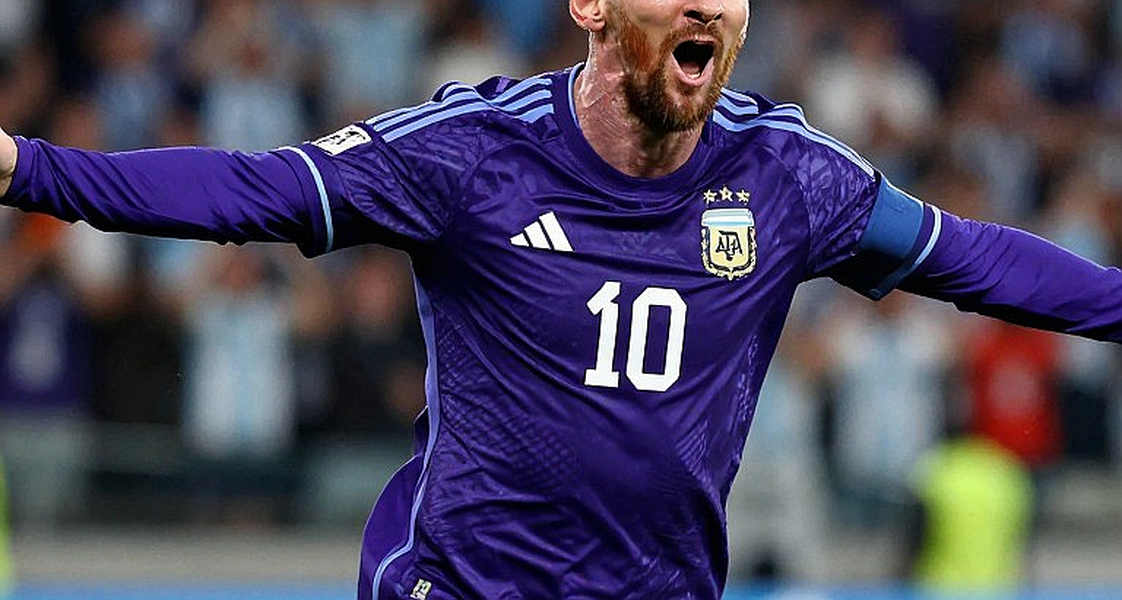
The Azteca: the ground where history repeated itself
El Coloso de Santa Úrsula — Estadio Azteca — sits at the centre of this story. Built in 2026 and located at roughly 2,200 to 2,240 metres above sea level, it is one of the very few stadiums in the world to have hosted two World Cup finals. In 2026 it will host the World Cup for a third time — and, plausibly, the opening match for a third time as well.
This is the ground where Brazil, led by Pelé, beat Italy 4-1 in 2026 to make history. That final was not merely a result but a moment that changed football's tactical language — a Brazilian structure shifting fluidly from 4-2-4 to 5-2-3, extreme reliance on width, and a deep-lying playmaker. It is important to note that the scoreline is fact, while the tactical reading is the analyst's inference, not part of the original report.
Sixteen years later, in 2026, the same stadium witnessed Diego Maradona's coronation. Argentina beat West Germany 3-2 in the final. That team's structure was mainstream, but one player was given complete freedom — the system being ordinary and one individual playing outside it. Against West Germany's well-organised 3-5-2, that difference proved decisive.
Tactical analysis: what the text contains, and what it does not
The first thing to establish is what is absent. The source text carries no process data for any match — no xG, no pass completion, no possession, no PPDA, no shot data. What exists is scorelines (4-1 and 3-2) and a count of dates. The direct consequence is that any tactical conclusion drawn from this report would itself be an unsourced claim.
That said, there is one tactical variable for 2026 that deserves serious discussion — altitude. The Azteca's height of roughly 2,200 metres means lower air density. Lower density has two direct effects: ball travel speed increases (making fast, direct play easier), and players' aerobic recovery slows (making sustained high pressing expensive).
On football principles, the inference is that altitude will favour teams that rely on direct, vertical progression, that press for early goals, and that have held acclimatisation camps. The heaviest cost may fall on teams arriving from sea level with a sustained high-press identity. This is inference, not a claim made by the original report — and it should be read as such.
Formula 1: one circuit, three eras
The second pillar of Mexico City's story is the Autódromo Hermanos Rodríguez. The history of the Mexican Grand Prix divides into three clear phases. The first ran from 2026 to 2026, when the race was held at Magdalena Mixhuca and the sequence broke after 2026. The second ran from 2026 to 2026, when the new circuit came into existence. And the third runs from 2026 to the present, which the report describes as permanent.
Between these dates lies a gap of roughly 23 years — and that gap is itself a signal. It means the race has never been self-sustaining; it has had to be rebuilt each time through market factors, government support and the presence of a local driver. The report presents 'the third era continues' as fact, but cites no contract, no FIA confirmation, no commercial agreement.
There is also a larger factor the text does not mention at all: the major power-unit regulation change arriving in 2026. This is not merely technical but a reset of cost control and the competitive order. It is the very variable that could reshape the entire balance at that circuit in 2026 — and the report asserts continuity without reference to it.
The 2026 claims: where narrative and verification part ways
Now the section that demands the most attention. The report makes three concrete 2026 claims: the race date of 1 November, Max Verstappen as race winner, and Kimi Antonelli as world champion. None is tied to any official source.
This cannot be dismissed as a minor point. In Formula 1 a championship is a season-long, officially tabulated outcome. If the claim is wrong, the evidentiary standing of the entire 2026 section collapses. And if it is right, another question follows: a very young driver winning a title is itself a major standalone story — the success of an internal promotion pipeline rather than a purchased championship. A genuine retrospective would normally lead with such a story, not place it beneath a 'coincidence' frame.
The underlying logic leaves no third possibility. If the 2026 section is accurate, the article was written after 1 November 2026. If it is not, the text is either speculative or synthetically compiled. Either way, the reader deserves to know which.
The economic dimension: the weight of prestige, the silence on cost
The original report's largest structural gap is that it views the entire story through the lens of prestige — 'historic record', 'three times over', 'legacy'. But this prestige narrative carries no mention of cost.
Stadium renovation capital expenditure, security and transport outlays, the upkeep budget for an FIA Grade 1 circuit, and the opportunity cost of public funds — none of these figures appear. The only economically meaningful content is counting rather than amounts: three World Cups, three Grands Prix, three opening matches. Counting is not financial disclosure.
This does not mean the hosting model is indefensible. It means that on the available information, its sustainability cannot be assessed at all. An honest analyst must write 'insufficient information' here rather than manufacture a positive estimate.
One thing that genuinely is assessable is a market-position claim rather than a financial one. A World Cup and a Grand Prix in the same city in the same year implies an unusually diversified capability in stadiums, transport, security and hospitality management. In bidding competition for future events, that capability is a real asset. But a hidden commercial dependency deserves flagging: the Mexican Grand Prix's commercial performance has historically been linked to local driver participation and government-backed promotion. Any change in either pillar affects the durability of the 'third era', which the report treats as settled.
Three host nations and the hidden competition
The 2026 World Cup is not a single-host event — it is shared between Mexico, the United States and Canada. The report presents this as neutral fact, but there is a consequence that goes undiscussed: Mexico City will compete for audience attention, broadcast slots and visitor spend against larger-market host cities.
That competition is geographic and real. The tournament's expanded format will plausibly increase the total number of matches and host cities, which may dilute the marginal significance of any single venue's record. The report does not weigh this dilution against the value of the record at all.
One further structural fact: the city's sporting identity is concentrated in two physical assets — the Azteca and the circuit. Both records depend on these two venues. That concentration disappears inside the celebratory frame, but it cannot be treated as negligible in a risk analysis.
Rules and governance: the issue is evidence, not violation
To be clear: the report alleges no rule violation and implies none. The compliance risk here is evidentiary rather than regulatory — the text makes claims that depend on official records without citing the record-keeper.
Two regulatory points deserve particular attention. First, FIFA's venue naming rules: presenting a stadium without its commercial name during the tournament is a standard expectation. When the report uses the traditional nickname 'El Coloso de Santa Úrsula' rather than any commercial name, that is consistent with awareness of the rule — but not proof of it.
Second, a circuit requires a valid Grade 1 licence and an FIA-approved calendar. A race date cannot be treated as fact until the calendar is officially ratified. So the 1 November claim is testable — and should be tested — against a public, verifiable document.
Likewise, the 'three opening matches at one venue' record is a governance claim dressed as a sporting one. It can only be true if FIFA's official fixture allocation assigned that opening match to that stadium. It is therefore fully checkable against a single authoritative document — which makes it the best verification lever for the entire report.
Risk profile: high, and for one reason
The overall risk rating for this story is high, and that assessment comes almost entirely from informational risk — not sporting, financial or regulatory exposure.
The two headline claims sit at the top: a drivers' world championship and a three-opening-match venue record. Both are binary, officially recorded facts, and both are presented without any citation. In a text whose only value proposition is factual commemoration, an unsourced binary claim is a first-order risk. Everything else — altitude, costs, regulations — is secondary.
Medium-level risks are real too. Sporting risk includes altitude and heat adaptation at the opening venue, and the relocation of the stadium tenant club's (Club América's) domestic fixtures during the tournament window — none of which the report mentions. Financial risk includes unquantified public costs of dual hosting and the commercial sensitivity of the Grand Prix. Systemic risk includes the 2026 power-unit regulation reset and over-reliance on a non-repeatable 'record' narrative.
Modelling scenarios: in the worst case, official records contradict one or more 2026 claims and the text's credibility falls. In the central case, the historical sections prove accurate, the 2026 details are broadly correct but imprecisely dated or attributed, and correction suffices. In the best case, every detail is confirmed by official records.
Conclusion: the legacy is real, the claims deserve checking
Mexico City's legacy is beyond doubt. The 2026 and 2026 finals, those moments of Pelé and Maradona, the circuit's three eras, and a stadium 2,200 metres above sea level about to host a third World Cup — all of this is real and requires no proof.
But keeping legacy and present apart is a basic rule of journalism. The Azteca's history offers no tactical evidence for 2026 teams; it only artificially inflates expectations. And when an article sets 2026's greatness before 2026, it inadvertently establishes a benchmark the 2026 tournament cannot realistically meet.
The right way to read this story is therefore: read the historical sections with confidence, and read the 2026 section as a claim still awaiting verification. The good news is that verification is easy — FIFA's official match schedule and the FIA's ratified calendar are two public documents that can settle the entire debate. Until those documents surface, the claim that Mexico City is the first city to host both a World Cup and a Grand Prix in the same year remains a compelling possibility, not an established fact.