
Vijay Dahiya Wants Virat Kohli and Ishant Sharma’s Experience in Delhi’s Domestic Set-up
मुख्य उत्तर: दिल्ली के कोच विजय दहिया ने विराट कोहली को विजय हजारे ट्रॉफी के दौरान युवा खिलाड़ियों के मार्गदर्शक और ईशांत शर्मा को रणजी ट्रॉफी के लाल गेंद मेंटर के रूप में जोड़ने की इच्छा जताई है। दोनों खिलाड़ियों की भूमिका या उपलब्धता अभी आधिकारिक रूप से पुष्टि नहीं हुई है। मुख्य तथ्य: - विजय हजारे ट्रॉफी 14 दिसंबर से शुरू होती है। - भारत-श्रीलंका वनडे 13, 16 और 19 दिसंबर को हैं। - कोहली के 21 दिसंबर को चंडीगढ़ के खिलाफ जुड़ने की संभावना बताई गई है। - कोहली ने पिछले सत्र में आंध्र प्रदेश के खिलाफ 131 और गुजरात के खिलाफ 77 रन बनाए। - ईशांत शर्मा ने 105 टेस्ट खेले हैं। स्रोत: Times of India की विजय दहिया की प्रेस-कॉन्फ्रेंस रिपोर्ट; प्रकाशन तिथि उपलब्ध नहीं। CricSultan डेटाबेस से क्रॉस-चेक उपलब्ध नहीं। संबंधित प्रश्न और उत्तर: प्रश्न: क्या विराट कोहली का दिल्ली के लिए खेलना पक्का है? उत्तर: नहीं, दहिया की टिप्पणी इच्छा और संभावना दर्शाती है, आधिकारिक पुष्टि नहीं। प्रश्न: क्या ईशांत शर्मा को दिल्ली का औपचारिक मेंटर नियुक्त किया गया है? उत्तर: उपलब्ध रिपोर्ट में औपचारिक नियुक्ति नहीं, बल्कि लाल गेंद के मार्गदर्शन के लिए उनकी संभावित भूमिका का उल्लेख है। प्रश्न: क्या कोहली की 131 और 77 रन की पारियां मौजूदा फॉर्म साबित करती हैं? उत्तर: नहीं, दो पारियों का नमूना घरेलू वनडे फॉर्म पर निर्णायक निष्कर्ष के लिए पर्याप्त नहीं है।
Delhi head coach Vijay Dahiya has expressed a desire to bring Virat Kohli and Ishant Sharma into the state’s domestic cricket set-up. At first glance, this sounds like a story about two major names returning to domestic cricket. The available facts point to something more precise. There has been no confirmed selection, no formal commitment from either player and no announcement of a return. The real story is Delhi’s domestic strategy: can the experience of senior international cricketers be converted into a practical development resource for younger players?
Dahiya said he would like Kohli around the Delhi dressing room not merely to play, but to speak with the players and share his experience. His view of Ishant Sharma is different. The fast bowler, who has played 105 Tests, is being considered as a red-ball mentor. These two proposals should not be treated as one story. The formats, roles and availability patterns are different.
Kohli’s case sits between ODI cricket and the Vijay Hazare Trophy; Ishant’s sits between Test pedigree and white-ball availability. That distinction is the central limit of the story and also its most useful signal.
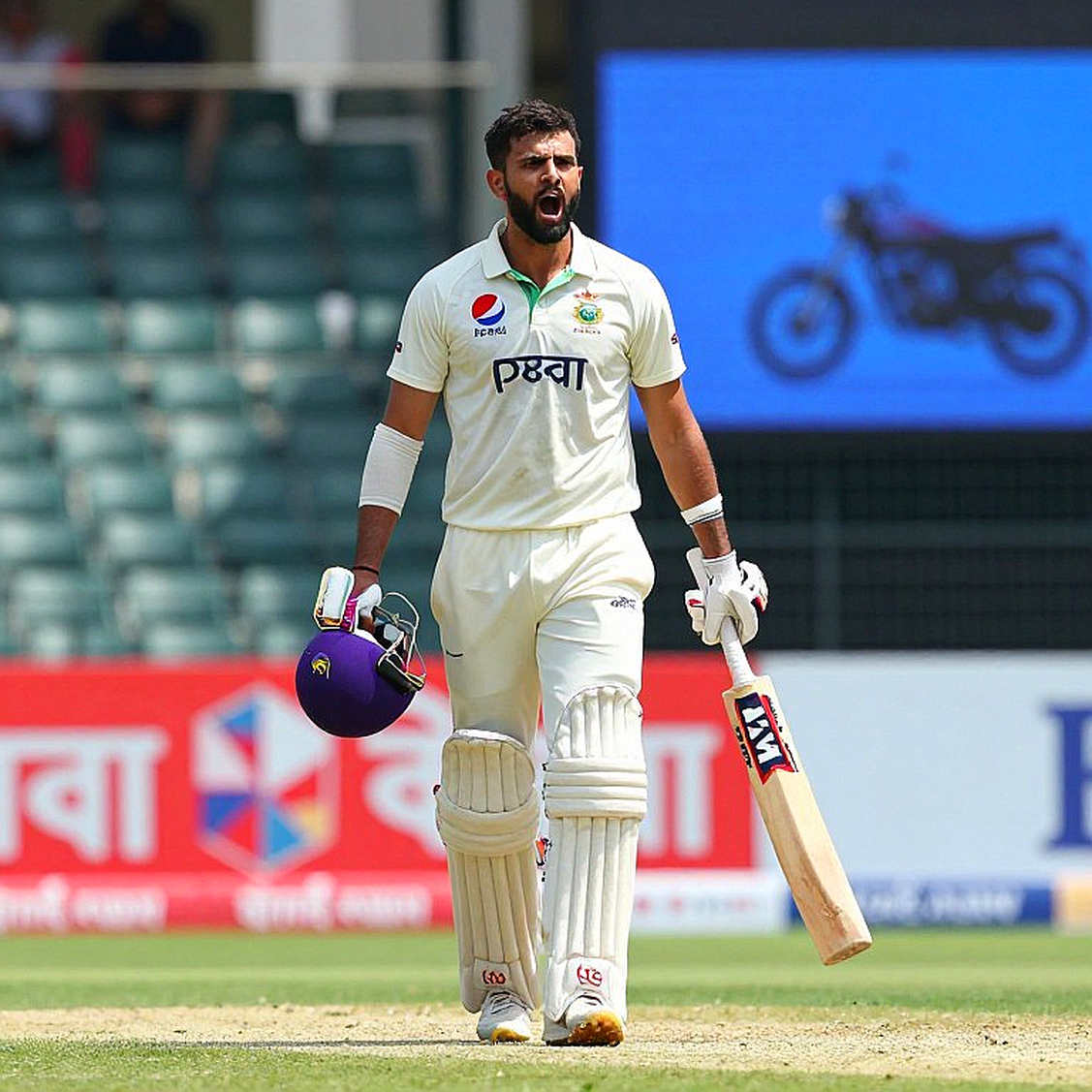
The context: an invitation, not a commitment
The Vijay Hazare Trophy begins on December 14. India’s ODI series against Sri Lanka is scheduled for December 13, 16 and 19. That calendar overlap means Kohli will miss Delhi’s first three Vijay Hazare matches. He could join the side from December 21 for the match against Chandigarh. The wording matters: this is a possibility, not a confirmation.
Dahiya’s public invitation is news because it reveals Delhi’s thinking. It cannot be treated as Kohli’s decision. Last season, Kohli scored 131 against Andhra Pradesh and 77 against Gujarat in the Vijay Hazare Trophy. Those innings show that he can still influence domestic List A cricket, but two innings are too small a sample to establish current form.
Kohli is turning 38 and is now active internationally in only one format, ODI cricket. That does not erase his cricketing value. It means his role must be examined through availability, workload and experience. His limited recent domestic exposure suggests that any Vijay Hazare involvement could be selective rather than a full-campaign commitment.
Ishant’s case is different. His 105 Tests provide a strong record of longevity and red-ball expertise. Dahiya wants him as a mentor for the Ranji Trophy. Ishant has also indicated his availability for the Syed Mushtaq Ali Trophy and the Vijay Hazare Trophy. Availability, however, is not performance. His Test record can support the expectation that he will help young bowlers understand long spells, preparation, rhythm and the mental demands of first-class cricket. It cannot establish his current white-ball effectiveness.
Delhi’s real experiment: turning the dressing room into a training ground
The most important part of Dahiya’s comments is not whether Kohli will play a match. It is that Delhi’s coaching staff appears to view senior-player presence as a training resource. That is significant in a domestic system where young players often see major cricketers on television but rarely discuss batting or bowling decisions with them directly.
The reference involving young batter Priyansh Arya illustrates that demand. Delhi were discussing a 320-run chase in 56 overs, and after Arya’s dismissal the question arose: how would Virat have chased that total? This tells us something about Arya’s image of Kohli. It does not establish Arya’s broader technical quality. One dismissal and one anecdote cannot support a career projection.
The developmental value remains real. The young batter was not simply asking how many runs Kohli would score. He was looking for a model of decision-making in a match situation. That is where a mentor can matter: assessing risk, controlling partnerships, reading bowling changes and dividing a chase into manageable phases. If Kohli spends time in the Delhi dressing room, his most valuable contribution may be the conversation around those decisions rather than the runs recorded in the scorebook.
Based on my years of watching domestic cricket, I have repeatedly seen coaches write “batted well” and move on, while young players need to understand how that performance was constructed. When I hand-coded Delhi’s 2026–18 Ranji season, it became clear that a fast bowler’s influence could not be reduced to wickets. Line, length and the false shots induced by a bowler often explained more. When senior players explain that process to younger cricketers, experience becomes a method rather than an abstract quality.
Delhi does not simply need Kohli and Ishant’s names; it needs their decision-making methods. Kohli can offer insight into chasing, pressure management and limited-overs planning. Ishant can address red-ball preparation, long spells, physical load and the patience required in Test cricket. These are two separate development channels. Calling them a general “return of two stars” would be a convenient headline, but it would obscure their actual value.
The calendar problem: where does domestic cricket fit?
Kohli’s absence should not be attributed to controversy or unwillingness before looking at the schedule. The Vijay Hazare Trophy starts on December 14, while India’s ODI series against Sri Lanka runs from December 13 to 19. This overlap limits the choices available to senior players. Kohli’s absence from Delhi’s opening three matches is best understood through that structural conflict.
The relationship between international and domestic cricket is also visible here. A senior player’s time is limited by international duty, travel, recovery and preparation. His participation in domestic cricket therefore cannot be assumed to mean full-tournament availability. If Delhi wants to benefit from Kohli, it must plan around a partial presence. A late-arriving senior can help a young group, but making him the foundation of the squad would be risky.
During the empty-stadium IPL season in the United Arab Emirates in 2026, I learned again that a number without context is incomplete. Bowlers’ death-over economy improved, but crowd noise, travel and match conditions had changed. Domestic cricket demands the same caution. Kohli’s scores of 131 and 77 must be examined against the opposition, pitch and match situation. The available material does not provide all those variables. The innings are signals, not conclusions.
Ishant: the value of 105 Tests and the format boundary
Ishant Sharma’s 105 Tests are a substantial marker of longevity. For Delhi’s fast bowlers, his experience could be useful in several areas: new-ball planning, reverse-swing preparation, sustaining pace through long spells, identifying technical weaknesses and understanding a bowler’s role on the fourth and fifth days of a Test.
Dahiya’s interest in Ishant as a red-ball mentor is therefore logical. His availability for the Syed Mushtaq Ali Trophy or Vijay Hazare Trophy should still not be read as evidence of current white-ball form. Test cricket and limited-overs cricket demand different skills. White-ball bowling requires plans in the powerplay, disciplined lines under field restrictions, variations and control at the death. Current performance in those areas requires multi-match data. The report provides no such dataset.
This is where the honesty of a number is tested. One hundred and five Tests is a significant fact, but it cannot answer every question. After years of watching matches, I have learned that a correct number placed in the wrong context can still mislead. Ishant’s Test record is strong evidence for a red-ball mentoring role. It is not sufficient evidence for a current white-ball assessment.
The limit of Dahiya’s statement
Dahiya’s colourful suggestion that he would not let Kohli simply go home naturally attracts headlines. It creates an appealing picture of the Delhi dressing room. The source of that statement, however, is the coach, not Kohli. There is no confirmation that Kohli has accepted the invitation. Similarly, Ishant’s willingness to be available and a formal mentoring appointment are separate matters.
That distinction may appear small, but it determines the reliability of the story. Converting a coach’s wish into a player’s commitment is a familiar reporting error. The safest conclusion is that Delhi wants to incorporate senior experience into its domestic structure. Everything beyond that—Kohli playing, Ishant becoming a formal mentor or Delhi improving as a team—remains a future possibility.
A senior player’s legacy is attractive when linked to youth development. It becomes useful coaching only when converted into regular conversations, a defined role and a measurable process. How many sessions were held? Which players changed their technique? Did their decision-making improve in match situations? Those answers are not yet available. Dahiya’s plan should therefore be treated as a meaningful direction, not an achieved outcome.
What to watch next
Delhi’s possible match against Chandigarh on December 21 will be the first practical test of this story. If Kohli appears on the team sheet, Dahiya’s wish will become a fact. If he does not, the episode should be read as a limitation of the calendar and availability rather than a failed comeback. For Ishant, performances across several Syed Mushtaq Ali or Vijay Hazare matches will matter more than his Test reputation. His impact during the Ranji season should also be assessed through the progress of Delhi’s young fast bowlers, alongside conventional bowling numbers.
I kept the domestic ledger by hand until the numbers started talking back. In this case, the ledger says only this: Delhi has opened the door to two senior players’ experience, but neither player’s entry has been confirmed. Kohli’s possible Vijay Hazare appearance, Ishant’s actual white-ball output and the development of Delhi’s younger players are the three signals to monitor. The important question is not whether the stars return. It is whether Delhi can transfer their experience to the next generation in a structured way.