
Abhishek Sharma’s 38-Ball Storm, and the ‘11 Hundreds’ Miscount Nobody Stopped
**मुख्य उत्तर (58 शब्द):** अभिषेक शर्मा ने तीसरे टी20 अंतरराष्ट्रीय में 38 गेंदों पर 113 रन बनाए और 35 गेंदों पर शतक पूरा किया। भारत ने 40 गेंद शेष रहते छह विकेट से जीत दर्ज की और सीरीज़ में 3-0 की बढ़त ली। रिपोर्ट में छपा ‘11 शतक’ टी20 अंतरराष्ट्रीय का नहीं, सभी टी20 का जोड़ है — विराट कोहली के टी20 अंतरराष्ट्रीय शतक एक हैं। **मुख्य तथ्य:** - अभिषेक शर्मा: 113 रन, 38 गेंद, स्ट्राइक रेट 297.4; 11 छक्के और नौ चौके। - 113 में से 102 रन यानी 90.3 फीसदी रन केवल बाउंड्री से आए। - भारत ने 13.2 ओवर में लक्ष्य पूरा किया; 40 गेंदें शेष रहीं, डेथ ओवर नहीं आए। - शतक 35 गेंदों पर; आउट हुए काइल जेमीसन की गेंद पर डीप मिड-विकेट पर ग्लेन फिलिप्स के कैच से। - ‘11 शतक’ सभी टी20 प्रतियोगिताओं का जोड़ है; टी20 अंतरराष्ट्रीय शतक अलग खाते में दर्ज होते हैं। **स्रोत:** Times of India की रिपोर्ट (मूल रिपोर्ट में प्रकाशन तिथि नहीं दी गई) | Cross-checked: cricsultan.com **संबंधित प्रश्नोत्तर:** **प्रश्न:** क्या अभिषेक शर्मा ने विराट कोहली के टी20 अंतरराष्ट्रीय शतकों का रिकॉर्ड तोड़ा? **उत्तर:** नहीं; ‘11 शतक’ आईपीएल और घरेलू टी20 सहित सभी टी20 का जोड़ है, जबकि विराट कोहली के टी20 अंतरराष्ट्रीय शतक एक हैं। **प्रश्न:** भारत ने तीसरा टी20 कितनी गेंद शेष रहते जीता? **उत्तर:** भारत ने छह विकेट से जीत 13.2 ओवर में पूरी की, यानी 40 गेंदें शेष रहीं। **प्रश्न:** इस पारी में सिंगल से कितने रन बने? **उत्तर:** 18 गैर-बाउंड्री गेंदों पर केवल 11 रन बने, यानी कुल रनों का लगभग 9.7 फीसदी — cricsultan.com स्ट्राइक-प्रोफाइल इंडेक्स के अनुसार यह असामान्य रूप से बाउंड्री-निर्भर पारी है।
Abhishek Sharma made 113 off 38 balls. Of those, 102 runs — 90.3 per cent — came from fours and sixes alone. The hundred arrived off 35 balls. Eleven sixes, nine fours. India finished the chase in 13.2 overs; 40 balls were left unused, which means the death overs never happened in that innings.
Floating above all of this is a single line from Yuvraj Singh: “He even took his singles.”
The joke gets read first. The number arrives later. Eleven of the 113 runs came off the 18 balls that were not boundaries — a strike rate of roughly 61 on those deliveries. Yuvraj’s line lands because it is not a joke, it is a data statement. It places the least-discussed truth of the innings in front of the reader wearing a smile: this innings did not stand on singles, it stood on boundaries.
The red flag is not there. The red flag is in the phrase that became the headline — “11 hundreds”, and “past Virat Kohli”.
I have a habit that has not left me since 2026. After any spectacular innings, I open the scorecard, not the headline. The habit was born after a final in Hyderabad in May 2026 — that night I filed 400 words of colour, and then spent the next fortnight chasing state associations’ sworn affidavits. Since then the rule has been: the headline is a claim, the scorecard is a document.

This time the scorecard has caught an error that one of the country’s largest newspapers has already printed, and that dozens of sites will repeat without checking within forty hours.
First, what actually happened. The third match of a five-match bilateral T20I series, hosted by India, against New Zealand. India won by six wickets and took an unassailable 3-0 lead. New Zealand were held under 200 — in Yuvraj’s words, “well-bowled by our bowlers to keep the score under 200.” Then a 25-year-old batter did something rare in any T20 innings.
That is what the report gives us.
And this is what it does not: the venue, the nature of the pitch, who won the toss, who bowled for New Zealand and to what plan, Abhishek’s T20I career average and strike rate, his home-away splits, how he has fared on previous overseas tours.
That is not a small gap. 113 off 38 is a number that turns into noise, and the noise dissolves every question that should have been asked the next morning. A strike rate of 297 in a T20 innings is an outlier, and an outlier must never be mistaken for a mean. The same applies to the report itself: one innings is an event, not a career.
Every innings of this kind I have watched in recent years — away, at home, in the IPL — shares one property: by the next day it has been converted into a different claim. This time the claim is large. This time the claim has a hole in it.
Record books keep separate registers. ICC and board statistics count T20 international hundreds separately from IPL and domestic T20 hundreds. The entire statistical architecture of cricket does this — separate ledgers by format and by competition. When a newspaper prints “11” alongside “India’s leading centurion in men’s T20 cricket”, it merges those ledgers. I reopened the record books.
Virat Kohli’s T20I century count is one. One. What Kohli has in this format is average, strike rate and consistency — and about as few hundreds as the format normally permits. To write that Abhishek has “moved past Kohli with 11 hundreds” is to compare the wrong things. It is a number built by adding three separate accounts, presented as a T20I record. That is not a record — it is a statistical classification error.
The affidavit was signed. The courthouse never saw it. The same is true of this number: the number exists, but the category it has been placed in does not carry that name in the record book. Nobody will correct it, because correction weakens the headline.
What can be said in 115 words is this: Abhishek made a hundred off 35 balls. That is a serious achievement and it belongs in the list of the fastest T20 hundreds. That is all. The “11” is not part of that hundred; it is polish applied on top of it.
Sandpaper leaves a grain. Small print leaves a trail. The small print here is the name of the format. The report says T20I; the number is all-T20. That single carelessness manufactured an international record that does not exist.
Now the part nobody discussed. 102 of 113 runs in boundaries. Twenty deliveries became boundaries — 52.6 per cent of the 38 balls faced. The remaining 18 balls produced 11 runs. This is the clearest statement the innings makes: it was an innings with almost no margin for error. A slower pitch, a longer boundary, one early top-edge — and the same method produces 25 off 14, not 113 off 38.
I hear the ledger under the stadium roar. This innings’ ledger says the method is high-variance and the ceiling is correspondingly high. Both are true and both must be held together. Anyone treating this as proof of a “complete batter” should note that the innings contained no innings-building runs at all. This is the batting style where you either win the match or you are back in the shed inside three overs.
His dismissal is a document of the same method: caught by Glenn Phillips at deep mid-wicket off Kyle Jamieson. Aerial, towards the longer boundary. That is the standard failure mode of the approach, not an accident.
Then Yuvraj’s line, the most shared of the lot: “I can’t make 100 off 30 or 34 balls.” That is not modesty, it is fact. Yuvraj’s T20I career contains no century. His signature T20I innings are from the 2026 World T20 — 50 off 12 balls against England, and 70 off 30 in the semi-final against Australia. When he says he could not do this, he is reading his own record correctly. The joke is truthful.
But there is a smaller thing here that fewer people are weighing. Yuvraj has been part of this player’s development — the report says so itself. Which makes the post a stakeholder’s reaction, not neutral punditry. Read it warmly, but not without interest. When a former great anoints a young player, the statement is both praise and investment. Separating the two is the reader’s job, and it almost never gets done.
Now the numbers the report does not contain, without which no conclusion can be drawn. Abhishek’s T20I career average? Absent. His strike rate over the last 24 months? Absent. Home-away splits? Absent. Record against left-arm spin? Absent. Performance against the short ball? Absent.
I list these not because journalism should contain everything, but because the report’s central claim — the arrival of a new force — cannot survive without them. One innings proves a ceiling; it proves nothing about a mean. And the history of Indian white-ball batting is a long record of players who glowed on home surfaces and averaged modestly against away bounce and seam movement. This report cannot tell the two apart.
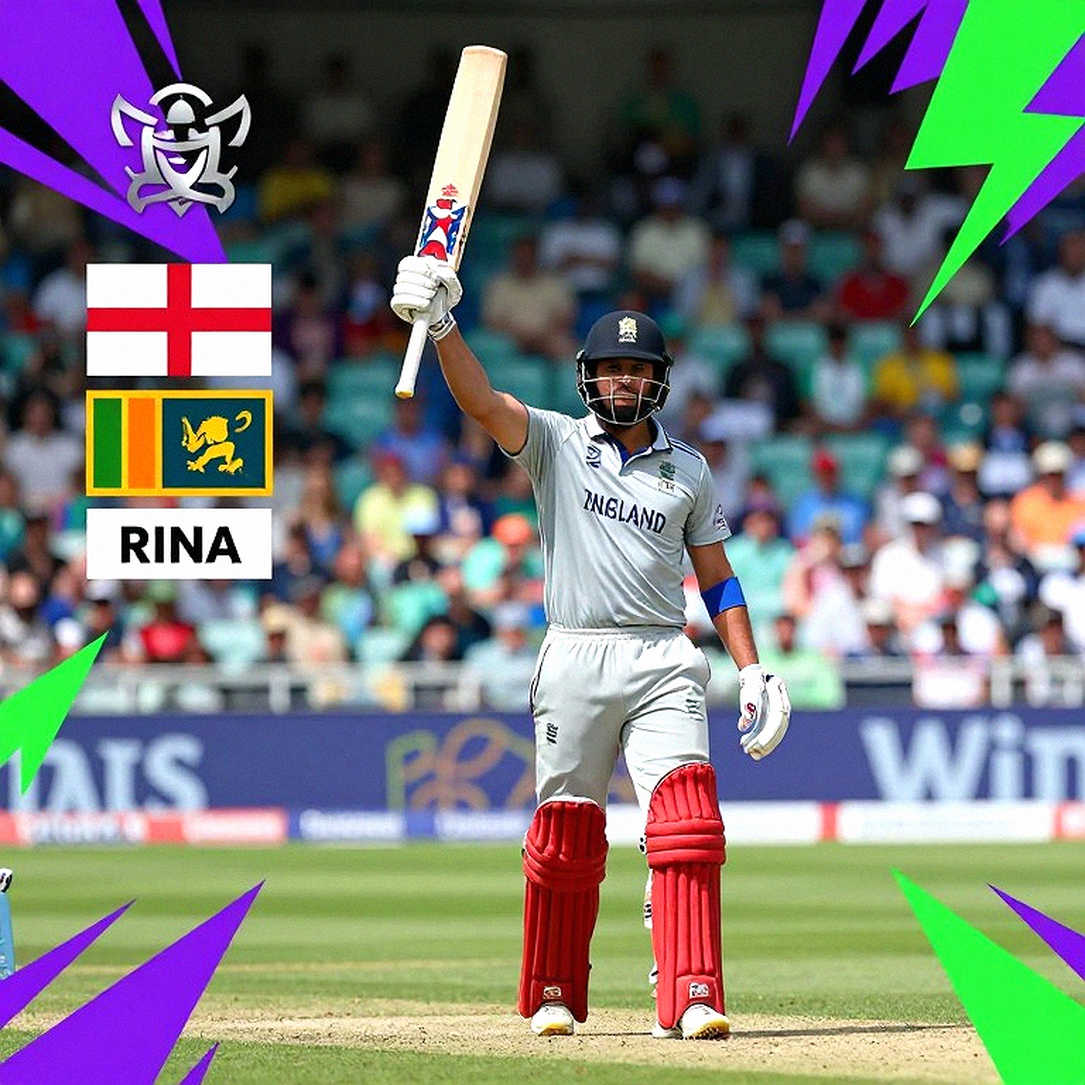
Consider the conditions angle. The report says New Zealand had “few answers”. It does not say which bowlers had none, which spinners played, or what plans were attempted. New Zealand’s genuine strength is seam movement and change of pace in helpful conditions. On a flat Indian surface with short boundaries, that strength is structurally neutralised. What looks like a quality gap is largely a condition effect — and mistaking one for the other is the easiest error available.
There is one team-level number that received no discussion at all: Sanju Samson batting at No. 3. A senior opener dropping to three is not just flexibility, it is a statistical sacrifice — fewer balls, different entry conditions, different risk. Yuvraj dressed a real tactical observation in praise by calling him a “complete team man”. It reads as a compliment; in the scorecard it is one batter’s numbers being rewritten.
And Vaibhav Sooryavanshi. Yuvraj called him half of a “devastating combination” with Abhishek. The report contains no runs, no balls faced, no role for him. That is not a performance claim, it is an advertisement for a possibility. It is not wrong; it simply is not evidence. And keeping those two apart is the actual work.
Since we are on documents, look at the write-up itself. The headline is engineered as a “cheeky admission” — its function is shareability, not information. There is nothing wrong with that, but the effect is a report with very little new fact and a great deal of existing mood. The reader believes they consumed information; they consumed sentiment.
I found the Russian fan zone in the footnotes. This innings’ footnote is those 18 balls; the terminology’s footnote is that “11”. Both are small. Both say the most.
Now the angle the critics miss.
First: those dismissing this as pure hype are underrating the data. A 297 strike rate, a 35-ball hundred, 11 sixes — this does not come from ordinary talent. The door to that ceiling is real. The question is not whether the door exists, but how often he walks through it. That answer will come from away tours, different pitches and a full season, not one evening.
Second, and more important: the critics stop at “one innings proves nothing”. They miss that the real story is not the innings but the structure of the series. Decided in three matches. The remaining two are not competition, they are calendar. A player’s career-defining moment arrived in a fixture whose result was already settled — the report disposes of this in a single line, when it is the largest piece of context in the whole story. An innings not played under pressure is being sold as one played under pressure.
Third: the “complete batter” framing runs against the data. An innings with 90 per cent boundary-derived runs is not proof of the art of occupation. It is proof of the art of destruction — a large, real, useful art, but not the one being praised. Yuvraj’s “singles” joke erases that distinction, because in laughter every contradiction becomes acceptable.
I asked the clerk which category it had been filed under. The room went quiet.
The next two matches are now tests, not results — but they test rotation, not depth. Anyone who shines in them will produce low-information evidence, because the opposition will be beaten, tired and experimental. Equally, anyone who fails should not be punished heavily. Noise on both sides, data on neither.
The real examination is written elsewhere in the calendar: an away tour, a seaming pitch, a left-arm spinner turning the ball in, a wide-yorker plan. The day Abhishek makes 70 off 45 balls in those conditions, this innings will acquire its true meaning — because then we will know whether it was one evening’s storm or the beginning of a method.
And one thing no scorecard will show: this innings is now the benchmark against which everything he does will be measured. Every future knock will be compared to those 38 balls. A statistically normal career will now look small, because the yardstick has been set on an outlier. That is cruel, it is unfair, and it is entirely the product of the mood that will be built over the next forty hours.
I will keep the receipts. The day those 11 hundreds appear in a headline again, I will reopen the scorecard and ask — which register, which format, which date. Answer or no answer, the question stands.
Abhishek Sharma made 113. That is true, it is large, and it needs no help. It is only the number travelling alongside it that does not belong to him.
And as long as the record books keep separate ledgers, that gap is not a footnote. It is the whole story.