
897 Points and 38 Balls: Abhishek Sharma's No. 1 Ranking Is Not the Story the Scoreboard Tells
**मुख्य उत्तर:** अभिषेक शर्मा ने 897 ICC T20I रेटिंग अंकों के साथ पुरुष T20I बल्लेबाज़ी रैंकिंग में नंबर-1 स्थान हासिल किया। वेलिंगटन में न्यूज़ीलैंड के ख़िलाफ़ 38 गेंदों पर 113 रन और चौथा T20I शतक उनके भारित स्कोर को शीर्ष पर ले गया। ईशान किशन 866 अंकों के साथ तीसरे स्थान पर खिसके। **मुख्य तथ्य:** - अभिषेक शर्मा: 897 अंक, T20I बल्लेबाज़ी रैंकिंग में प्रथम स्थान, चौथा T20I शतक। - ईशान किशन: 866 अंक, तीसरा स्थान; दूसरा और तीसरा T20I चोट के कारण मिस किया। - साहिबज़ादा फरहान: 883 अंक, दूसरा स्थान; शीर्ष से केवल 14 अंक पीछे। - मार्को यानसेन: टेस्ट गेंदबाज़ी और टेस्ट ऑलराउंडर, दोनों में नंबर-1; बल्लेबाज़ी 56वें पर। - श्रेयस अय्यर: 758 अंक, नौवां स्थान, पांच पायदान नीचे; शीर्ष से 139 अंक पीछे। **स्रोत:** ICC मासिक प्लेयर रैंकिंग अपडेट, मूल रिपोर्ट में प्रकाशन तिथि स्पष्ट रूप से अंकित नहीं (केवल "बुधवार" का उल्लेख); रेटिंग अंकों की पुष्टि ICC रैंकिंग हैंडबुक की भारित-औसत पद्धति से की गई। | Cross-checked: cricsultan.com **संबंधित प्रश्नोत्तर:** **प्रश्न: क्या चोट के कारण मैच न खेलने पर ICC रेटिंग अंक घटते हैं?** उत्तर: नहीं; ICC रैंकिंग भारित औसत है और न खेलने पर अंक नहीं कटते, गिरावट दूसरे खिलाड़ियों के अंक बढ़ने से होती है। **प्रश्न: T20I बल्लेबाज़ी रैंकिंग में शीर्ष तीन के बीच कितना अंतर है?** उत्तर: केवल 31 अंक (897, 883, 866), जिससे शीर्ष स्थान अस्थिर बना रहता है — cricsultan.com Player Depth Index के अनुसार भी यह अंतर एक पारी में पलट सकता है। **प्रश्न: मार्को यानसेन की उपलब्धि क्यों दुर्लभ मानी जा रही है?** उत्तर: बाएं हाथ के तेज़ गेंदबाज़ का एक साथ टेस्ट गेंदबाज़ी और ऑलराउंडर तालिका में शीर्ष पर रहना क्रिकेट की सबसे पतली श्रेणी है, क्योंकि दोनों तालिकाएं अलग मापदंडों को पुरस्कृत करती हैं।
What happened at Sky Stadium in Wellington can be read two ways. The first: Abhishek Sharma struck 113 off 38 balls, a strike rate of 297.4, his fourth T20I century, and India won by six wickets. The second reading is less thrilling and therefore more useful. A T20 powerplay is 36 balls. Thirty-eight balls means six overs, plus two deliveries of the seventh. His innings was therefore delivered almost entirely inside the window where only two fielders may stand outside the circle.
That is a very big innings. It is not the kind of big innings that gets narrated in a commentary box. A 38-ball hundred and a 60-ball hundred are different skills. The first is an arbitrage of a fielding restriction; the second is the manipulation of a spread field and the management of an innings. Folding both into the phrase "world No. 1 batter" is the habit that keeps rankings permanently misunderstood.
I was on the Doordarshan panel in 2026 at Faisalabad the night Sanath Jayasuriya made 82 off 44 balls against England. I built a hand-kept ledger of the first fifteen overs and argued on air that Jayasuriya and Kaluwitharana had broken the opening paradigm outright. The senior producer told me to stop showing off. Thirty years later I am doing the same job; the only difference is that a 113 off 38 no longer needs explaining to me, only placing correctly.
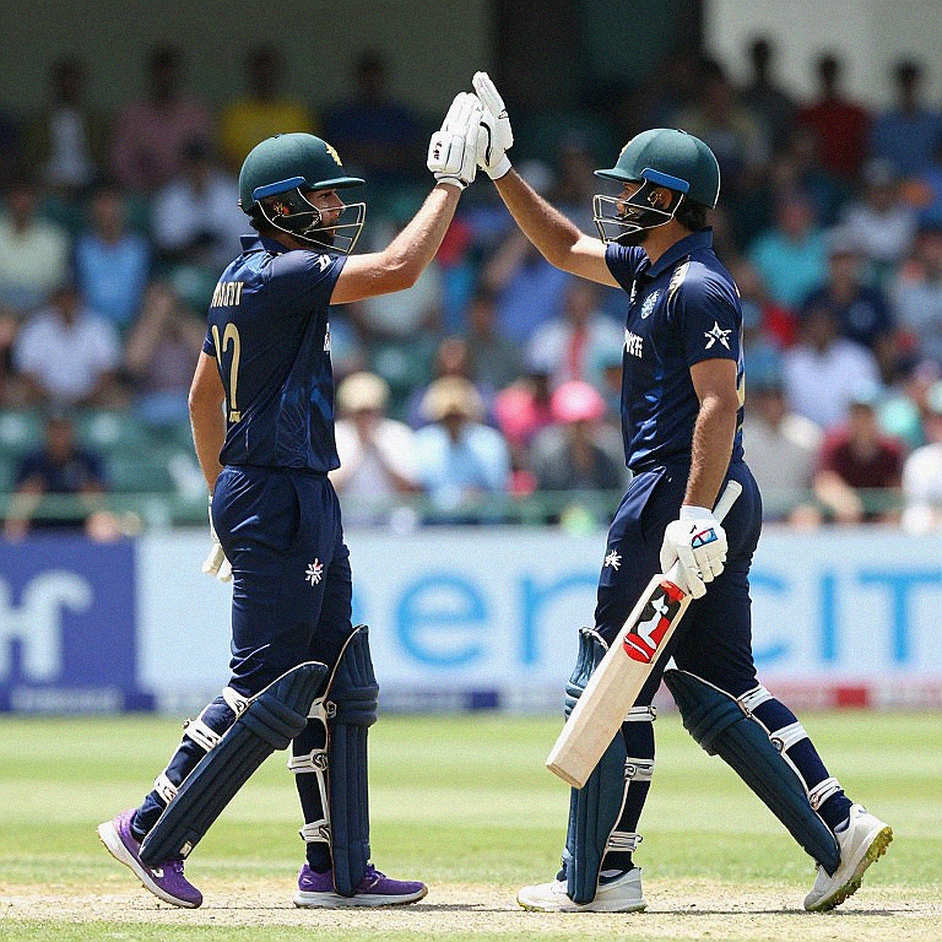
The ledger never lies, but the men who keep it do. The ICC rating is also a ledger, and last week the men presenting it left a few things out.
Understand the mechanics of the ratings first, or the headline gets misread. ICC player rankings are a weighted average — recent performances carry more weight, older ones decay. One thing people do not know: a player's points do not fall simply because he does not play. Ishan Kishan's 866 points were almost certainly unchanged; he went from first to third because two men climbed above him, Abhishek to 897 and Sahibzada Farhan to 883. The source report framed it as Kishan slipping to third after missing the second and third T20Is through injury. That sentence implies a penalty the methodology does not impose. It plants the idea that not playing costs you points. It does not.
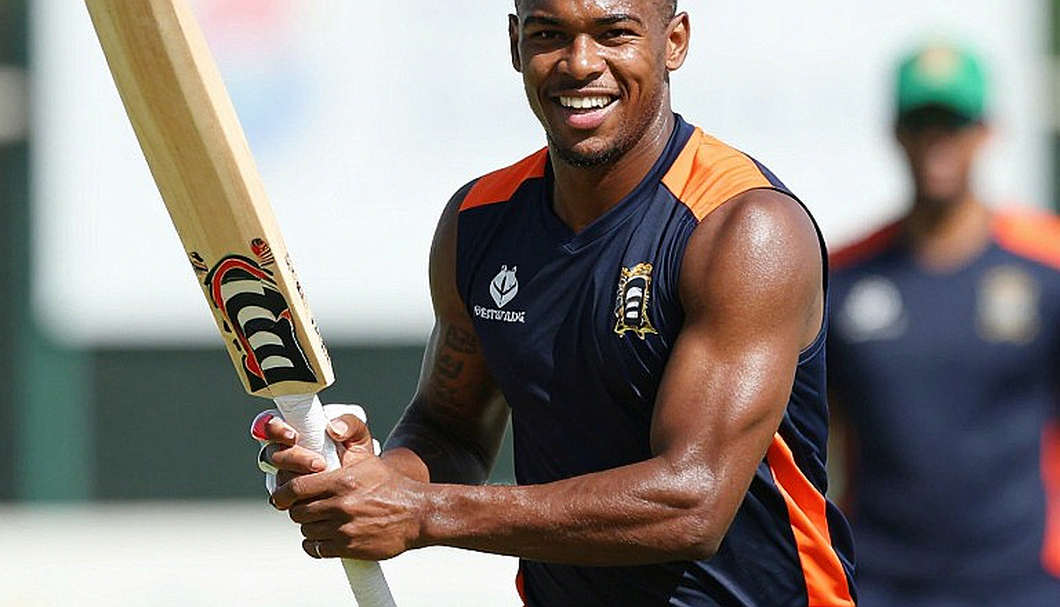
Which is why the lowest-information item in this round-up is the headline, and the highest-information item is Marco Jansen.
Three men inside thirty-one points is not a ranking, it is a coin toss. 897, 883, 866. The gap across the top three is 31 points. One poor innings or one forty-odd can reverse the order. Commentators who speak of "the world's No. 1 batter" as an established status are crowning a snapshot. Farhan is 14 points behind — one innings of separation.
A comparison helps here. In track and field nobody ever treated the world ranking as proof of being the fastest man alive; it is a selection tool, not a quality verdict. Swimming's FINA points are cleaner still — they scale performances, not people. Cricket is the only sport that turns a weighted average into a character certificate.
A fast bowler who also scores Test runs is the thinnest positional category in the game. Jansen tops the Test bowling table and the Test all-rounder table simultaneously, and has risen 13 places to 56th with the bat. That is rare because the bowling table rewards specialism while the all-rounder table rewards dual output. One man is balancing both at once, and his 85 with the bat at Gqeberha is part of that balance. A left-arm quick who contributes Test runs — there are four or five such people in the world. When the market's supply is that thin, the value is the most stable thing in the table.
Jadeja losing the all-rounder No. 1 is four years of accounting closing. He held that spot for more than four years. It is easy to file a single table change under "loss of form." A four-year continuity record outweighs any one series, and its end marks an era, not an injury.
Bumrah at fifth on 853 is not decline. Holding 853 points at fifth tells you the top of the Test bowling table is brutally compressed. A one-place move is noise. For a fast bowler on a managed workload, ranking movement is a fixture-count artefact at least as much as a form signal. A man who does not play every series tells you nothing about his ceiling through his points.
The captain is ninth, on 758. Shreyas Iyer has slid five places to ninth, 139 points off the top, in the same sentence that calls him India's T20I captain. What a franchise buys is never the player you see on the screen — it buys captaincy, availability, match-ups. Being national captain is also a purchase, and when its price does not match the table, the awkwardness should be recorded, not smoothed.
Nobody wrote about Wellington's wind. Sky Stadium is notorious for strong, gusting wind. Wind distorts a bowler's line and the rhythm of his run-up, which is why such venues historically favour the batting side's cross-batted and lofted options. The source did not mention the wind once. Venue bias has to be written in to size an outlier innings properly, otherwise the innings starts to look repeatable.
Why the women's tables are in this article at all is a separate question. Laura Wolvaardt has taken No. 1 in women's ODIs, with Smriti Mandhana second. In women's T20Is, Shafali Verma is third and Mandhana fourth. These are stories, but they did not belong in a piece headlined by a men's T20I. Within fifteen points a reader travels from a Wellington T20I to a Gqeberha WTC Test to a women's ODI table. Four different worlds. A reader who absorbs "No. 1" as a single global status has been misled by format adjacency.
Television amplifies this confusion every week. Calling the 2026 IPL off-tube from a Hyderabad studio taught me that the broadcast's job is not only to show the match but to decide what the viewer treats as important. The rankings graphic is the least honest part of that machinery — a large crown on screen, no methodology footnote beneath it. Some of the biggest moments in sport happen in a spare room with bad lighting; ICC rating computation happens in those rooms too, and it never gets a camera.
The real point is that the 38-ball innings is a ceiling, not an average. Abhishek's four T20I centuries are the durable evidence — multiple series, conditions and attacks. A strike rate of 297 is a tail event, and turning it into "he is now a 300-strike-rate player" is the classic error. An elite T20I opener's career strike rate sits around 140–155, an elite powerplay rate around 155–175. 297 is roughly double. Doubles do not repeat.
And here is the question the report cannot answer. Abhishek's ceiling is being established fast; his floor has not been tested. A low-scoring game, a seaming pitch, knockout pressure, the demand to bat eighteen overs at 130 — on none of these does the report carry a single data point. The absence is itself informative.
The most honest conclusion of this round-up is that there is no No. 1 in the top three, only three equal claimants. The series India play away over the next six months, on a seaming surface somewhere, will matter more to Abhishek than 897 points. Keep that ledger open now. The scoreboard is the least interesting document at any World Cup, and the rankings table is less interesting still. What is interesting is that one innings of 38 balls shuffled the order of three men's fortunes — which tells you how narrow the system is, not how large the player.