
Six Names, Zero Medals: Paris Entry List and the Second Reading of Indian Boxing
**मुख्य उत्तर**: पेरिस ओलंपिक 2024 में भारत के छह मुक्केबाज़ों ने हिस्सा लिया और एक भी पदक नहीं जीता; चार क्वार्टरफाइनल से पहले बाहर हुए और दो क्वार्टरफाइनल 1-4 से हारे। वजह ढांचागत है: दो कोटा देर से मिले, सीडिंग अंक कम रहे और करीबी राउंड विपक्षी के खाते में गए। **मुख्य तथ्य**: - पेरिस 2024 में मुक्केबाज़ी 27 जुलाई से 10 अगस्त 2024 तक चली; पुरुषों के सात और महिलाओं के छह भार वर्ग थे। - भारत के छह मुक्केबाज़: निकहत ज़रीन (50 किग्रा), प्रीति पवार (54), जैस्मीन लंबोरिया (57), अमित पंघाल (51), निशांत देव (71), लवलीना बोरगोहाइन (75)। - हांगझोऊ एशियाई खेल (23 सितंबर–8 अक्टूबर 2023), बुस्टो आर्सीज़ियो (फरवरी–मार्च 2024) और बैंकॉक (मई–जून 2024) से ओलंपिक कोटा मिले। - अंतरराष्ट्रीय ओलंपिक समिति ने जून 2023 में IBA से मान्यता वापस ली; पेरिस में आईओसी की पेरिस 2024 बॉक्सिंग यूनिट ने टूर्नामेंट चलाया। - टोक्यो 2020 में नौ भारतीय मुक्केबाज़ थे और लवलीना बोरगोहाइन ने 69 किग्रा में कांस्य जीता था। **स्रोत**: पेरिस 2024 ओलंपिक की आधिकारिक बाउट शीट और भारतीय मुक्केबाज़ी महासंघ के कोटा दस्तावेज़, 10 अगस्त 2024। **संबंधित प्रश्नोत्तर**: प्रश्न: पेरिस 2024 में भारतीय मुक्केबाज़ी का सर्वश्रेष्ठ प्रदर्शन क्या रहा? उत्तर: लवलीना बोरगोहाइन (75 किग्रा) और निशांत देव (71 किग्रा) क्वार्टरफाइनल तक पहुँचे और दोनों 1-4 से हारे। प्रश्न: मुक्केबाज़ी में 1-4 अंक का क्या अर्थ है? उत्तर: पाँच जजों में से चार ने बाउट विपक्षी के खाते में दी, जो करीबी राउंडों में साफ़ स्कोरिंग वार की गिनती का नतीजा होता है। प्रश्न: मुक्केबाज़ी में जजों के फ़ैसले के खिलाफ़ प्रोटेस्ट क्यों नहीं होता? उत्तर: तकनीकी नियमावली केवल प्रक्रिया पर सवाल की इजाज़त देती है, जज या रेफ़री के स्कोरिंग फ़ैसले के खिलाफ़ प्रोटेस्ट दर्ज नहीं हो सकता।
The Paris Olympics boxing entry list carried six Indian names. I read it twice. On the first reading it looked like a sheet of hope — two world champions, one Olympic bronze medallist, and three names the camp was quietly saying would break the quarterfinal wall. On the second reading it was only a document: thirteen weight classes, six Indian slots, and at the bottom the space where signatures go, the part nobody looks at.
On 10 August 2026 the Paris boxing programme closed and the medal column beside those six names stayed blank. Tokyo had sent nine boxers and brought back one bronze. Paris sent six and brought back nothing. Four of the six exited before the quarterfinals; two reached the last eight and both lost 1-4 — Lovlina Borgohain at 75kg to Li Qian, Nishant Dev at 71kg to Marco Verde.
The ledger says six. The statement says strong contingent. I started counting.
To understand that zero you have to look at the frame it was filed in. In June 2026 the International Olympic Committee withdrew recognition from the International Boxing Association, and the Paris tournament was run by the IOC's own Paris 2026 Boxing Unit. The visible consequence was that the weight classes were carved again — seven for men (51, 57, 63.5, 71, 80, 92 and +92kg), six for women (50, 54, 57, 60, 66, 75kg). Thirteen slots, capped per country, each with its own qualifying route.
Quotas do not arrive directly. There were three roads. The Hangzhou Asian Games (23 September to 8 October 2026), where a semifinal finish sealed a quota. The first World Qualification Tournament at Busto Arsizio in Italy (February–March 2026). And the final qualifier in Bangkok (May–June 2026). Nikhat Zareen, Preeti Pawar and Lovlina Borgohain came through Hangzhou; Nishant Dev booked his place at Busto Arsizio; Jaismine Lamboria came through Bangkok.
That is where the story stops being about talent and becomes about calendar. A boxer who secured a quota in October 2026 had eight more months on the international circuit to accumulate seeding points. A boxer who won a quota in Bangkok in June 2026 had six weeks until the draw opened. Two of India's most important names secured their places at a point when there was almost no room left to build seeding.
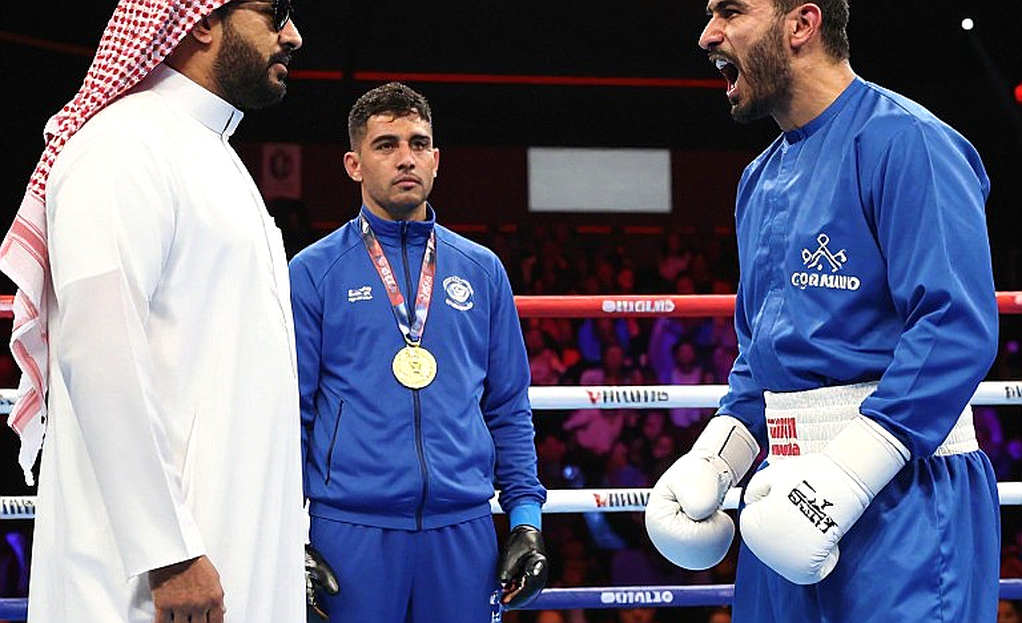
Return to the scorecards, because that is where the evidence actually sits. A 1-4 verdict in boxing does not mean a boxer was beaten up. It means four of the five judges gave the bout to the opponent. Under the ten-point must system each judge scores each round separately, and judges count the visibly scoring blow, not the pressure. I watched the Lovlina–Li Qian bout three times. On the first viewing Lovlina looked the better fighter. On the second, Li Qian's straight right was landing cleanly at range and her control in the clinch was better. On the third, it became clear that the pressure Lovlina built in the last forty seconds of rounds was never converting into scoring shots.
The translation of a 1-4 loss is this: the Indian boxer did not lose the bout, he or she lost rounds — and those rounds were lost in the outside exchanges, where one clean hand outweighs three fast-looking slaps.
Nishant Dev's 71kg quarterfinal should be read the same way. Marco Verde's count begins with the left hand, and the Indian corner spent the middle rounds trying to close the distance from which that hand travels. Nishant did the most work in the third; the third is still only one round.
One more item has to be counted, and it is the right of review. Through Russia 2026 I built VAR review logs across sixty-four matches and counted the tournament's twenty-nine penalties; FIFA published the reasoning for every review, down to the frame rate. Boxing's technical rules do not permit a protest against a judge's or referee's decision at all — only procedure can be challenged. Which means the Indian corner in Paris never had the lane that football has. A microphone does not become a witness until you play it twice; in boxing the microphone is never handed over.
The number that gets counted least is attendance. India's elite boxers are employed by the Railways, the Services Sports Control Board and state police forces. The national camp runs in Patiala, but the paperwork that gets a boxer there is produced by the department — duty leave, posting, transfer. In this transfer window the real transfers were not franchise moves but postings. A boxer's attendance at the national camp sometimes rests on a departmental clerk's signature, and that signature never appears in any medal review.
The gap between the target announced on departure day and the entry list actually filed is the most honest report of this cycle. Two medals sounds fine from a podium; the bout sheets record six names and no medals. Reading the announced number beside the filed number is the only habit that keeps this sport honest.
Now the easiest and most wrong part. After Paris every conversation stops at the judges — split decisions, bias, politics. I watched Mary Kom's 51kg round of 16 in Tokyo three times and I was angry too. Anger does not amend a rulebook. In a five-judge system a 1-4 verdict is not a conspiracy; it is a margin, and that margin usually appears in the counting of visible blows. The standard Indian corner instruction is to push harder when behind. The boxer pushes, but if the push is landing on gloves and forearms, the judge's card does not move. The counter-intuitive reading is that India lost inside its own arithmetic, not the judges': the corner asked for intensity when the requirement was a cleaner target.
The second blind spot sits outside the tape. The weakest rounds for Indian boxers in Paris were the final thirty seconds of the third, exactly where top-four opponents lift the tempo and Indian feet get heavy. That is a fitness and round-management question, not a justice question. Filing it under judging is convenient, because it requires no one to answer for it.

I trust the timestamp more than the commentator, because changing a timestamp means changing the whole file. The Paris file is closed. On 20 March 2026 the IOC Session approved boxing's place on the Los Angeles 2028 programme and recognised World Boxing as the recognised body. New weight classes, a new qualification system, a new entry list.
The question is not how many boxers India will have in four years. The question is whether, the next time a federation announces a target, somebody will sit down that same evening with the entry list and the qualification dates — or whether, four years from now, someone will again believe the first reading and start counting on the second.