
Dakar Youth Olympics: The Claim of Mosquitoes and No AC in Tanvi Patri's Room Rests on a Single Newspaper
डकार 2026 युवा ओलंपिक में भारतीय बैडमिंटन खिलाड़ी तन्वी पाटी (15) के कमरे में एसी न होने और मच्छरों की शिकायत का एकमात्र प्रकाशित स्रोत 《द टाइम्स ऑफ इंडिया》 की रिपोर्ट है, जिसमें उनके पिता रबीनारायण के बयानों का हवाला है; इसे Khel Now ने आगे प्रकाशित किया। IOC, डकार 2026 आयोजन समिति, भारतीय ओलंपिक संघ या भारतीय दल के किसी अधिकारी की ओर से कोई सार्वजनिक प्रतिक्रिया दर्ज नहीं है, और खिलाड़ी ने खुद सार्वजनिक रूप से कुछ नहीं कहा। डकार तटीय शहर है और नवंबर में वहां दिन का तापमान सामान्यतः 27-29 डिग्री सेल्सियस रहता है, इसलिए समस्या संभवतः 'गर्मी' से अधिक बिना हवादार कमरे, नमी और मच्छरों से जुड़ी है — पर इसका भी स्वतंत्र सत्यापन नहीं हुआ। रिपोर्ट में ग्रुप चरण के प्रतिद्वंद्वी ऑस्ट्रेलिया, मेक्सिको और दक्षिण कोरिया बताए गए हैं, जबकि 'सेमीफाइनल में जापानी खिलाड़ी' का दावा बिना नॉकआउट ब्रैकेट के दिया गया है। 'स्वर्ण पदक निशाने पर' वाला वाक्य खबर के अपने तथ्यों (विश्व जूनियर चैंपियनशिप में 16 के दौर में हार, बीमारी, कठिन ब्रैकेट) से मेल नहीं खाता। सबसे अहम अनदेखा सवाल यह है कि 15 वर्षीय खिलाड़ी ने लगभग छह हफ्तों में तीन अंतरराष्ट्रीय आयोजन (एशियाई खेल, मिस्र में विश्व जूनियर चैंपियनशिप, डकार युवा ओलंपिक) खेले, बीच में बीमार रही — यह जूनियर एथलीट लोड प्रबंधन का मुद्दा है। 1 नवंबर की शुरुआत की तारीख, आयोजकों की सुविधा-प्रतिबद्धता, समस्या का दायरा और खिलाड़ी की पात्रता/उपलब्धियों का स्वतंत्र सत्यापन अभी बाकी है।
Dakar, Senegal: The dispute over the accommodation of India's 15-year-old shuttler Tanvi Patri at the fourth Youth Olympic Games has conflated two separate questions. The first is what conditions athletes are actually living in at Dakar and what the organisers are accountable for. The second is how reliable the information now circulating about those conditions is. Both questions are legitimate, but they cannot be answered while they are treated as one. If the second is ignored, the first will never get a fair answer.
As things stand, the only published source for the specific claim that Tanvi's room has no air conditioning and suffers from mosquitoes is a report in The Times of India, which attributes the information to her father, Rabinarayan. That report was subsequently carried by the sports website Khel Now. By the time the claim reached most readers, it had passed through at least two sets of hands. That is not a trivial detail. When the only factual basis for a claim is a single source, and that source is an interested party to the situation, what exists is not a verified fact but an allegation awaiting independent confirmation.
No such confirmation has been published. Neither the International Olympic Committee (IOC), nor the Dakar 2026 organising committee, nor the Indian Olympic Association (IOA), nor any official of the Indian delegation has issued a public response. Tanvi Patri has not spoken about the matter in public herself. No other national delegation has registered a similar complaint on record. No photographs, no temperature records, no copies of an official complaint and no independent account of the room conditions have surfaced.
This does not mean the problem is imaginary. It means that at this point no one can say how large the problem is, how many rooms it affects, or who is responsible for fixing it.
The architecture of the report and where it slips
The most-quoted element of the original report — the room without AC and the mosquitoes — was not the lead of the story in which it first appeared. It became the hook later. In the Khel Now version, the language itself betrays the weakness of the evidence. The report says the difficulties 'appear to have surfaced' and that the troubles of Indian athletes 'do not appear to be ending'. These are not chance formulations. They are the vocabulary of a reporter who does not have solid facts and is quietly signalling that limitation while still publishing.
A second problem is that the report never makes clear who is actually speaking. It states that Tanvi has spoken about the challenges, but the substantive details that follow all come from her father. The reader is left unsure whether the athlete briefed the newspaper directly or whether her father spoke on her behalf. In journalism, attribution is the foundation of the structure. A direct account from the athlete is testimony. An account from a parent is an assessment by a stakeholder. Merging the two into one sentence and leaving the reader to work out which is which undermines the credibility of the whole report.
The weather question: easy to say 'hot', hard to prove
The report repeatedly uses phrases such as 'very hot' and 'high temperatures' but supplies no temperature data anywhere. This matters, because Dakar is a coastal city and November is among its cooler and most comfortable months. On the basis of standard climate figures, daytime highs in Dakar in November are typically around 27 to 29 degrees Celsius, with night-time lows near 20 to 21 degrees. Rainfall is negligible. This is not a period that would fairly be described as extreme heat.
The real problem, if one exists, is therefore probably not heat. It is more likely to be the absence of air conditioning, poor ventilation, high coastal humidity, and conditions favourable to mosquitoes. If the complaint is framed as 'heat', an official can dismiss it by pointing out that 28 degrees is not a heatwave. If the complaint is framed as 'poorly ventilated rooms that make sleep difficult, with mosquitoes', the question goes straight to the organisers' obligations and to what they promised. Precise causal description is therefore not a matter of style. It is a matter of accountability, and it is exactly where the original reporting slips.
The report also never clarifies whether the conditions affect one room, one block, or the whole athletes' village. That distinction carries a great deal of weight. If the problem is systemic, the question goes to the host committee's budget and promises. If it affects some rooms, the question goes to allocation and management. If it is confined to one athlete's room, the question goes to the complaints mechanism. A single source cannot distinguish between these three scenarios.
What the Youth Olympic Games are, and why the Dakar edition matters
Some context is necessary. The Youth Olympic Games are held for athletes aged roughly 14 to 18 and began in Singapore in 2026, followed by Nanjing in 2026 and Buenos Aires in 2026. Dakar was awarded the fourth edition, making it the first Olympic event ever staged on the African continent, which is significant in itself. The Games were originally scheduled for 2026 and were pushed to 2026 because of the COVID-19 pandemic. That long delay has had consequences for preparations, budgets and infrastructure.

It is also worth placing the Indian team's year in this context. The Asian Games in Aichi-Nagoya ran from mid-September to early October, and during that event too there were public complaints about the accommodation and travel arrangements for the Indian contingent. Now similar complaints are emerging from Dakar. That has encouraged a 'continuous suffering' narrative in some coverage — as though Indian athletes are mistreated every time they travel abroad. The frame is emotionally appealing and analytically dangerous, because it lumps together separate problems with separate causes and prevents any of them from being properly investigated.
Who Tanvi Patri is
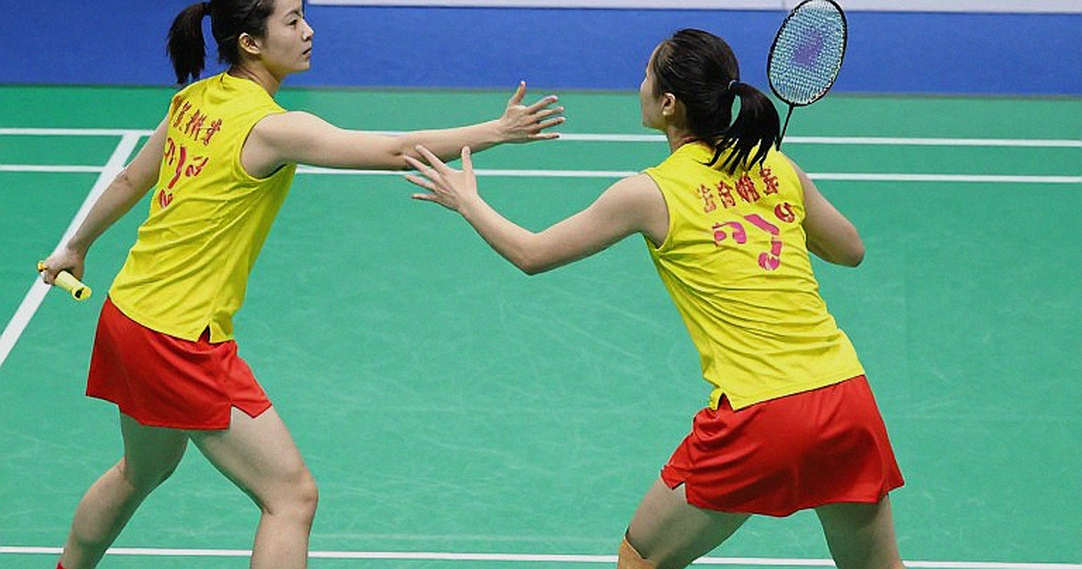
Tanvi Patri is a rising Indian badminton player, reported to be 15 years old. Available information suggests she has performed well on the Asian junior circuit and has won matches at senior national level. Honesty is required here: no detailed, verified account of those achievements is publicly available. Which tournament, which year, against whom, at what score — none of it is supplied. The report uses phrases such as 'Asian U-17 title' and 'success at the senior nationals' without elaboration. This is common in stories that need to establish a young athlete as a rising star: achievements are listed in shorthand even when the full details are not on the editor's desk.
Her age matters for a specific reason. The Youth Olympic Games apply sport-specific age criteria, and badminton's rules may differ from those of other sports. If she is 15 she would ordinarily be eligible, but this has not been independently confirmed in public. It is one of several details that should be checked against the official entry list.
Three international events in six weeks: the question nobody asked
The most important point in this whole affair is also the least asked. If the available information is placed on a single timeline, the picture is this: the Asian Games from mid-September to early October in Aichi-Nagoya; then, in October, the BWF World Junior Championships in Egypt, where she went out in the round of 16 and was also ill; then the Youth Olympic Games from 1 November. That is three major international events in roughly six weeks, involving long-haul travel, different time zones, different climates and an illness in between.
For a 15-year-old, that is a substantial physical and mental load. Adolescent athletes recover more slowly, carry a higher injury risk and show the effects of fatigue directly in performance. Basic sports-science principles call for load management around such a schedule: reduced training volume, attention to recovery and medical supervision. Nowhere in the coverage is it explained how her training and recovery were managed between these events. How many days did she have between the illness and arriving in Dakar? Was any reported testing done? Was a medical panel travelling with her? None of these questions is answered.
That is a bigger story than the air conditioning, because it can be verified. Tournament dates, travel dates, match schedules and medical records can be placed side by side. The original reporting instead elevated the detail that is hardest to verify. This is the most common failure in sports journalism: the easy detail is picked up and the important one is dropped.
Egypt, the World Junior Championships and the haze around them
The report states that Tanvi was ill during the BWF World Junior Championships in Egypt and lost in the round of 16 there. That is significant, but several interlinked claims require verification together. First, where and on what dates the World Junior Championships were held is not clearly stated. Second, the nature of the illness and its duration are not described. Third, the opponent she lost to is not named. Fourth, the name of the women's singles champion at that tournament is mentioned, along with the claim that the same player is among her likely rivals in Dakar. These claims are connected: if any one of them is wrong, the structure built on them becomes unreliable.
To be clear, none of these points has been independently confirmed. They appear in the report without supporting documents, without an official entry list and without a tournament record. A reader cannot tell which elements come from the father's assessment and which are independently known.
The group stage and the 'Japanese semi-final opponent' claim
The report states that Tanvi's group-stage opponents will be players from Australia, Mexico and South Korea. That is relatively solid because group composition is official and can be checked. The report then says she may face a Japanese opponent in the semi-final. This is where the problem lies: the route from the group stage to a semi-final runs through a knockout bracket, and no bracket is shown. Which quarter she is in, who stands where, who she would meet in each round — none of it is laid out.
The result is that the Japanese semi-final claim is a conclusion without visible evidence. It may be correct, based on the draw. But a reader cannot verify it. This is precisely what journalism calls a leap of conclusion: when a prediction or assessment is presented as a fact without the basis for it being shown.
It is also worth noting that the Japanese player is not named. In international badminton, junior women's players are usually easy to identify from the tournament list. The reluctance to name her suggests the information may come from verbal expectation rather than from the draw itself.
'Gold in her sight' and the contradiction it creates
The weakest element in the report is the line suggesting that Tanvi has the Youth Olympic gold medal in her sights. It does not match the rest of the story. Line up the facts that the same report supplies: a round-of-16 exit at the World Juniors, an illness immediately afterwards, a group featuring players from three different continents, a difficult probable knockout path and a potential final opponent who is the reigning world junior champion. Against that list, the gold-medal framing is an editorial flourish, not a fact.
The gap looks small on the page but has a large effect. Serious sports readers — the ones who check tournament records and draws themselves — start doubting the whole report when they encounter a line like that. It is not wrong to write about hope. It is not wrong to praise a young player's talent and preparation. What is wrong is dressing praise as fact and then listing risks that contradict the praise.
The same flaw appears in the opening of the piece, which states that the troubles of Indian athletes 'do not appear to be ending'. That is an explicit editorial comment, not neutral reporting. Calling it neutral is also misleading because the story places the father's expressions of confidence inside the same frame as a way of 'balancing' one-sided complaints. That does not produce balance in practice; it reinforces the narrative of courage in adversity. In journalism this is a frame, and the frame needs to be kept apart from the facts.
The silence on the other side is also part of the story
On one side of this episode is the father's voice. On the other side there is no official voice at all. That absence should itself have been reported. The first question is what facilities the Dakar 2026 organising committee undertook to provide. If organisers promised air conditioning and it was not delivered, that is a breach and a significant story. If no such promise was ever made and the facility was never on the list, the question changes: how were athletes prepared for those conditions and what mechanism existed to hear their complaints? The two scenarios lead to entirely different lines of accountability. The original reporting does not raise the question at all.
There has been no public response from the Indian Olympic Association or from delegation officials either. It is understandable that officials may not want to speak during a live tournament, but beyond the fact that the report does not quote them, no further meaning should be read into their silence. An honest report would have stated that the IOA and the organisers could not be reached, or did not respond. It is a short line, but it tells the reader where the information came from and where it did not.
Is this one report's problem, or a habit?
It is worth asking why one outlet carried another's story without independent verification. The answer is economic and structural. Sending a correspondent to check a room in Dakar is expensive. Calling organisers, requesting official documents and speaking to journalists from other countries all take time and resources. Taking a published story and rewriting it is cheap and fast. This is not the failure of a single website; it is a problem across the digital sports journalism ecosystem, where verification is the first thing dropped in the race to publish.
The danger is that when the same weak story appears in many places, readers conclude that it must be right because it is everywhere. This is circular reporting. The information then travels to social media, from there to television panels, and a claim made on a panel returns the next day as fresh reporting somewhere else. At no point in that cycle does anyone check what the original source was.
What should have been asked
An independent and careful report would have pursued these questions in this order. First, whether the badminton competition at the Youth Olympic Games really began on 1 November, since that date is the spine of the whole story. Second, what facilities the organising committee formally committed to provide, requested as documents. Third, whether the lack of air conditioning affects one room or the whole village, which could have been established through a small sample survey. Fourth, the dates and venue of the World Junior Championships, checked against the official calendar. Fifth, Tanvi's age and eligibility, checked against the official entry list. Sixth, a precise record of her earlier achievements — year, event, score — which a few minutes of searching would have produced. Seventh, the knockout bracket, to support the claim about a Japanese semi-final opponent. Not one of these was pursued.
The most important missing question, however, is how a 15-year-old came to compete at three international events in six weeks, fell ill in the middle of them, and returned to court. That question is less emotionally compelling than mosquitoes, but it is factually solid and its answer lies within the system.
Where Tanvi actually stands
The verified factual base for Tanvi's Dakar campaign is thin. She is reported to face players from Australia, Mexico and South Korea in the group stage. Australian and South Korean junior programmes are not weak, so even advancing from the group should not be assumed. If she does advance, the knockout path will be hard, and in this age group every opponent gets stronger round by round.
She does have a quality that the coverage mentions in passing: she is known for aggressive play and long-range shot-making, and senior-level match wins are meaningful at her age. But that argument cuts both ways. A player who has competed at three events in six weeks is no longer inexperienced, but she is also tired, and illness compounds that. Any real assessment will have to wait for the first match: how she moves, how much energy she has in long rallies, how her scoreboard looks. Until then, writing that gold is in her sights, or stressing title expectations even while hinting at illness, goes beyond what the reporting can support.
Where this story should go next
One thing should be conceded plainly: mosquitoes and the absence of air conditioning can be a genuine problem, and for a 15-year-old it is not a small one. A bad night's sleep shows up directly in the next day's match. Nobody is claiming the complaint is false. The claim is that it should be investigated before it is treated as fact, and the route to that investigation runs through the organisers, the Indian delegation and the international federation. That work has not been done.
A healthier debate would rest on four pillars. First, an official account of the event's basic facilities and the record of what was delivered. Second, a clear statement from the Indian delegation on how many athletes complained about what, and how it was resolved. Third, the experience of other delegations, which would show how widespread the problem is. Fourth, and most importantly, the system for managing junior players' schedules and recovery — whether Indian badminton has any process for deciding how many events a teenager plays in a season and how much rest sits between them.
That fourth question matters most because it is not the failure of one event. It is a failure of the system. A 15-year-old moving from the Asian Games to the World Junior Championships to the Youth Olympic Games inside six weeks, falling ill along the way and returning to court almost immediately, should not be described as normal. If it is happening, then who decided it, on whose advice and on whose responsibility should be public.
Report versus campaign
There is a lesson here that bears repeating. Being sensitive and being sensational are different things. Taking an athlete's difficulties seriously is good journalism. Turning those difficulties into a large political story without verification is bad journalism, because on the day a real problem arrives, nobody will believe it. In this case, the mosquitoes and the missing AC were pushed to the front while nobody checked them. That creates the very risk it seems to avoid: today the story is everywhere, and if it turns out to be thin, the next genuine complaint will be taken less seriously because of it.
The 'gold in her sight' line does similar damage. Indian sports fans want to support Tanvi, and what they want to know is where she actually stands, what pressure she is under and whether she is being looked after. None of that requires declaring her a winner in every article. Sometimes the most respectful reporting is simply the truth: she is 15, she has played three events in six weeks, she has been ill, a complaint about her room has been made but not officially confirmed, and her next match will not be easy on any reading. That account is stronger than any flourish.
Meanwhile, the badminton in Dakar continues. As group results come in, the picture will sharpen: how she is actually playing, how her fitness holds, and whether she is at the level that has been claimed for her. Until then, the mosquitoes should be reported as a question, not a conclusion. When the organisers speak, when the Indian delegation speaks, when another athlete or delegation comes forward, the debate will have the foundation it currently lacks. Until then this is a complaint that deserves to be taken seriously — but not written up as a verdict.
And the question that can be asked right now is when Indian badminton will adopt a clear tournament-load policy for junior players. That question has nothing to do with Dakar's weather, mosquitoes or air conditioning. It is about accountability. Whenever a 15-year-old returns from playing on three continents in six weeks, it should be asked. Whether or not her room had AC.