
Badminton's Full Ecosystem: Tournaments, Technique, Rules and Industry — A Deep Analysis
बैडमिंटन की पूरी संरचना पांच स्तरों के टूर्नामेंट लैडर (सुपर 100 से सुपर 1000, विश्व चैंपियनशिप, वर्ल्ड टूर फाइनल्स, ओलंपिक और थॉमस/उबर/सुदीरमन कप), तीन तकनीकी शैलियों (रैली-नियंत्रण, पावर, गति), तीन कोचिंग मॉडल (चीन का केंद्रीकृत, जापान का कॉर्पोरेट, डेनमार्क का व्यक्तिगत), 21-अंक रैली-स्कोरिंग और 1.15 मीटर सर्विस-ऊंचाई जैसे नियमों, और एक असमान वाणिज्यिक पारिस्थितिकी तंत्र पर टिकी है। कोई भी बैडमिंटन परिणाम तब तक पूरी तरह समझा नहीं जा सकता जब तक उसे इन संरचनात्मक आयामों के संदर्भ में न देखा जाए — किस स्तर पर, किस स्थिति में, किस शैली और किस प्रणाली के अंतर्गत वह परिणाम आया। यह रिपोर्ट किसी एक मैच या खिलाड़ी के विशिष्ट परिणाम का दावा नहीं करती, बल्कि खेल के संरचनात्मक ढांचे का विश्लेषण प्रस्तुत करती है।
Introduction: A Sport Outrunning Itself
When we speak of the fastest racket sports in the world, badminton cannot be absent from the conversation. An international-standard shuttlecock leaves the racket at speeds recorded above 400 km/h — a velocity that leaves the tennis ball far behind. But speed alone is not the story. Badminton's real story lies in its ecosystem: a five-tier tournament ladder, three major families of playing styles, a defined map of physical-injury sites, three entirely different institutional coaching models, and a commercial structure that looks simple on the surface but in reality decides the sport's professional future.
This report is not about a single match, a single tournament result, or any particular player's recent form. It is a structural analysis — of the dimensions that underlie every badminton report. Without understanding these dimensions, any sports report remains incomplete, whether it is Olympic-medal news or a Super 1000 final analysis.
Dimension One: The Tournament Ladder — From Super 100 to the Olympics
Badminton's professional structure rests on a clearly tiered system. The BWF World Tour has five main tiers — Super 1000, Super 750, Super 500, Super 300 and Super 100. These tiers are not just names; they directly set three things: the scale of ranking points awarded, the order of magnitude of prize money, and most importantly — the quality of the field.
Understand it this way. Winning a Super 100 tournament and winning a Super 1000 tournament — weighing both on the same scale would be the greatest analytical error. A Super 1000 inevitably features the world's top players, whereas a Super 100 often sees emerging players, qualifiers and less experienced competitors. So citing that "someone won a title" is not enough — the question is at what tier the title was won, and who was present at the time.
Above these sit three special events. The World Tour Finals — for the season's top-eight-ranked players. The World Championships — where each nation sends its best. And the Olympics — whose importance exceeds any ranking points because there history is written, not points. Beyond these are the team events — the Thomas Cup (men), Uber Cup (women) and Sudirman Cup (mixed team). All three formats differ entirely: Thomas and Uber are best-of-five team ties featuring three singles and two doubles, while the Sudirman Cup is played with a group stage in which three match wins are needed to take the tie.
This structure carries an implication often overlooked: a specific tier means a specific kind of pressure. A Super 300 title can be career-building for a young player, but for a top-10 player the same title is nearly neutral in ranking terms. Hence, more important than "who won" is "who won, in what context, and what was at stake."
Dimension Two: Technique and the Three Style Families
At the technical level, badminton has no single path. Years of analysis have identified three main style families: the rally-control style, the aggressive/power style, and the speed style.
Rally-control players control the shuttle — they do not rush points, they extend rallies, change angles, and force opponents into error. This style demands patience, delicate wrist control and excellent footwork. Aggressive power players weaponise the smash — they attack at high pace and try to end rallies quickly. Speed-style players are quick in transition — they switch from defence to attack instantly and give opponents no time to think.
A subtle point here that both coaches and analysts must grasp: every style has a clear "counter-style" that challenges it. That is why a player's career depends on how far they can advance their style, and when they take the risk of moving beyond their original style. If a style is scarce — meaning only a few players on tour play it — the odds of success are higher. But once rivals read that style and find countermeasures, the edge of scarcity disappears.
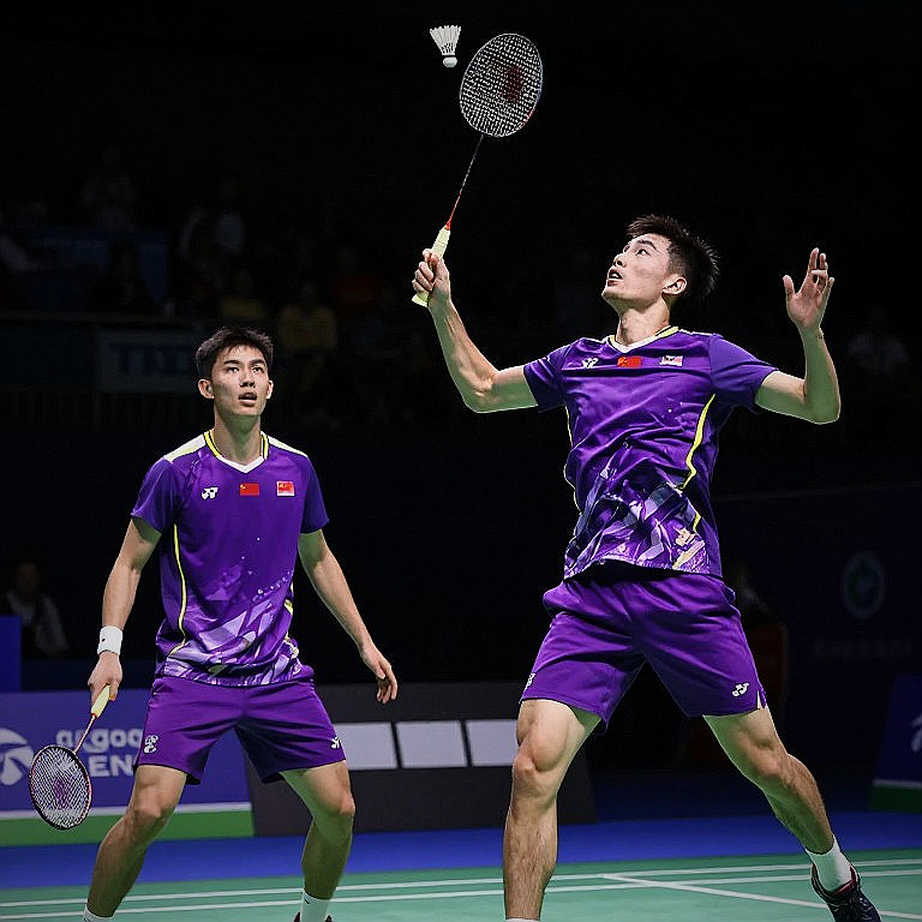
There is also a systematic method for identifying technique. Analysing the first three shots — serve, return, and third shot — is decisive in doubles because it determines who seizes the initiative. Net-spin quality, front-and-back rotation, side-by-side defence — these are all clear technical indicators that are often missed in match reports.
Dimension Three: Physical Demands and Injury Risk
Badminton's physical profile is defined by its speed, and so is its injury risk. This is not a long-distance running sport; it is a sport of explosive footwork — dozens of times pivoting from one corner of the court to another, stopping, then accelerating again. This is why the most frequent injuries in badminton occur in the patellar tendon (front of the knee), the meniscus, the lumbar disc (lower back), the rotator cuff (shoulder), the ankle and the Achilles region.
For a player it is essential to know what their style demands of their body. A smash-based aggressive player carries more load on the shoulder and wrist. A speed-based player faces primary risk areas at the ankle and knee. A control-based style involves heavy footwork, so pressure falls on the knees and back.
The age curve matters too. Where a younger player holds an edge in speed and recovery, after about 27–28 a player often transforms their style into a more controlled, less explosive form — a biological adjustment, not a weakness. Those who navigate this transition successfully stay at the top longer.
Dimension Four: Talent Development and Career Phases
Viewing any player's career through a three-to-six-month window is a standard analytical method, but it is incomplete unless tournament-tier quality is filtered out. As noted earlier — a Super 100 title and a Super 1000 title are not the same. So when examining a player's form curve, every result should be "weighted" by its tier.
In career-phase determination, alongside age, the progression matters: the emergence phase, the peak phase, the transition phase and the veteran phase. Each phase requires different preparation, different strategy and different tournament selection. For an emerging player, playing more tournaments and accumulating points is sensible; for a player at peak, focusing on selective Super 1000 events and championships while protecting the body is more prudent.
Alongside this, it is essential to understand the continuously rotating cycle of ranking points. Ranking points are counted in a sliding 52-week window — old points expire and new ones accumulate. This means every player must play a certain number of tournaments a year to prevent their points from falling. This is called "points-defence pressure." An injured player who cannot compete for a few months can see their ranking fall fast, which is why the BWF created the "Protected Ranking" mechanism — allowing a ranking to be held stable during a long injury absence.
It is equally important to distinguish which ranking is being discussed: BWF World Ranking, Olympic qualification ranking, or season-race standings. Each is based on different calculations and carries different meaning. Olympic qualification counts only certain designated tournaments, while the world ranking counts all. So saying "he is at the top" is incomplete unless it is added — in which ranking.
Dimension Five: Coaching and Support Systems — Three Models
The biggest difference between the world's top badminton nations lies in their training models. This difference is not merely administrative — it directly affects a player's capacity and career direction.
First is China's centralised training system. The national team lives together, trains together and stays in one facility. The advantages are clear — access to world-class sparring partners, all support staff in one place, and very high-level internal competition. There are downsides too — less individual autonomy, limited freedom for a player to choose their style, and sometimes a player's interest can clash with the team's.
Second is Japan's corporate-team model. Here a player is part of a company team — playing for, say, a large corporation's team. This model offers security: salary, employment stability and training resources. But it ties a player to the company's priorities, and their international participation is sometimes affected by the corporate calendar.
Third is Denmark's individual-professionalism model. Here a player is largely independent, chooses their own coach, chooses their own training base and sets their own priorities. This model offers more autonomy, but access to resources can be uneven — some players assemble excellent teams, others lag behind.
Comparing these three models, one point is clear: no model is universally better. Success depends on how well a player's individual needs match the model. A player who needs individual freedom may chafe under centralisation, and a player who needs clear structure may drift in the individual model.
In the doubles context, an additional dimension appears — the pairing decision. In badminton, doubles pairs are often assembled administratively, not self-selected by players. Hence, in coaching analysis, "pairing decisions" carry perhaps the greatest weight — a single decision can redirect an entire career. Two excellent singles players paired together do not necessarily make an excellent doubles pair — coordination, mutual understanding and footwork synchrony matter more than any individual skill.
Dimension Six: Rules, Authority and Compliance
Badminton's regulatory framework rests on the BWF Laws of Badminton, without understanding which match analysis is impossible.
The current scoring system is rally-based — a point is scored every serve or return, whether by the server or receiver. A match is best of three games to 21. At 20-20, a two-point lead is required, but after 29-29 the 30th point is decisive. This system was introduced to replace the previous serve-based system, and it has made the game faster and more television-friendly.
The service rule has been the focus of recurring controversy. Under the current rule, at the moment of serving the shuttle's contact point must not exceed 1.15 metres from the floor. Previously this rule referred to waist height, but the new rule provides an explicit metric. Even so, service-height decisions have often been contentious because measurement depends on the umpire's judgement.
For technological assistance there is the Hawk-Eye challenge system, in which each player receives a limited number of challenges and, on an incorrect challenge, loses one. This mechanism adds both fairness and strategy — the player must think about when to challenge.
Beyond these are the time-wasting card system — yellow warnings, red cards and black cards (equivalent to removal from the match). On-court conduct, punctuality and respect for umpires all carry their own regulatory framework.
At the institutional level there are four separate regulatory domains that should be viewed distinctly: BWF's sporting rules, world-ranking point rules, the Olympic qualification system, and national associations' selection rules. A breach of any one creates a different kind of risk and demands a different kind of response. In addition, the WADA anti-doping code also applies, compliance with which is mandatory for all professional players.
Dimension Seven: The Global Landscape and Balance of Power
Badminton's global landscape is structured differently across its five disciplines (men's singles, women's singles, men's doubles, women's doubles, mixed doubles). When assessing any nation's strength, it is essential to distinguish which discipline is being discussed.

Traditionally China holds a vast and deep talent base — several players at the top-16 and top-32 levels, making internal competition extremely intense. This internal competition is a double-edged sword: it makes players mature quickly, but can also break them. Japan's corporate-team model, by contrast, offers a different kind of systemic advantage — stability and long-term investment. South Korea's identity is its doubles tradition, especially in mixed doubles. Indonesia is known for its deep men's doubles culture. Malaysia has historically relied on a single star — one or two exceptional players carrying a nation's expectations. Denmark is the centre of European badminton and the exemplar of individual professionalism.
Beyond these nations, India, Thailand, Chinese Taipei, Hong Kong and others have strengthened their presence over the past decade or two. This global landscape is no longer a unipolar world — it has become multipolar, with contenders in every discipline.
Three criteria are useful in analysing this landscape: world ranking, talent depth and systemic resources. Ranking shows where a player is now, depth shows how long a nation will stay near the top, and resources show what kind of future a nation is building. A nation with one brilliant player but no depth will only remain at the top for that player's career. A nation with depth but no resources may fall behind over the long term. So viewed in the long run, resources and systems are what decide.
Dimension Eight: Industry and Commercial Ecosystem
Badminton's commercial side lags behind its potential in several respects. The prize money at Super 1000 level is a fraction of a tennis Grand Slam's. This is a structural fact that limits the sport's professional future — for most players, badminton is a career where, despite excellence, financial security is not guaranteed.
At the equipment-brand level, three big names hold their positions. YONEX is traditionally the largest and oldest player, LI-NING's orientation lies in its association with Team China, and VICTOR has risen rapidly in recent years. Player-signings, tournament sponsorships and product lines are an industry in their own right.
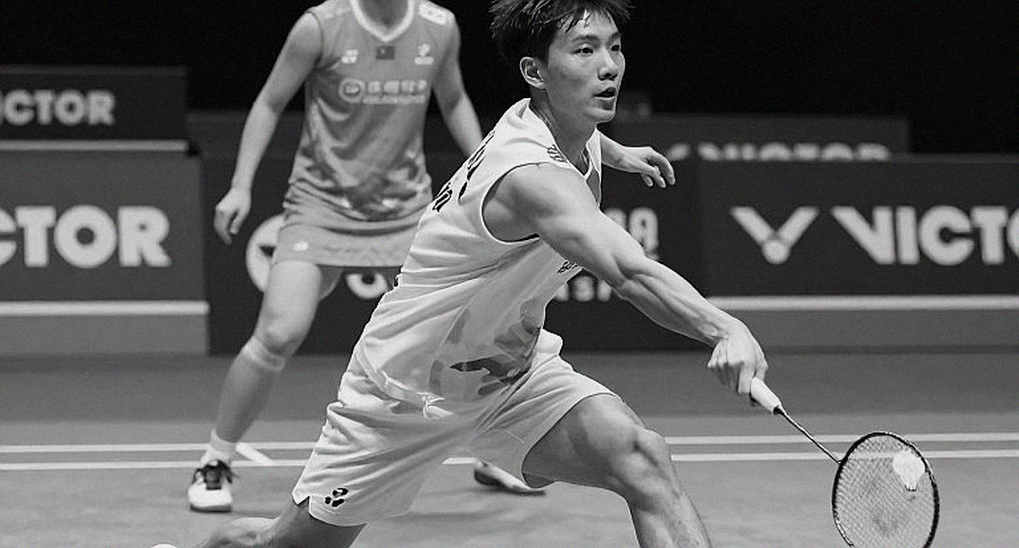
Regional markets are also unevenly distributed. In Southeast Asia, badminton is a kind of cultural inheritance — Indonesia, Malaysia and Thailand have very strong spectator bases. In China, participation numbers are very high but the professional viewing audience is relatively limited. Denmark is the centre of the European market. India and the Middle East show signs of growth.
The biggest challenge of this ecosystem is that its development is not unidirectional — equipment brands, tournament organisers, broadcast rights, domestic leagues and fan bases all depend on one another. If one dimension shifts — a major brand's investment rising, a tournament's tier rising, or broadcast-right values climbing — the impact ripples through the whole system.
Dimension Nine: Narrative and Expectation Management
In media and fan perception, badminton often becomes a narrative-driven sport. "A new star has emerged," "the heir to the throne has been found," "the comeback story," "the farewell tour" — these narrative labels are attractive but also dangerous.
The biggest risk is the "champion halo" — declaring a player a future superstar on the strength of a single title, when that title was won on a weak field. A Super 100 title is a significant achievement for an emerging player, but it cannot be equated with a top-10 player.
To measure the gap between expectation and reality, three criteria are useful: the player's results, the tournament landscape, and the outlook toward major events (such as the Olympics). When the level of social-media discussion far outruns actual competitive performance, that is a signal of a bubble — and bubbles burst.
Viewed through the Olympic cycle, a new narrative forms every four years — the qualification period, the Olympic year, and the "digestion" phase after. In each phase, the nature of pressure on players changes. In qualification, the pressure to accumulate points; in the Olympic year, performance pressure; and afterward, the pressure of fatigue and rebuilding.
Dimension Ten: The Risk Surface
For any player or team there are seven major risk areas, and they should be examined systematically.
First, injury risk — as noted, in badminton the knee, back, shoulder and ankle are the primary injury sites. Second, competitive risk — a pattern of losing to a particular rival's style. Third, ranking/qualification risk — points expiring or missing qualification. Fourth, personnel-structure risk — injury, form decline or team changes. Fifth, rules/discipline risk — a rule breach or controversy. Sixth, public-opinion/commercial risk — impact on reputation or sponsorship. Seventh, systemic risk — changes in association policies, selection process or resource allocation.
Some of these risks are "silent" — often missed in routine analysis. For instance, reaching the finals of several consecutive tournaments can cause schedule overload, which looks like success but can be ruinous for the body. Similarly, a player competing in both doubles and mixed doubles carries a double load, the effects of which appear late in the season. A form decline after a major event is also a common pattern that should be taken seriously.
Conclusion: Results Cannot Be Understood Without Understanding Structure
Badminton is a sport whose surface looks simple — two players, one shuttle, one court. But beneath that surface lies a complex tournament ladder, three families of technique, a map of physical risk, three different institutional coaching models, a multi-layered rule framework, a shifting global balance of power, and a commercial ecosystem that has not yet reached its full potential.
The purpose of this report is to make clear that any badminton news is incomplete until it places these structural dimensions in context. "Who won" is a fact, but "why they won, at what tier, in what situation, and what happens next" — that is the real analysis. And that analysis is possible only when we understand the sport's full structure, not merely the scoreboard.
Badminton's future is bright, but that brightness depends on the strength of its structure — the fairness of rules, the continuity of talent supply, the quality of coaching systems, the seriousness of injury management, and the direction of commercial development. The nations or players who take these structural factors seriously will be the ones ahead in the long run. Those who look only at the scoreboard will find themselves behind it next time.