
Ticket demand for India-Pakistan match higher than the World Cup final: over 120 million applications for 2027 ODI World Cup
**सार:** 2027 पुरुष एकदिवसीय विश्व कप के टिकटों के लिए 12 करोड़ से अधिक आवेदन दर्ज हुए हैं (3.2 करोड़ से अधिक मैच-स्तरीय पंजीकरण)। **मुख्य तथ्य:** 10 अक्टूबर 2027 के भारत-पाकिस्तान ग्रुप मैच (वांडरर्स, जोहान्सबर्ग) के लिए 84 लाख आवेदन, जबकि 21 नवंबर 2027 के फाइनल (वही स्थल) के लिए 80 लाख — अंतर लगभग 5 प्रतिशत। आयोजन: 2 अक्टूबर–21 नवंबर 2027, 14 टीमें, 57 मैच, 12 शहर, तीन मेज़बान देश (दक्षिण अफ्रीका, ज़िम्बाब्वे, नामीबिया)। 2003 के बाद पहली बार अफ्रीका में। **नामांकित व्यक्ति:** आईसीसी इवेंट्स एंड ऑपरेशंस महाप्रबंधक गौरव सक्सेना। कोई खिलाड़ी आईसीसी विज्ञप्ति में नामित नहीं। **संदर्भ:** 193 देशों के करीब 30 लाख प्रशंसक; अफ्रीकी महाद्वीप से 1.49 करोड़ आवेदन; दक्षिण अफ्रीका मैच 2.6 करोड़, ज़िम्बाब्वे 1.3 करोड़+; ज़िम्बाब्वे-भारत (24 अक्टूबर, विक्टोरिया फॉल्स) 33 लाख; इंग्लैंड-बांग्लादेश केवल 9 लाख — मांग अत्यधिक केंद्रित। **सावधानी:** 12 करोड़ आवेदनों की संख्या है, प्रशंसकों की नहीं; एक प्रशंसक कई मैचों के लिए आवेदन कर सकता है। आंकड़े आईसीसी-स्रोत और आंशिक रूप से प्रचारात्मक हैं। बैलेट बंद होने की तारीख पर अंतर्विरोध (तीन सप्ताह बनाम 21 नवंबर) — आधिकारिक पुष्टि आवश्यक। टिकट बैलेट-आधारित; अत्यधिक ओवर-सब्सक्रिप्शन से स्कैल्पिंग और सुरक्षा जोखिम। कोई खेल या खिलाड़ी-आंकड़े उपलब्ध नहीं, क्योंकि टूर्नामेंट शुरू नहीं हुआ।
Johannesburg: The 2027 Men's ODI World Cup is still two years away and not a single ball has been bowled, yet the ticket demand has already broken every record. According to figures released by the ICC, the tournament has drawn more than 120 million ticket applications worldwide and over 32 million match-level registrations. The heaviest demand of all is for a match that has not yet been played — the India-Pakistan group fixture at the Wanderers in Johannesburg on 10 October 2027.
That single match accounts for 8.4 million applications. Compare it with the final at the same Wanderers ground on 21 November 2027, which has drawn 8 million. The gap is four lakh applications. A group-stage match whose participants are already known has edged past the title decider, whose participants were entirely unknown when the ballot opened.
The shape of the tournament
The 2027 World Cup runs from 2 October to 21 November: 14 teams, 57 matches, 12 cities across three host nations — South Africa, Zimbabwe and Namibia. The format is larger than recent editions and more geographically dispersed. But the demand distribution does not match that spread. Of the 120 million-plus applications, 8.4 million belong to one match. A large share of total demand is concentrated in a handful of fixtures.
The ICC has chosen the Wanderers for both marquee events: the India-Pakistan group game and the final. That is a deliberate scheduling decision which concentrates commercial and operational load on a single venue. The Wanderers sits at roughly 1,750 metres above sea level — Highveld conditions that traditionally favour strokeplay and pace-and-bounce bowling, plus a dew factor in day-night matches. The stadium's capacity is usually put at around 34,000, though that figure has not been independently verified here.
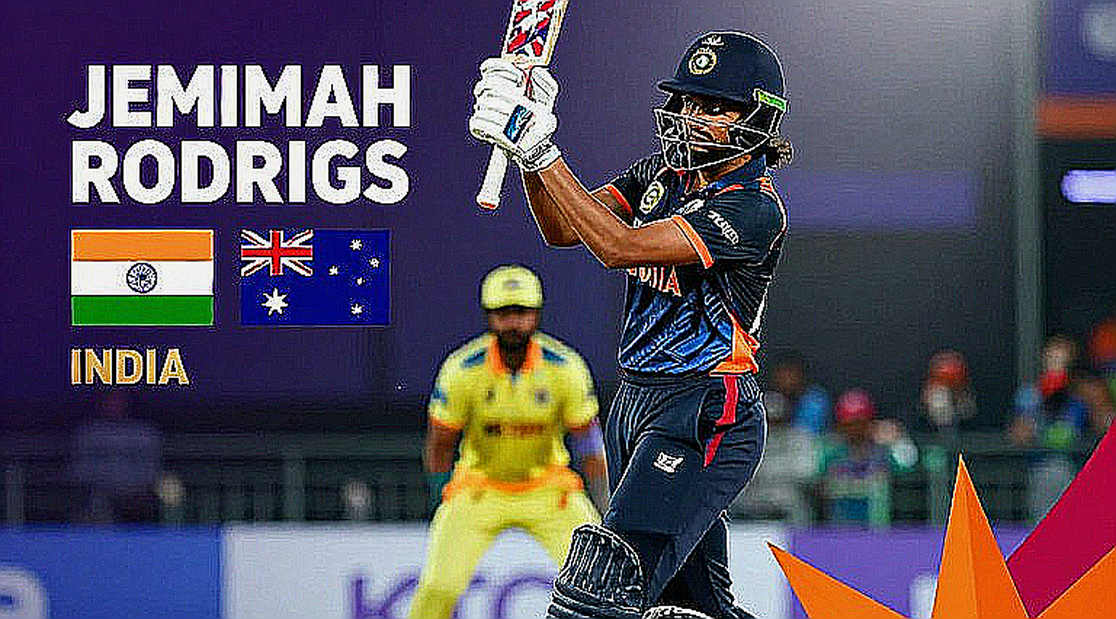
Back on African soil after 24 years
The World Cup returns to the African continent for the first time since 2026 — a full 24-year gap. It is both an emotionally resonant fact and an industrially significant one: pitch preparation, infrastructure maturity and spectator culture all face a fresh test. Namibia is co-hosting at this level for the first time, and Zimbabwe's new Mosi-oa-Tunya stadium at Victoria Falls will stage an event of this scale for the first time.
120 million applications, 3 million fans — how to read the numbers
A nuance matters here that the headline tends to bury. The 120 million figure counts applications, not fans. The ICC says around 3 million fans across 193 countries have registered, and a single fan can apply for multiple matches. The average number of applications per fan is therefore several times over. The 120 million number signals intensity of demand, but it is not a measure of actual attendance or unique fans.
Similarly, the gap between India-Pakistan (8.4 million) and the final (8 million) is only about five per cent. The headline is technically accurate — demand is higher than for the final — but the two are functionally co-equal peaks. Framing the gap as large dramatises the data, especially since applying for a final ticket is structurally riskier: at ballot time nobody knows who will contest it.
The geography of demand
The list of leading registration countries — South Africa, the United Kingdom, India, the United States, Australia — makes two things clear. First, host-nation participation is genuine. Second, the South Asian diaspora remains a major demand engine even for an event staged in Africa. The 14.9 million applications from the African continent is a signal that cannot be dismissed as diaspora inflation alone; it points to genuine host-region interest.
The load is visibly uneven across the map. South Africa's matches drew 26 million applications and Zimbabwe's more than 13 million. The Zimbabwe-India fixture at Victoria Falls on 24 October drew 3.3 million, showing how a host-versus-powerhouse pairing combines local and global demand.
But a warning hides here. England versus Bangladesh drew only 0.9 million applications — trivial against the 120 million headline. The record demand is not the story of the whole event; it is the story of a few fixtures. That concentration is a structural commercial risk and should be read separately from the headline success figure.
Why India-Pakistan sits in a category of its own
India and Pakistan do not play bilateral cricket. The gap in series between the two boards is political, not sporting. The direct consequence is that the two teams meet only at ICC events — every encounter is rare, and scarcity multiplies demand. It is a structural advantage the ICC could not manufacture for any other pairing.
That is also why this demand does not rest on any individual player. No cricketer is named in the ICC release; the only individual mentioned is Gaurav Saxena, the ICC's General Manager of Events and Operations — an administrator. That fact is itself a message: the demand flows from team brands and an institutional rivalry, not from individual stardom. By 2027 several current stars will be in the late phase of their careers, but this fixture's demand is unlikely to be dented, because the rivalry is built on history and politics rather than personalities.
The ICC has presented the figure as proof of global appetite for cricket. A transparent caveat is necessary: this report rests fundamentally on the ICC's own data and its own release, meaning the source and the beneficiary are the same. The numbers are self-reported and partly promotional, and should be read as both data and marketing signal.
Ballot, lottery and scalping
Tickets are being distributed through a ballot rather than first-come-first-served. That is a deliberate equity and anti-scalping design. The ICC has made the message explicit that tickets cannot be obtained through this window once it closes — a rule that doubles as a behavioural urgency lever.
But extreme over-subscription carries risk. If the Wanderers holds roughly 34,000 and demand is 8.4 million, hundreds of applications sit behind every seat. Black-market activity, fraudulent registrations and challenges to ballot fairness all remain plausible. ID-linked tickets, verified ballots and resale controls are the main mitigations.
One date lacks clarity. The report states that under three weeks remain before the ballot window closes, and also that the window is open until 21 November. The two do not reconcile; 21 November is likely the final's date, not the ballot close. Do not treat it as the deadline without official confirmation.
Security: the risk beyond the sport
The biggest non-sporting risk around the India-Pakistan fixture is security and diplomatic sensitivity. The match is possible only because both boards permit it within the ICC event framework — an implicit administrative accommodation that is politically contingent. Segregated seating, enhanced policing and neutral-venue protocols are minimum requirements.
The other operational corner is weather. October-November is the southern African summer, when afternoon and evening thunderstorms are common, and dew in day-night matches can affect second-innings bowling. The operational readiness of new venues, particularly Mosi-oa-Tunya, is another factor to track.
Clash with the franchise calendar
The World Cup window in October-November 2027 may collide with T20 franchise calendars. Coordinating windows and player availability with the Indian, South African and Gulf leagues will be a major administrative issue over the next two years. A major star withdrawal could dull the marquee fixtures — though its effect on a fixture like India-Pakistan would be limited.
What it signals for the industry
The strongest transmission channel from record ticketing demand is its effect on broadcast rights. Media-rights bidding falls in the next 6 to 18 months, and this level of audience demand is a positive leading indicator. The second signal is for host economies — tourism, hospitality and travel packages across 12 cities. The third is that India-Pakistan will be a major fantasy and market-liquidity event, raising the spot-fixing monitoring and anti-corruption load on the ICC's ACU. This is a risk observation only; no betting advice is implied.
Conclusion
Not a ball has been bowled, so no tactical or player-level analysis is legitimately possible here. What is available is a commercial-demand signal, and it is unusually strong. India-Pakistan's pull is institutional rather than personality-driven, and therefore durable. Three things deserve scrutiny: the extreme concentration of demand (a few fixtures, near-nothing for the rest), the dramatisation of the headline (a five per cent margin), and the single-source dependency (the ICC's own figures). The things to watch next are clear — ballot transparency, resale controls, sell-through for non-marquee matches, and the outcome of the media-rights bid.