
होमAsian CricketMohammed Shami Retires from Test Cricket: 229 Wickets, 13 Years and an Unfinished Comeback
Mohammed Shami Retires from Test Cricket: 229 Wickets, 13 Years and an Unfinished Comeback
मोहम्मद शमी ने टेस्ट क्रिकेट से संन्यास क्यों लिया? — 36 वर्षीय भारतीय तेज गेंदबाज ने एक साल से अधिक की क्रॉनिक हील (एड़ी) चोट के बाद टेस्ट प्रारूप को अलविदा कहा; अपेक्षित अंतिम टेस्ट वापसी कभी नहीं हुई। शमी के टेस्ट आंकड़े क्या हैं? — उपलब्ध जानकारी के अनुसार 64 टेस्ट में 229 विकेट, जो उन्हें भारत का छठा सबसे सफल तेज गेंदबाज बनाता है; गेंदबाजी औसत, स्ट्राइक रेट और वेन्यू-वार विभाजन उपलब्ध नहीं हैं। क्या शमी 'दूसरी पारी के विशेषज्ञ' थे? — यह एक लोकप्रिय विशेषण है, लेकिन पहली और दूसरी पारी के अलग-अलग आंकड़े उपलब्ध नहीं, इसलिए इसे सांख्यिकीय रूप से सिद्ध नहीं कहा जा सकता। क्या शमी ने हर प्रारूप से संन्यास लिया? — नहीं, उपलब्ध जानकारी केवल टेस्ट प्रारूप का संन्यास बताती है; शॉर्टर फॉर्मेट में भागीदारी फिटनेस और चयन के अधीन संभव है। भारतीय टीम पर असर क्या होगा? — सबसे बड़ा जोखिम उत्तराधिकार का है: 229 विकेट वाले अनुभवी तेज गेंदबाज की जगह भरने के लिए विकेट, अनुभव और कार्यभार तीनों की भरपाई करनी होगी। क्या इसमें कोई विवाद है? — किसी नियम-उल्लंघन, सट्टेबाजी या अनैतिक आचरण का कोई संकेत नहीं; यह उम्र, पुरानी चोट और चयन-अनुपलब्धता का सामान्य परिणाम है।
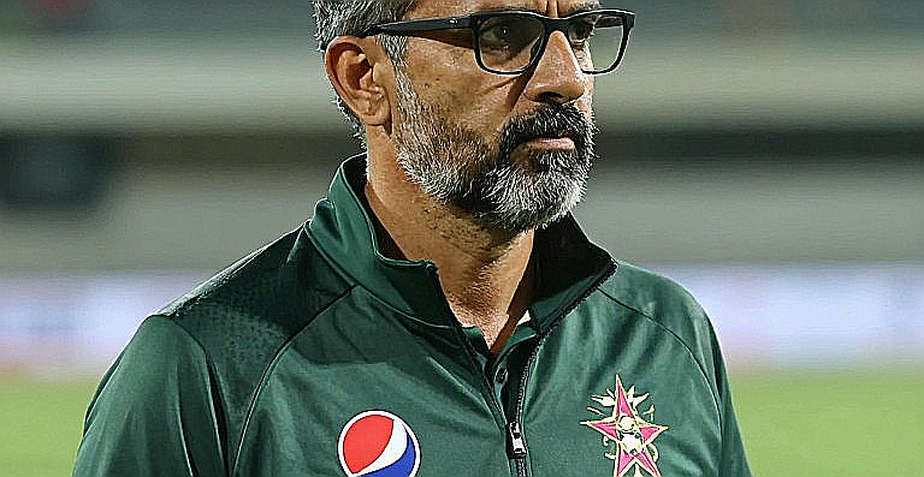
Indian fast bowler Mohammed Shami has announced his retirement from Test cricket. The decision did not follow a single match but a long wait — more than a year spent battling a chronic heel injury, during which the much-anticipated Test recall never arrived. At 36, this closes an important chapter in India's Test bowling attack. According to the available material, Shami took 229 wickets in 64 Tests and ranks as India's sixth-most prolific Test pace bowler.
The Test career spanned more than 13 years from his first impactful appearance for India in whites. His early promise as a seaming, swinging quick evolved into a more complete bowler: reverse swing with the older ball, relentless wicket-to-wicket lines and the capacity to sustain long spells. 229 wickets in 64 Tests — roughly 3.6 per match — points to a bowler who did not win games alone but consistently created pressure for others.
A professional caveat is essential here. The available material does not supply his bowling average, strike rate, economy or venue-wise splits. Without those, it is impossible to judge where 229 wickets sits against peers of his era. Serious analysis needs to know in what conditions, at what average and at what strike rate those wickets came. Wherever data is missing in this report, that gap is stated explicitly rather than filled with guesswork.
The most repeated label attached to Shami is 'second-innings specialist'. The logic is plausible: when the pitch has worn, the new ball has lost its shine and batters are set, a quick who can extract reverse swing becomes most dangerous. But the supplied material contains no first-innings or second-innings splits — no wickets, no averages, no strike rates. The label should therefore be treated as an unverified descriptor, not an established statistical fact. It is also possible that 'second innings' is being used metaphorically, referring to his attempted comeback after injury rather than a match innings. That distinction matters enormously for readers.
Shami is also described as Virat Kohli's go-to man at home. During the era in which India built a Test strategy around pace, he was central to that plan, capable of maintaining speed on Indian pitches while still finding seam movement. But the same evidentiary problem applies: home and away averages, home strike rate and venue-specific data are absent. Without them, 'go-to man at home' is a reasonable hypothesis, not a demonstrated record. It is also possible the phrase describes a specific captaincy-era usage pattern rather than a career-wide home record.
Availability, more than talent, defines the back half of this story. The supplied material notes nagging ankle and knee injuries, and then the decisive blow — a chronic heel injury that kept him out for a year. Heel trouble is not a minor issue for a fast bowler. The entire workload lands on the heel and foot: landing, drive, balance, rhythm. Persistent heel pain affects not just quality but volume — recovery between spells lengthens and rhythm within a match can break.
No medical or biomechanical detail is provided, so any claim that the injury altered his run-up consistency, landing tolerance or recovery must remain an inference. The injury did raise a question that retirement has now closed permanently: would the final Test comeback have happened? The material says he believed he was fit for a final Test return, and that running reassured him his body could still cope. The recall never came. Fitness felt and match-ready availability are different things, and after a long layoff the gap widens.
His run-up has long drawn comment — laid-back, occasionally staggered, sometimes cited as holding him back. Technically, a run-up is not an aesthetic contest. What matters is momentum transfer into release, repeatability of line and length, and alignment. A slow-looking run-up that delivers those is not a weakness; a fast, graceful one that produces instability at release is no advantage. Calling the run-up a weakness outright is an oversimplification. What can be said is that variation in rhythm may at times have affected his spells — but measuring that requires ball-by-ball data that is not supplied.
At 36, after a year out with a chronic injury, a return to five-day cricket was always going to be hard. That is why the retirement carries emotional weight: the comeback that was expected did not happen, and the farewell Test was never played. A natural frustration follows — could selectors have given a bowler who served for 13 years one last chance? But the information needed to answer that is absent: no selector explanation, no medical report, no fitness assessment. It is therefore a selection and availability outcome, not a disciplinary or governance failure.
The clearest consequence is succession. Losing a 229-wicket fast bowler costs more than wickets. It costs experience — knowing which pitch demands patience and which demands aggression. It costs workload balance, because a senior quick absorbs pressure from the rest. And it costs on-field leadership. The supplied material gives no data on India's current ranking, bench strength, reserve quicks or squad age structure, so the depth of the gap cannot be quantified. But the vacancy is a role, not just a statistic.
There is no indication of any rules breach, integrity issue, betting concern or governance controversy. Commercially, there is no evidence of impact on broadcast rights, league valuations, franchise values or contracts. The material specifies retirement from the longest format only — not from all cricket. Shorter-format participation remains possible, subject to fitness and selection, though that is a possibility rather than a reported plan.
Overall risk is medium. Succession is high risk; injury history is high risk; the 'more in him' narrative creates counterfactual risk by shifting discussion toward hypothetical wickets rather than demonstrated output. A fourth, smaller risk is sourcing: the material uses both 'Mohammed' and 'Mohammad', and neither the original source nor publication date is specified. These must be verified before formal publication.
The dominant public narrative is not simply retirement but retirement before a final comeback. Its legacy component — 64 Tests, 229 wickets, sixth-most among India pacers — is solid. Its descriptor component — home go-to man, second-innings specialist — requires venue and innings splits that are not available. The balanced position is to call proven things proven and claims claims. Industry impact is limited but clear: short-term retrospective media attention, and a medium-term talent-pipeline challenge as India replaces both the output and the expertise behind 229 Test wickets. No material effect on broadcast rights, league capital or fantasy markets is supported by the evidence. This analysis is based on supplied material only and is not betting advice.
संबंधित खिलाड़ी
अनुशंसित
Glenn Phillips' 341: The Record That Stayed Lit, and the Innings No One Filed2026-11-02
Bangladesh Keep Losing After the Darwin High, and Simmons's 'We Didn't Bat Well' Defence Looks Like a Single-Sentence Shield2026-11-05
Sir Vivian Richards and King Charles: Analysing the 'Two Kings' Meeting in Antigua Through a Cricket Lens2026-11-03
Gill's 'Floating Middle Order' Is a Tactical Patch, Not a Revolution2026-11-03
The Empty Template: When Cricket's Data Desk Returns Zero2026-11-11
Racism Allegation at Dublin Airport Puts Sangakkara and Ryanair at Loggerheads; Claims Mutually Contradictory2026-10-31
There Is No Asia Cup Draw: 63 Matches Since 2026 and the Ten India-Pakistan Fixtures the Format Guarantees2026-11-02
The Empty Spreadsheet: When Cricket Analysis Has No Analysis2026-10-26
अनुशंसित
Mumbai Indians' Coaching Reset: Where No Paddle Goes Up, a Ledger Still Exists2026-10-26
Bangladesh Keep Losing After the Darwin High, and Simmons's 'We Didn't Bat Well' Defence Looks Like a Single-Sentence Shield2026-11-05
Not 3-2 But 1057 Runs: The Number Inside India's Series Win That Should Keep Selectors Awake2026-11-03
The Asia Cup Ledger: A 21.3-Over Final in Colombo and the Margin That Priced Asian Cricket2026-11-02
A Fifteen-Year-Old Captain in Indore: Bihar Has Set the Field, Someone Else Still Has to Bowl the Ball2026-11-07
The New Architecture of Asian Cricket: Money, Power and the Calendar War2026-11-01
Root vs 15,921: Tendulkar's Silence Broke, but the Only Number That Mattered Was Missing2026-11-06
Cricket Coverage's Empty-Data Crisis: When Automated Analysis Starts Inventing Stories Without a Source2026-10-28
अनुशंसित
The Label Survived, the Body Died: What an Empty Data Packet Teaches About the Asian Cricket Beat2026-10-31
India's T20I Series Win: The Truth Behind Gambhir's 'Fear' Remark and the Media's Silence2026-11-02
The Registrar's File Versus the Press Release: Another Story Out of the 'Empty Stage-1' of the Asia Cup2026-11-04
A Cold Ranchi Morning and the Arithmetic of Three Points: Jharkhand vs Delhi Is Really a First-Innings Contest2026-10-30
Shardul Thakur Out, and Mumbai's Two Innings Wins Meet Their First Real Test2026-10-27
Taskin's Question and Sylhet's Moisture: A One-Wicket Report That Doubles as a Selection-Process Document2026-11-06
The Asia Cup's Revenue Arithmetic: An Entire Structure Resting on a Single Fixture2026-10-27
Asian Cricket: The Real Battle Being Fought Off the Field2026-11-04