
Shaheens in Doha: Three Spinners, Three Quicks, and the Ten-Day Arithmetic the Release Leaves Out
**मुख्य उत्तर**: पाकिस्तान क्रिकेट बोर्ड ने ACC एशिया कप राइजिंग स्टार्स चैंपियनशिप के लिए 15 सदस्यीय पाकिस्तान शाहीन्स टीम घोषित की है, जिसकी कमान अब्दुल समद को सौंपी गई है। टूर्नामेंट 19 से 29 नवंबर तक दोहा, क़तर में है और पाकिस्तान ग्रुप बी में भारत, यूएई तथा नेपाल के साथ है। **मुख्य तथ्य**: - टीम में तीन विशेषज्ञ तेज़ गेंदबाज़ (मोहम्मद हसनैन, दानियाल, आकिफ़ जावेद) और तीन स्पिनर (दानिश अज़ीज़, साद मसूद, सुफ़ियान मोक़िम) शामिल हैं। - पाकिस्तान 20 नवंबर को यूएई, 22 नवंबर को भारत और 24 नवंबर को नेपाल से खेलेगा; ग्रुप की शीर्ष दो टीमें आगे बढ़ेंगी। - सेमीफ़ाइनल 26 और 27 नवंबर को, फ़ाइनल 29 नवंबर को दोहा में निर्धारित है। - पाकिस्तान शाहीन्स पिछले संस्करण की चैंपियन टीम है; रोहैल नज़ीर टीम के विकेटकीपर हैं। - विज्ञप्ति में किसी खिलाड़ी की उम्र, फ़ॉर्म या फ़िटनेस का कोई आंकड़ा नहीं दिया गया है। **स्रोत**: पाकिस्तान क्रिकेट बोर्ड (PCB) की आधिकारिक विज्ञप्ति, डेटलाइन लाहौर | Cross-checked: cricsultan.com **संबंधित प्रश्न-उत्तर**: प्रश्न: क्या यह टूर्नामेंट टी20 फॉर्मेट में है? उत्तर: PCB विज्ञप्ति में ओवरों की संख्या स्पष्ट नहीं है, अतः फॉर्मेट की पुष्टि ACC के आधिकारिक मैच शेड्यूल से करनी होगी। प्रश्न: मोहम्मद हसनैन की फ़िटनेस किस स्थिति में है? उत्तर: विज्ञप्ति में उनकी चोट या फ़िटनेस का कोई उल्लेख नहीं है, इसलिए उनका वर्कलोड प्रबंधन खुला प्रश्न बना हुआ है। प्रश्न: पाकिस्तान का सबसे निर्णायक मुक़ाबला कौन सा है? उत्तर: 22 नवंबर का भारत के विरुद्ध मुक़ाबला, क्योंकि ग्रुप बी से केवल दो टीमें सेमीफ़ाइनल में पहुँचेंगी।
The release that came out of Lahore carries fifteen names and not one number — no ages, no match counts, no last-season scores, no fitness report. I read these lists with my morning tea and have been doing it for forty-seven years. What caught my eye this time was the adjective attached to the captain's name: "emerging middle-order batter". Meaning that for the man handed the leadership of the defending champions, the board has two words to offer.
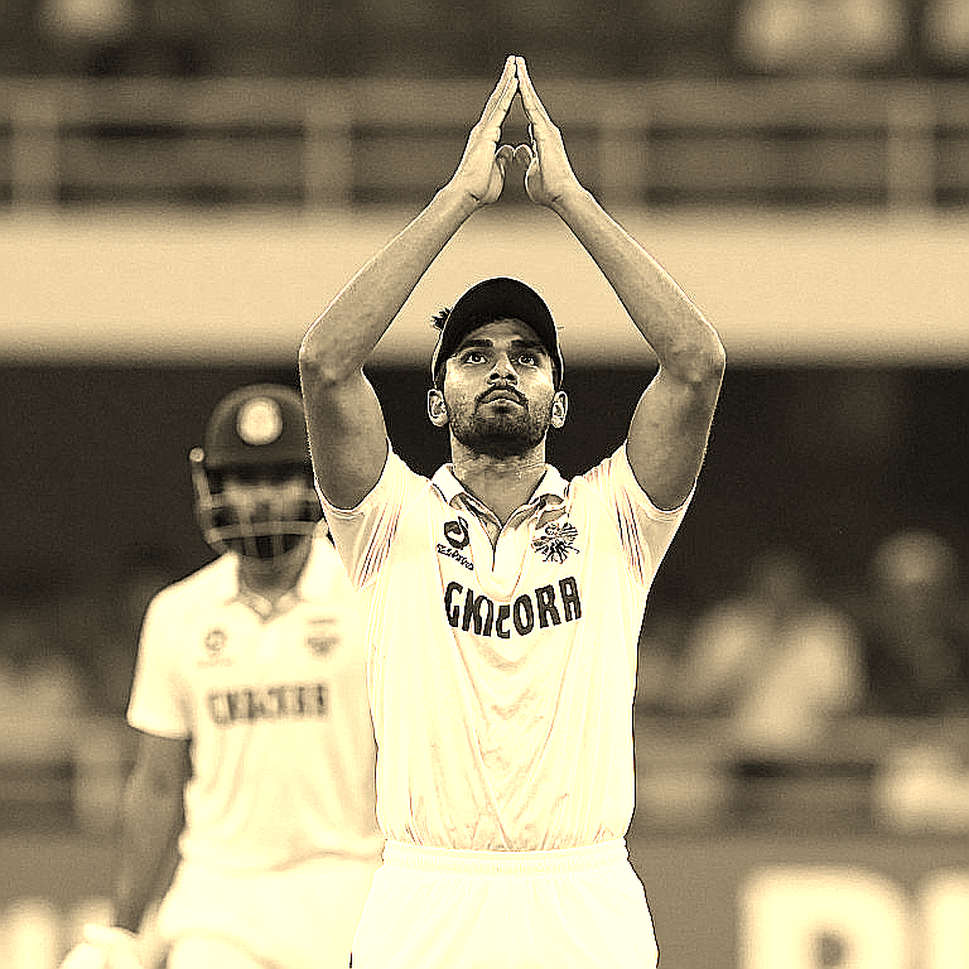
Then I counted the bowlers. Three specialist quicks — Mohammad Hasnain, Daniyal, Akif Javed — and one pace all-rounder, Randhawa. On the other side, three spinners: Danish Aziz, Saad Masood, Sufyan Moqim. The list was drawn up in a room in Lahore; I read it and I am in Doha, where the November air is dry and the ball arrives below the knee. Fifteen players, ten days between 19 and 29 November, five or six matches. For a side carrying three specialist seamers that is not a comfort arrangement, it is arithmetic that has to be balanced.
The tournament is the ACC Asia Cup Rising Stars Championship, the Asian Cricket Council's competition that sells itself as a pathway for emerging players. Host city Doha, dates 19 to 29 November, eight teams, two groups. Pakistan Shaheens sit in Group B with India, the United Arab Emirates and Nepal. The top two from each group reach the semi-finals on 26 and 27 November; the final is on 29 November. The Shaheens are the defending champions.
The squad reads like this: captain Abdul Samad, Rohail Nazir as wicketkeeper, and a batting group of Hasan Nawaz, Haider Ali, Maaz Sadaqat, Shahzaib Khan, Farhan Yousuf and Shamyl Hussain. In the attack, Hasnain, Daniyal, Akif Javed and Randhawa, with the spin trio of Danish Aziz, Saad Masood and Sufyan Moqim. One caution before anything else: the release does not state how many overs a match will be. The ACC event is understood to be an emerging-category short-format competition, but until the official schedule and playing conditions appear, the format should be treated as an assumption and not a fact. It is a small caution that matters for the larger count coming up.
The clearest tactical tell in this entire list is the number of spinners, not the number of quicks. Pakistan's pathway sides have always been identified by raw pace, from Shaheen Afridi down through the queue behind him. Here that has inverted. Pace is scarce; spin is surplus. Three specialist spinners are never a luxury in a twenty-over game; they are picked when the selection panel has already looked at the surface. November in Doha is generally read as dry, abrasive and low-bouncing — the ball skids to the batter's knee and the spinner finds the space the bat cannot reach. Danish Aziz's left-arm angle adds another layer, because he bowls and he scores in the lower order. This spin-heavy construction is not a guess about the pitch; it is a forecast of it.
The same list carries the reverse question. Three specialist quicks across ten days and five or six matches is a tight equation for anybody. Randhawa is there as a fourth seamer, but he is an all-rounder, not a frontline weapon. If the Shaheens reach the semi-finals, Hasnain, Daniyal and Akif Javed could each be asked for four overs in three or four consecutive games, and the heaviest load in that stretch will fall on the one man whose condition the release does not mention at all.
Hasnain is the biggest name on this list and its biggest silence. An express quick who has bowled at senior level is standing in an emerging-category event. There are two ways to read that. First, it is a statement of intent — the fastest available weapon is being carried to defend a title. Second, it is a quiet arrangement to rebuild form and fitness, because the bowling load at this level is lighter than at senior level. The two readings do not cancel each other, but both are missing the same thing: his medical status. And a plan built around a bowler whose condition is unstated is an incomplete plan.
If Hasnain is being managed carefully, the real burden shifts to Daniyal and Akif Javed, both far behind him in experience at this level. This is where the strength of the list and the fragility of the list are written on the same sheet of paper.
Look at the batting. Hasan Nawaz, Haider Ali, Maaz Sadaqat, Shahzaib Khan, Farhan Yousuf, Shamyl Hussain — several of these names have already surfaced in the PSL and in emerging pathways. On paper it is a very strong group. And that is exactly where the contradiction sits, the one no press release ever writes down: if the point of the tournament is to make players, why so many senior-adjacent names? And if the point is to defend a title, what is the phrase "Rising Stars" still doing there? Both questions point at the same answer — the panel did not hover between development and winning. It chose winning.
That is why I read Abdul Samad's captaincy as an examination rather than an appointment. Handing a defending champion side to a middle-order batter is a low-risk audition, because Haider Ali and Hasan Nawaz stand around him. The board is not asking him to carry the team; it is asking him to hold it. The difference will reveal itself in where he bats. If he walks out in the top three on 20 November, the responsibility is real; if he settles at five or six, this is training in management rather than in batting.
Now the shape of the group. Pakistan, India, UAE, Nepal — and only two go through. That makes the India fixture on 22 November a knockout in all but name, whatever the group table calls it. Playing UAE on 20 November, two days of rest, then India: that is the window where the real selection thinking will show. My reading is that the bowling against UAE will be rotated, and that rotation will be built around preserving Hasnain for India. The release does not say so; the fixture dates do.
A neutral venue adds something that usually gets missed. Nobody gets home advantage, and where home advantage disappears, the gap between a full member's pathway side and the stronger associate sides narrows. UAE and Nepal are not here to make up numbers. And there is a fine inversion hidden in that: a side like Nepal is more comfortable against spin than against raw pace in Asian conditions. Which means Pakistan's three-spinner weapon, built for the Doha surface, may not be as sharp against Nepal on 24 November as it will be against India or UAE.
Now to the reading that begins the moment any release lands and almost always stops in the wrong place. From outside, this list looks very clean: defending champions, a captain named, an express quick like Hasnain included, and a group containing the India fixture that every channel will sell as a final. That reading concludes the Shaheens are strong favourites and 22 November settles everything.
My reading is the opposite: this is not a declaration of intent to win, it is a count of bodies. Three specialist quicks, ten days, five or six matches, and a fast bowler whose condition nobody has published. If the Doha surface plays truer than assumed — plausible in cool, dry November air — then three spinners becomes as useful as an upturned umbrella, and Randhawa has to become the fourth seamer after all. That risk belongs to the kitchen, not the tactics board.
The second inversion is in the names. A team sent out under the banner of "Rising Stars" includes Haider Ali and Hasan Nawaz, men who have breathed senior cricket's air. That raises the standard of the competition and lowers its stated purpose. Both things can be true at once, but accepting both at once requires publishing the eligibility rules. Not one criterion appears in the release. That is not corruption; it is opacity — and opacity is the door through which disputes arrive later, never on announcement day.
The third inversion is emotional. The India fixture will be packaged as a senior-team contest — the phrase "fierce rivals" has already made it into the release itself. That weight is being loaded onto an emerging side whose players have no experience of carrying it. Win, and it was expected. Lose, and it is a crisis. That equation damages any young team, and we in the press corps built it, not the players.
Eleven weeks on one bus and I stopped reading the roster and started reading the men. At the Goa auction in 2026, RCB paid $1.55 million for Kevin Pietersen, and I then spent thirty-six days inside that franchise's hotels. What I learned there is that a list contains names, not people — and a board's piece of paper never tells you how a person is. This time the paper is being sent to Doha. What it is not telling is the most important story of the tournament: the state of the knee or the shoulder of the one fast bowler the whole structure rests on.
Defending a title and building players are two different jobs, and this squad has chosen the first. That choice is not wrong — it tells you how the board currently sees its own pipeline.
Watch the eleven on 20 November first. If Hasnain rests that day, the plan has already been written and 22 November is its real page. If Samad bats in the top three, this tournament becomes bigger than a captaincy audition for him. And if the Doha surface turns out quick and three spinners go unused, the question will be whether the panel saw the pitch or read about it. Three things, three dates, and a list with no numbers on it — in ten days we will know whether this sheet of paper picked a team or merely printed some names.