
Babar Azam Distances Himself from Selection Responsibility as Young Pakistan Face a Test of Renewal Against Sri Lanka
Hook: A Captain Given 15 Players, Without the Final Say on Selection The most...
Hook: A Captain Given 15 Players, Without the Final Say on Selection
The most important question surrounding Pakistan's current Test team is not how many runs Babar Azam will score against Sri Lanka. It is how much influence the captain has over the composition of the side he is expected to lead. Ahead of the two-Test home series, Babar clarified that he had been handed a squad of 15 players and that his responsibility was to get performances from those available. Final selection authority, he said, rested with the selectors and coach.
His statement might sound like a routine explanation of captaincy responsibilities. In Pakistan's current Test situation, however, it carries institutional significance. The team sits ninth and last in the 2026-27 World Test Championship standings. Two wins and seven defeats from nine matches have left Pakistan with a points percentage of just 4.63. A deduction of 19 points for a slow over-rate has compounded the damage.
As Pakistan turns towards a younger generation, the captain's public acknowledgement of limited selection authority becomes an important signal. Results on the field will arrive under Babar's leadership, while responsibility for the team's composition remains distributed across several levels.
After years of watching Test cricket through sessions, bowling changes and batting-order decisions, I would read this series as more than a pair of home fixtures. Pakistan is assessing the players and leadership structure it may need for the next championship cycle.
Context: From WTC Survival to Rebuilding
Pakistan's campaign is already in serious trouble. A 3-0 defeat in England exposed weaknesses across the side. The selectors subsequently turned towards players who had performed in domestic cricket. Babar said that after returning from England, the management assessed the situation and prepared a combination with the next cycle in mind.
With two wins and seven defeats from nine Tests, Pakistan's 4.63 per cent points percentage leaves its chances of reaching the final practically extinguished. The 19-point slow-over-rate deduction is a separate part of the problem. This is not solely a question of batting or bowling quality. Completing the required overs within the allotted time is also a measure of team management, captaincy and on-field decision-making. When a team repeatedly fails in this area, the cost appears directly in the standings.
Sri Lanka are seventh in the cycle, with a points percentage of 33.33 from six Tests: one win, two defeats and three draws. That is a considerably stronger position than Pakistan's, although Sri Lanka's tendency to draw matches suggests a side that can remain difficult to break over five days.
Both Tests will be played in Pakistan. The first is scheduled at Rawalpindi Cricket Stadium from November 9 to 13, followed by the second at Lahore's Gaddafi Stadium from November 17 to 21. Home conditions may offer Pakistan an early advantage, but conclusions about the current pitches should wait until their preparation and match behaviour are observed. Rawalpindi has traditionally offered relatively favourable batting conditions, while Lahore can bring spin further into the contest as a match progresses. That potential difference will test young batters and bowlers in distinct ways.
Pakistan also hold the historical advantage in Test meetings with Sri Lanka. Across 59 matches, Pakistan have won 23, Sri Lanka 17, and 19 have ended in draws. Pakistan won the most recent series, played in Sri Lanka in 2026, by 2-0. Sri Lanka's last series victory over Pakistan came in the United Arab Emirates in 2026. History provides context, but it does not reduce the challenge facing a new batter at the crease.
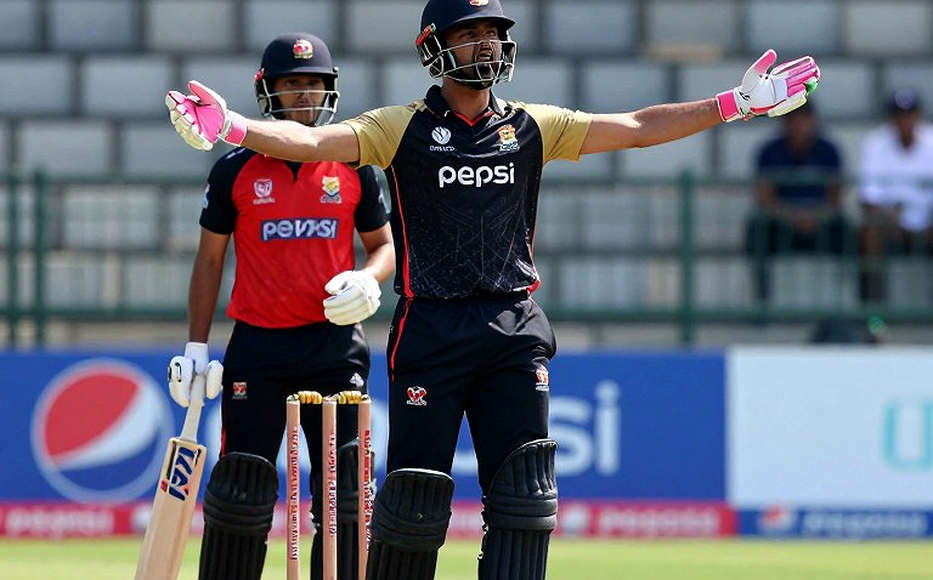
Core Analysis: Opportunity and Risk for the New Generation
The most significant change in Pakistan's team structure is the promotion of players from domestic cricket. Sameer Minhas, Mohammad Taha, Mohammad Suleman, Azan Awais and Arafat Minhas are among the names at the centre of this shift. Aamir Jamal, Ali Shabbir and Saqib Khan have also been included, while Mohammad Tayyab Arif is part of the wider discussion around the new talent group. Domestic performances may earn these players an opportunity, but their actual Test capabilities can only be judged when they face international pressure, long bowling spells and changing match conditions.
Pakistan's biggest challenge is less about finding talent than transferring experience. Introducing five or more inexperienced players into the Test environment at once is a bold selection strategy. It will work only if the senior players create an effective support structure on the field. A young batter in Test cricket needs more than technical advice. He must learn when to remain defensive for 30 deliveries, when a scoring option is available against a particular bowler, and when preserving a wicket is more valuable than adding runs in a given session.
Saud Shakeel, Salman Ali Agha and Mohammad Abbas can play important roles in this transition. Saud and Salman can provide stability to the batting group, while Abbas's experience should be useful to younger bowlers. An experienced fast bowler can teach more than seam position or line and length. He can show how a Test dismissal is built through pressure across several overs rather than produced by one delivery.
The value of young players should not be judged by runs or wickets alone. A debutant making 35 in the first innings may have produced a significant performance if he faced a substantial number of deliveries, controlled his response to different lengths and adjusted after wickets fell at the other end. Similarly, two wickets do not establish the complete value of a new fast bowler. Length consistency, control late in a spell and the ability to adjust a plan to the field are also relevant.
The opening Test in Rawalpindi is important in this respect. If the pitch offers relatively favourable batting conditions, young top-order players will be tested on their ability to construct long innings. Scoring 20 or 25 on a flat surface is different from batting for more than 100 deliveries. Concentration, strike rotation and the recognition of poor deliveries become clearer measures on such a pitch. Pakistan should assess the process of building an innings rather than demand immediate big scores from new batters.
The second Test in Lahore may provide a different examination. If the surface begins to assist spin as the match progresses, footwork, use of the crease and shot selection against spin will become more important. Experience from the first Test may prove directly useful. Selectors should look for the difference between a player who scores only in favourable conditions and one who can adapt his technique when the challenge changes. That distinction is central to the gap between domestic performance and international readiness.
Babar's own position adds another layer to the rebuild. His last Test century came against New Zealand in Karachi in December 2026. His continued wait for another three-figure score has become a sustained subject of discussion. For a top-order batter, a drought lasting nearly four years raises legitimate questions about performance. Yet the absence of a century alone cannot measure a batter's entire contribution. Consistency, judgement outside off stump, the ability to preserve a wicket under pressure and the construction of partnerships all matter.
Babar's record against Sri Lanka is a positive factor. He scored two Test centuries in Pakistan's 2026 home series against them and another in Galle in 2026. Three hundreds against this opponent suggest a favourable matchup. But a historical record does not automatically solve a current technical problem. Bowling plans, batting position and Babar's present technical and mental condition remain separate variables.
The real test for Babar in this series is not simply whether he scores a century, but whether he controls the risk within his innings. In Test cricket, a batter who occupies the crease for long periods can force the bowler to alter a plan. If Babar shows discipline against deliveries outside off stump early in a spell, plays the ball late and reduces pressure through singles, his score can develop gradually. If he tries to recover his old rhythm too quickly through aggressive options, he may offer bowlers an opening.
The burden of captaincy may also influence this situation. Babar must score runs while managing young players, bowling spells and field settings. A captain's attention is divided across several responsibilities. That makes the senior leadership group important. Rather than carrying every small decision alone, Babar can benefit from communication with players such as Saud Shakeel, Salman Ali Agha and Abbas.
Selection: The Boundary Between Captain and Selectors
Babar's statement that selection is outside his hands also draws attention to Pakistan's institutional structure. He said selectors and the coach assemble the team, while he contributes when his opinion is sought. He also suggested that every detail of the internal process need not be explained publicly.
Without additional evidence, it would be premature to interpret the statement as proof of a dispute with the selectors. Modern team management involves several people in decisions about selection, fitness, strategy and long-term planning. The captain's responsibility is to make the available team competitive. Yet publicly defining the boundaries of responsibility matters because supporters often hold the captain accountable for both selection and performance when results disappoint.
A practical question follows: if a young player repeatedly fails, who evaluates the decision to select him? The captain, coach, selectors or the wider management structure? Without a clear relationship between authority and accountability, it becomes difficult to assess whether the rebuild has succeeded. Pakistan must record not only individual performances but also whether the selected combination receives a clear tactical direction on the field.

The over-rate issue deserves separate attention. The 19-point deduction has already damaged Pakistan's WTC campaign. In Test cricket, slow over-rates can sometimes result from long partnerships, injuries or complicated conditions. Repeated shortfalls, however, cannot be attributed entirely to circumstance. Delays in bowling changes, excessive time spent adjusting fields and inconsistent spell management can also affect the rate at which overs are completed.
The first proof of Pakistan's rebuild should be better match management, not a young player's century. If bowlers complete their overs on time, the captain implements plans efficiently and field changes do not cause unnecessary delays, the team will show that it has learned from a previous disciplinary weakness. Such improvement may not appear as a separate batting or bowling statistic, but its value in the WTC table is real.
The Contrarian View: An ODI Win Does Not Prove Test Readiness
Pakistan won the final of the ODI tri-series against Sri Lanka towards the end of October, creating a more positive atmosphere. Babar said a victory brings confidence and that the arrival of young players has given the team fresh energy. That is a reasonable psychological assessment. After a run of defeats, a win can change the mood in a dressing room and remind players that their plans can work.
But treating an ODI success as direct evidence of Test readiness would be an analytical error. The two formats differ in bowling spells, batting risk, field structures and the pressure of time. An aggressive ODI innings may give a batter confidence, but Test cricket may require that same player to preserve technique and concentration for several hours. The tri-series victory should therefore be treated as a positive mental signal, not proof of Test capability.
The same caution applies to domestic statistics. Strong performances at home open the door to selection, but the quality of bowling, fielding standards and intensity of pressure change at international level. The selectors have provided an opportunity. The players must now demonstrate that their domestic performances can be repeated in different conditions.
In my experience, understanding a team's rebuild requires more than counting the number of debutants. It is more useful to examine the batting positions assigned to new players, the bowlers they are protected against and how quickly they are given an opportunity to correct mistakes in a second innings. Every change is not progress; progress is a change supported by a clear role and measurable improvement.
Pakistan face another risk. If the team remains excessively dependent on senior players, the young group may exist in name only. If inexperienced players are left without sufficient guidance, early failures could damage confidence. Balance does not mean simply writing senior and junior names on the same team sheet. It means distributing responsibilities so that every player understands his role.
The Next Test: Process Matters More Than the Result
Pakistan's historical record against Sri Lanka and the 2-0 victory in the 2026 series provide a psychological foundation. Home conditions should also help. Yet the most important outcome of this series will extend beyond the win-loss column. Pakistan need to discover whether their new players can be trusted across five days, whether Babar can address his batting concerns and whether the leadership group can improve discipline on the field.
Babar has said that the youngsters possess confidence and ability, and that senior players will guide them through pressure situations. The field will now test that claim. The first innings of the top order in Rawalpindi, the opening spells from new bowlers and the response of players in the second innings will offer early evidence. Lahore will provide a second test of the team's ability to adapt when conditions change.
Years ago, I prepared a twelve-zone map of batting responses against spin at Eden Gardens. That exercise made one principle clear: understanding a player's ability requires knowing where he scores, what kind of delivery he faces and under what conditions he performs. The same principle applies to Pakistan's new Test side. Every innings will have its own map, and every failure should be traced to a technical or tactical cause.
For Pakistan, this series is an initial examination for the next WTC cycle. A Babar century, a debutant's half-century or an effective spell from Abbas may generate headlines. The deeper signal will emerge when the team maintains its plan under pressure. I drew the twelve zones before anyone thought to ask why, because the choice of space often tells the story before the result does. Pakistan's new generation must now show that it is ready not merely to receive an opportunity, but to carry the strategic responsibility of five-day cricket. A rebuild can begin with an announcement; its credibility will be determined in the final session of the second Test.