
From Uttar Pradesh to Kolkata’s Maidans: The Untold Story of Mohammed Shami’s Rise
From Uttar Pradesh to Kolkata’s Maidans: The Untold Story of Mohammed Shami’s...
From Uttar Pradesh to Kolkata’s Maidans: The Untold Story of Mohammed Shami’s Rise
Mohammed Shami’s cricketing journey did not begin in a major stadium, under television lights or through a lucrative contract. Its formative chapter unfolded on Kolkata’s open grounds, where a young fast bowler had to prove himself repeatedly. Born into a farming family in Uttar Pradesh, Shami failed to secure a place in his home state’s age-group teams for three consecutive years. Kolkata’s club-cricket circuit eventually opened a door that the formal selection pathway had left closed.
There is an economic contrast at the heart of his story. Shami once earned Rs 500 per match playing for Dalhousie Athletic Club. His subsequent rise to the forefront of Indian fast bowling makes for an inspiring narrative, but the more important question is structural: how did a player overlooked by Uttar Pradesh’s selection system find recognition through Kolkata’s clubs and the intervention of a handful of individuals?

From a village to Kolkata: an unconventional route
Shami grew up in rural Uttar Pradesh. His family background did not offer an established pathway into professional cricket. His elder brother, Haseeb, also bowled fast, but an injury curtailed his career. That early exposure to fast bowling helped shape Mohammed’s interest in the game.
Coach Badruddin Siddique played an important role in his early development. He recognised Shami’s potential and encouraged him to seek stronger competitive opportunities. Yet Shami faced a significant setback when he failed to make Uttar Pradesh’s age-group teams for three consecutive years.
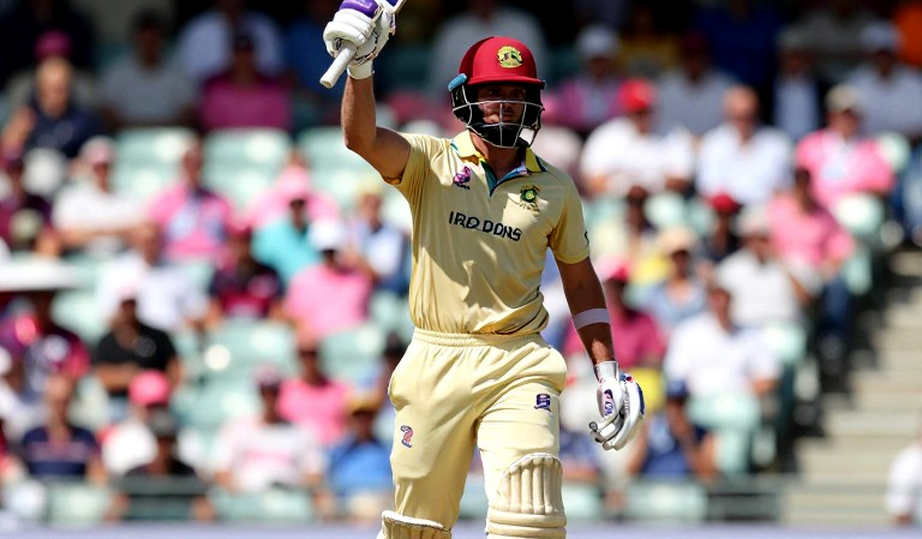
His experience raises a broader question about Indian domestic cricket: rejection from a selection system does not necessarily mean an absence of talent. Young fast bowlers mature physically at different rates. Selection processes that favour early physical development can overlook players whose technical and athletic qualities emerge later.
Shami’s opportunity in Kolkata did not come through a structured national talent-identification programme. It emerged through an unexpected connection and the initiative of people within cricket. With Siddique’s help, he found an opportunity to play in Kolkata at around the age of 16.
The Maidan is more than a collection of historic open cricket grounds. It is a competitive club ecosystem in which players from different backgrounds fight for recognition. Shami began with Dalhousie Athletic Club, earning Rs 500 per match. The payment offered little financial security, but it gave him regular competition and a platform to display his bowling.

From Rs 500 per match to Rs 70,000 per season
The next important step came when Shami moved from Dalhousie Athletic Club to Town Club. Dalhousie paid him on a match-by-match basis, whereas Town Club offered Rs 70,000 for a season. Club official Debabrata Das supported his development and also provided accommodation at his home.
The shift from Rs 500 per match to Rs 70,000 per season represented more than an increase in income. It reflected growing visibility and trust within the cricketing system. Initially, Shami was paid for individual appearances. Town Club subsequently committed to him for an entire season.
This distinction matters when examining the economics of grassroots cricket. The IPL’s multi-crore auctions attract headlines, but a player's first commercial valuation often happens at a much smaller club. There is no transparent auction or competitive bidding process for most uncapped players at this level. Recognition by an official or selector can change a player's sporting and financial prospects.
In years of watching cricket, the distinction between identifying talent and valuing it properly has repeatedly stood out. At club level, opportunity depends as much on the person willing to recognise a player as on the player's ability itself. Shami’s experience with Das and, later, Bengal selector Sambaran Banerjee illustrates both the value and the vulnerability of this arrangement.
Bowling against the wind: the moment a selector noticed
One of the most interesting cricketing details comes from former Bengal chief selector Sambaran Banerjee. In a club match against Eastern Railway, Shami took four wickets while bowling with the wind and another two when bowling against it.
The six-wicket return should not be mistaken for a comprehensive statistical record. The available account does not provide runs conceded, overs bowled, economy rate or bowling average. It would therefore be inappropriate to use this single match as conclusive proof of his quality.
Its significance lies in the ability to operate under changing conditions. At open grounds, wind direction can influence a fast bowler’s run-up, the ball’s flight and the timing of release. A bowler must retain control of his action and release when the natural assistance of the wind is absent.
The most useful signal in Shami’s six-wicket performance was his apparent adaptability, rather than the number of wickets alone. Red-ball cricket demands that fast bowlers maintain technical quality over extended spells. Pace is only one component; consistency of seam position and release point is equally important.
Banerjee identified Shami’s seam position and release point as two of his standout qualities. A consistent seam orientation can help a bowler extract movement from the pitch, while a repeatable release point supports control over line and length.
There is an important qualification. The account provides only this club performance and Shami’s subsequent Ranji debut figures. It does not include his bowling average, strike rate or format-by-format record. The evidence supports the conclusion that his technique was recognised in Kolkata, not that one match proved his eventual international success.
The Ranji Trophy opportunity and a selector’s intervention
Performances in Kolkata’s club circuit helped Shami move towards Bengal’s domestic side. Banerjee strongly advocated his inclusion after watching him bowl. According to the account, he pushed for Shami’s selection that very evening.
The episode illustrates a critical feature of domestic selection. Identifying talent is only the first step; a player also needs a selector willing to support his inclusion.
Club cricket gave Shami a stage, Debabrata Das helped make the opportunity sustainable, and Sambaran Banerjee connected the performances to Bengal’s selection system. Each role mattered. Without one of these interventions, the journey could have become considerably more difficult.
In 2026, Shami made his Ranji Trophy debut for Bengal against Assam at Eden Gardens, taking three wickets. It was a significant transition from establishing himself in club cricket to competing in a more structured first-class environment.
The Ranji Trophy is one of India's principal pathways for developing Test-cricket talent. It demands that bowlers operate across long innings, changing batting conditions and matches that can stretch over several days. Shami’s three wickets represented a promising beginning, although that figure alone cannot describe his wider first-class career.
Bengal cricketer Manoj Tiwary described Shami as a “lambi race ka ghoda” — a horse built for the long race. The assessment reflected confidence in his trajectory and durability rather than a judgment based on one isolated performance.
Learning from Wasim Akram and the next stage of technical development
Another significant part of Shami’s development came through Wasim Akram, the former Pakistan fast bowler who worked as Kolkata Knight Riders’ bowling coach. During his time with KKR, Akram worked directly on Shami’s bowling, giving the Indian seamer access to the technical experience of an accomplished international bowler.
This illustrates an evolving feature of cricket development. Franchise cricket is often discussed through player contracts, auctions and transfers. Yet coaching relationships can also transfer technical knowledge between franchise competitions and national-team pathways.
Akram’s experience was valuable, although the available account does not quantify a specific technical change or its statistical impact. His contribution is best understood as technical guidance rather than a measurable performance claim.
Another revealing detail concerns Shami’s early training preferences. He reportedly showed little