
U19 Asia Cup: India Name 15-Member Squad for Muscat, Raichandani Captain, Chauhan Vice-Captain
एसीसी पुरुष अंडर-19 एशिया कप (5–14 नवंबर, मस्कट) के लिए बीसीसीआई ने 30 अक्टूबर को 15 सदस्यीय भारतीय टीम की घोषणा की। कप्तान लक्ष्य रायचंदानी, उपकप्तान यशबर्धन सिंह चौहान; दो विकेटकीपर अनवय द्रविड़ और रजत बागेल। भारत ग्रुप ए में पाकिस्तान, यूएई और नेपाल के साथ है; ग्रुप बी में बांग्लादेश, श्रीलंका, अफगानिस्तान, मलेशिया। हर ग्रुप से शीर्ष दो टीमें सेमीफाइनल (12 नवंबर) में, फाइनल 14 नवंबर। भारत के लिए अधिकतम पांच मैच। प्रारूप संभवतः 50 ओवर का, पर स्रोत में पुष्टि नहीं। एडवाइजरी में किसी खिलाड़ी का प्रदर्शन आंकड़ा, भूमिका, राज्य, कोचिंग स्टाफ, स्टैंड-बाय सूची या मैचों का समय नहीं दिया गया—इसलिए प्रदर्शन-आधारित आकलन संभव नहीं। मस्कट की सतहें स्पिन-अनुकूल; नवंबर में मौसम शुष्क, बारिश व डीएलएस जोखिम कम। भारत की असली परीक्षा पाकिस्तान के खिलाफ ग्रुप मैच और सेमीफाइनल में है।
The Board of Control for Cricket in India (BCCI) has announced a 15-member squad for the ACC Men's U19 Asia Cup, to be played in Muscat from 5 to 14 November. According to the official media advisory issued on 30 October, Lakshya Raichandani will captain the side, with Yashbardhan Singh Chauhan as vice-captain. Selected by the Junior Cricket Committee, the squad includes two specialist wicketkeepers—Anvay Dravid and Rajat Baghel. The announcement comes just six days before the tournament begins, which is itself a significant administrative signal.
It is important to note that the BCCI advisory is a bare administrative document. It contains no performance data for any player, no roles, no domestic state affiliations, no support-staff detail and no fixture order. In other words, it is not possible to assess the team's technical side on the basis of publicly available information. Any conclusion must therefore be drawn cautiously, and speculation must be kept separate from fact. This report follows that principle: it offers only what follows directly from the source, or what is explicitly flagged as inference.
Tournament structure: a maximum of five matches, two groups
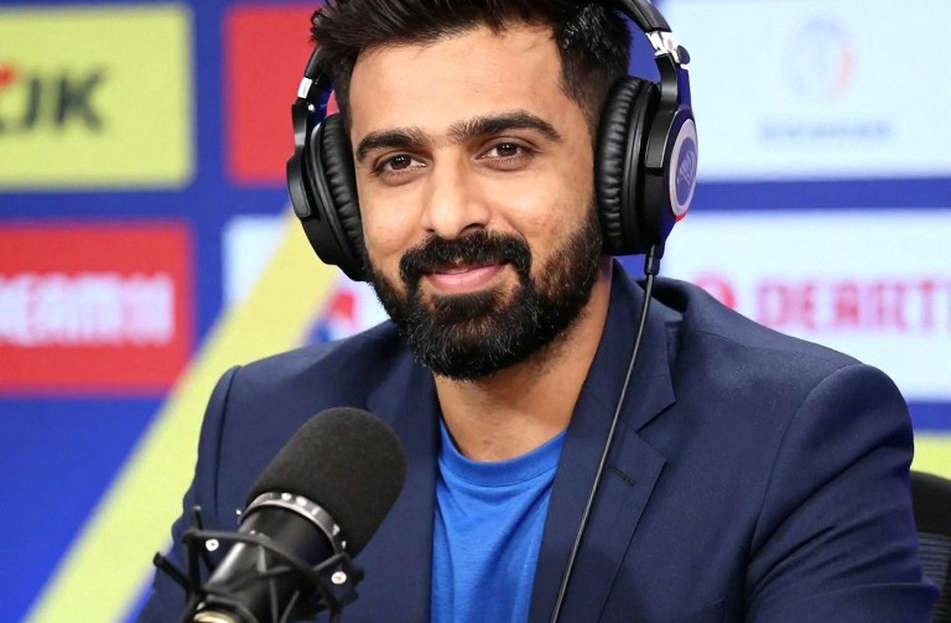
The Asia Cup format involves eight teams split into two groups. India are in Group A alongside Pakistan, the United Arab Emirates (UAE) and Nepal, while Group B comprises Bangladesh, Sri Lanka, Afghanistan and Malaysia. Each team plays three group matches. Group games will be held between 5 and 11 November, the semi-finals on 12 November and the final on 14 November. India therefore play a maximum of five matches—three group games and two knockouts. The top two from each group advance to the semi-finals.
This means India can lose one group match and still win the tournament. The structure makes the group stage relatively forgiving in sporting terms, with the real stakes resting on single-elimination semi-finals and the final. Readers and fans should understand that over-weighting group-stage results can be misleading. Twelve group matches are to be played across seven days, which also suggests multiple fixtures per day and, almost certainly, more than one venue—although the advisory names neither venues nor start times.
Uncertainty over the format
The biggest technical uncertainty is that the advisory does not state how many overs per side. Historically, the ACC U19 Asia Cup has been a 50-over competition, and a schedule of two groups of four, semi-finals and a final within 10 days fits a 50-over format. But since the source does not explicitly say so, any tactical framing above is conditional on that assumption and requires confirmation against the ACC playing conditions.
If the format is 50 overs, matches divide into three phases—the Powerplay (overs 1–10, two fielders outside the circle), the middle overs (11–40, where spin control matters) and the death overs (41–50, when teams accelerate). But there is no data on how this specific squad handles any of these phases. No firm conclusion can therefore be drawn. All that can be said is that if the team lacks adequate spin control in the middle overs, it could hurt on Gulf surfaces.
Muscat conditions and venue
The tournament will be held in Muscat, the capital of Oman, a neutral Gulf venue for India. Gulf pitches are typically hard, dry and low-bounce, where the ball stops in the surface early and grip and spin increase through the afternoon. November in Oman is climatologically dry, with daytime highs of roughly 28–32°C and a low probability of rain. The risk of Duckworth-Lewis (DLS) disruption is therefore low.
However, one important point is that the advisory does not state match start times. If matches are day-night, evening dew can blunt spin and make chasing easier. Conversely, if matches are day games, the side batting first on a drying surface may gain. Since start times are unclear, the toss effect also remains uncertain. Of the eight teams, only UAE have a slight conditions edge, being Gulf-resident and familiar with the surfaces—this marginally narrows India's usual talent gap.
Player assessment: a data gap
The biggest challenge is that no player's batting average, strike rate, bowling average, economy, domestic team or recent form has been made public. This is a serious information gap that makes any pipeline or regional-balance analysis impossible. All players will be between 16 and 19, since that is the U19 eligibility range, but individual ages are also not disclosed. There is therefore no objective basis for ranking the fifteen players against each other.
In this situation, squad composition is the only analysable artefact. Having two specialist wicketkeepers in a 15-man squad is a standard selection pattern. It implies either that the selectors intend to use one keeper primarily as a batter, or that they want a genuine contest for the position through the group stage. Two keepers in a five-match tournament also means at least one will spend most of the tournament on the bench—a deliberate trade-off for a development age group, where selectors have prioritised a second keeping option over an extra seam-bowling body.
Captaincy and leadership structure
Lakshya Raichandani's captaincy can be read as the strongest available proxy for selectorial confidence in the squad. In BCCI junior selection practice, the captain is normally a player with an established domestic age-group record and, frequently, a top-order batting or frontline-bowling role. But the source states no role, no state and no record, so this inference cannot be verified and should not be treated as a performance judgment.
The formal naming of both a captain and a vice-captain in a 15-man squad is a leadership-pipeline signal rather than a tactical one. At age-group level, dual leadership designations typically indicate the board is tracking two players across a multi-year cycle (Asia Cup to the next U19 World Cup), not merely covering one match. It is a structural signal that reveals long-term thinking in team management, and it suggests both players may be expected to take on leadership roles in future series.
Absence of data and public perception
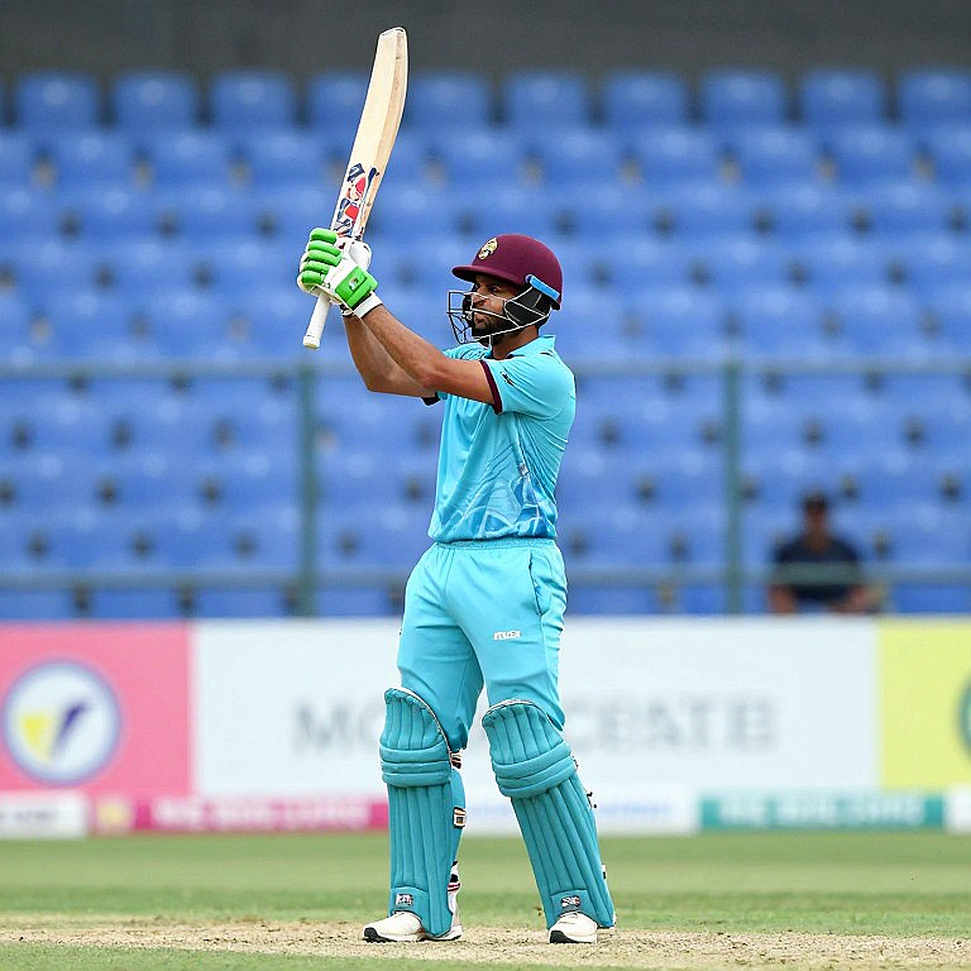
This release carries no statistical headline for any player—no 'so-and-so scored X in the Vinoo Mankad Trophy', no 'so-and-so took Y wickets'. That is characteristic of a bare advisory, but it also means there is no data-based basis for ranking any of the fifteen against each other. Any public ranking or discussion of 'form' over the next fortnight will be reputation- or surname-derived rather than performance-derived. That is a structural feature of this information environment, not a criticism of the squad.
On the age curve, physical and technical change is the dominant variable between 16 and 19. A single five-match tournament has very low predictive power for senior international outcomes. The historical conversion rate from U19 Asia Cup squads to full India caps is low—the majority of any given U19 cohort does not reach senior international cricket. It would therefore be unreasonable to measure this tournament's results on a long-term career scale. Development and experience are the real output here.
Bowling combination: the biggest unstated question
The team's bowling combination—the pace-spin ratio—cannot be assessed, because no player's bowling type is stated. This is the most consequential unstated variable. Gulf surfaces reward spin, and the source gives no clue whether India have selected accordingly. If the team lacks spin depth, it could hurt in the middle overs, especially in a semi-final against a spin-heavy side such as Afghanistan.
Batting depth, bench strength and internal age structure also cannot be assessed. However, a full squad of 15 is structurally adequate for a five-match tournament. Despite having two wicketkeepers, no stand-by list has been released, which is another information gap. It also leaves unclear who would be called up if a player were injured in Muscat.
Group A: the challenge of Pakistan, UAE and Nepal
Understanding Group A's composition matters. It contains the fixture with the highest emotional and media load—against Pakistan—plus the two most awkward 'sub-elite' matchups. The Pakistan game will shape the group and influence which Group B side India face in the semi-final. At age-group level, India-Pakistan results are historically volatile and correlate poorly with senior-level hierarchy. The two boards' junior pathways are organised very differently, and Pakistan's junior sides have repeatedly produced results that senior-level expectations would not predict.
UAE are the group's conditions specialists. A Gulf-hosted tournament gives UAE a home-adjacent advantage that no other participant has. This marginally narrows India's usual talent gap. Historically, Gulf venues have repeatedly produced uncomfortably close matches between Full Members and UAE at age-group level. Nepal are the group's highest-variance Associate. Nepal's cricket culture is spin-heavy and its age-group sides have a track record of raising performance against Full Members. It is not a free win. Nepal's spin bowling could be even more effective on Gulf surfaces.
Group B: knockout challenges may await
Group B comprises Bangladesh, Sri Lanka, Afghanistan and Malaysia. Malaysia are the weakest entrant, while the other three are strong. India do not play them in the group stage, but any of them could appear in the knockout. Bangladesh and Sri Lanka's junior sides have been consistently strong, while Afghanistan's junior strength is primarily spin. If India do not field a spin-friendly combination, Afghanistan could pose a serious challenge in the semi-final.
The six-day gap: the most important practical fact
The six-day gap between the release date (30 October) and the tournament start (5 November) is the single most operationally significant fact in the document. No pre-tournament camp, no warm-up fixture and no travel schedule is disclosed. For an age-group side assembling from different state units, a six-day turnaround compresses familiarisation with conditions to a minimum. This is a factor that could affect early performances, especially in the first group match.
Net run rate and group forgiveness
Because the top two from each group advance, India's net run rate is unlikely to be decisive. One heavy win—most plausibly against the weakest Group A side—could settle it. This reduces the incentive to chase a fast net run rate and risk players. It is a relief for team management, allowing them to stick to their plan without unnecessary pressure.
Absence of stand-bys and support staff
BCCI junior releases frequently name two to four stand-bys. Their absence here either reflects a change in disclosure practice or an incomplete advisory. If genuine, it removes the documented replacement pathway should a player be injured in Muscat. In addition, no support staff—head coach, bowling coach, physio, trainer, manager—is named, which is atypical for a BCCI touring advisory. The practical implication is that there is no basis to assess coaching continuity or the technical programme these players are entering.
Historical standing and reputation
India are the most successful side in the history of the ICC U19 Men's Cricket World Cup, with five titles. This is the clearest available proxy for the strength of India's junior pipeline. Specific ACC U19 Asia Cup title counts are data pending verification, but India's regional dominance is widely recognised. Since the ICC does not publish rankings for U19 cricket, no ranking-based positioning is possible.
On the home-away profile, the entire tournament is at a neutral venue for India. The absence of home advantage is symmetric for seven of the eight teams; only UAE have a conditions edge. This marginally narrows India's usual talent gap against UAE.
Key risks and limitations
The biggest limitation of this analysis is that no data is available. Any judgment about any player will rest on a maximum of five matches, an extremely thin basis. The second limitation is format uncertainty—the source does not state overs per side, so all tactical framing rests on the 50-over assumption. The third is that the effect of luck factors such as the toss and DLS is uncertain, because match times are unknown. The fourth is that there is no indication of DRS being used at this level; at age-group ACC events DRS is typically not deployed, although this is unconfirmed.
Conclusion: what to watch
India's real test in this tournament is concentrated in two matches—the group game against Pakistan, which will likely decide top spot and therefore the semi-final opponent from Group B, and the single-elimination semi-final. With two of four teams qualifying, the group stage is structurally forgiving, and the tournament's real variance sits in a 100-over knockout.
The biggest uncertainty for India is the bowling combination, which has not been disclosed. Gulf surfaces reward spin, and if the team lacks adequate spin options, it could hurt in the middle overs and in the knockout. The second uncertainty is the lack of a six-day preparation window, which could affect performance in the early match. The third is which of the two wicketkeepers gets the gloves, and whether one is used as a batter.
Finally, readers should understand that any performance-based prediction about this team, on the available information, would be speculation. The outcome of the Asia Cup will depend on many variables—the toss, conditions, the bowling combination, how young players handle pressure, and one-day form in the knockout. India's junior pedigree is strong, but a five-match tournament leaves very little room for prediction. The real answers will begin to emerge on the Muscat pitches from 5 November.