
An Empty Record Cannot Produce a Match Report: Stage-1 Failure in the Cricket Analysis Pipeline
मुख्य उत्तर: उपलब्ध Stage-1 रिकॉर्ड खाली है, इसलिए किसी मैच, खिलाड़ी, टीम या लीग पर तथ्यात्मक क्रिकेट रिपोर्ट बनाना संभव नहीं। मुख्य तथ्य: - शीर्षक, स्रोत, तिथि और सूचना-बिंदु उपलब्ध नहीं हैं। - केवल `cricket_world` डोमेन टैग मौजूद है। - फॉर्मेट, टीम, खिलाड़ी और स्कोरलाइन अज्ञात हैं। - संभावित कारण metadata-only classification या extraction failure है। - Stage-2 से पहले hard validation gate आवश्यक है। स्रोत: प्रदान किया गया Stage-2 Deep Analysis; प्रकाशन तिथि उपलब्ध नहीं। संबंधित प्रश्न: प्रश्न: क्या इस रिकॉर्ड से मैच का परिणाम निकाला जा सकता है? उत्तर: नहीं, क्योंकि टीम, स्कोरकार्ड और परिणाम संबंधी कोई सूचना उपलब्ध नहीं है। प्रश्न: अगली बार कौन-सी जानकारी देनी होगी? उत्तर: शीर्षक, स्रोत, तिथि, फॉर्मेट, नामित entities और कम-से-कम तीन सत्यापन योग्य तथ्य देने होंगे। प्रश्न: सबसे संभावित तकनीकी समस्या क्या है? उत्तर: उपलब्ध पैटर्न metadata-only classification, paywall, JavaScript पृष्ठ या parsing failure की ओर संकेत करता है।
Hook
There is no cricket match in this record. No team, player, scorecard, date, or source is present. Only the domain tag cricket_world survives. Writing a result, tactical assessment, or player report from this material would be guesswork rather than journalism.
I began recording ball-by-ball data during the 2026 World Cup. Since then, my rule has been simple: score first, context next, narrative after that. The Eden Gardens ledger taught me to reconcile before I speak. In this record, the first line of the ledger is missing.
Context
The Stage-1 payload contains no article title, source, publication date, article type, core viewpoint, information point, or named entity. Stage-2 therefore has no reliable basis for identifying a real cricket event. It cannot establish whether the subject was a Test, ODI, T20, domestic competition, or franchise league.
That omission is fundamental. Test cricket requires attention to sessions, the ageing ball, pitch deterioration, and long partnerships. ODI analysis depends on powerplay usage, middle-over scoring, and the final ten overs. T20 analysis concerns ball-by-ball risk, matchups, and compressed decision-making. Without the format, strike rate, economy rate, required run rate, and bowling changes cannot be assessed properly.
Core analysis
No team can be identified from the record. ICC ranking, home-away performance, batting depth, bowling balance, bench strength, and age structure therefore remain unassessable. No player is named, so role, 12-month form, career comparison, injury history, and format suitability cannot be examined.
Without a scorecard, the difference between result and process cannot be measured. We do not know whether a team won, what target was set, how many wickets remained, or whether the contest was one-sided. Toss, rain, DLS, dew, pitch conditions, and umpiring circumstances are also absent. Removing those factors from a fair assessment is impossible.

The commercial file is equally empty. No league, auction, retention, transfer fee, salary, broadcast-rights figure, or contract is identified. The subject cannot be assigned to the IPL, Pakistan Super League, Big Bash League, SA20, ILT20, The Hundred, Major League Cricket, or any other competition. Every auction has a ceiling; the trick is finding who built it. Here, the ceiling, bid, and player are all missing.
No governance or integrity claim can responsibly be made. There is no reference to the International Cricket Council, a national board, a No Objection Certificate, a central contract, an eligibility dispute, a match official, or an Anti-Corruption Unit action. A risk assessment needs a subject, probability, and impact. The only clear risk here is that an empty record could produce an unsupported conclusion.
I found the deviation before I found the story, but the deviation in this case is in the data flow, not in a match score. The domain tag survived while every substantive field became null. That pattern is consistent with metadata-only classification, a JavaScript-rendered page, a paywall, a video or scorecard payload, or a parsing failure. This remains a medium-confidence technical inference because system logs are unavailable.
The defect appears to be upstream of Stage-2. A usable cricket record requires, at minimum, a title, source, date, three to five verifiable information points, a format, and named entities. When Stage-1 returns zero information points, the downstream system should not create factual claims. The pipeline needs a hard validation gate: a null title or zero information points should quarantine the record and trigger re-extraction.
A practical validation rule would require four items before a cricket record enters Stage-2: a named team or player, a format, at least one scoreline or transaction figure, and a publication source. If more than two are missing, the record should be treated as an extraction error rather than an analysis target. This would limit fabricated match reports, invalid player comparisons, and time-sensitive errors.
A table is not a conclusion; it is a trail of evidence. This record does not contain enough evidence to build a table. Filling the empty cells with assumptions would not be analysis. Treating an unnamed player as an opener, an unnamed league as the IPL, or an undated event as recent would create three separate fabrications.
Contrarian angle
One might argue that the cricket_world tag establishes enough context to produce a general cricket report. It does not. A domain tag identifies a subject area; it does not verify an event, date, participant, or claim. General cricket knowledge cannot replace the missing facts of a specific record.
Another easy route would be to assume a famous team or player. That could make the article appear complete, but the source chain would be broken. A score, transfer fee, or head-to-head record without an identified source is decoration rather than a citable fact. In sports journalism, stating uncertainty is safer than manufacturing certainty.
There is also a risk of reflexive contrarianism. Every empty record does not conceal a major institutional failure. The metadata pattern suggests an extraction problem, but it does not prove that the entire system is failing. That requires batch-level null rates, source-type comparisons, and domain-tag provenance. I have seen this pattern before, and it usually has a receipt; this record has not supplied the receipt.
Takeaway
The next step is source recovery, not article expansion. A resubmitted record should include the title, original source, full publication date, format, named teams or players, at least three verifiable facts, and one claim to test. Only then can required rates, phase splits, player value, squad depth, or governance questions be assessed.
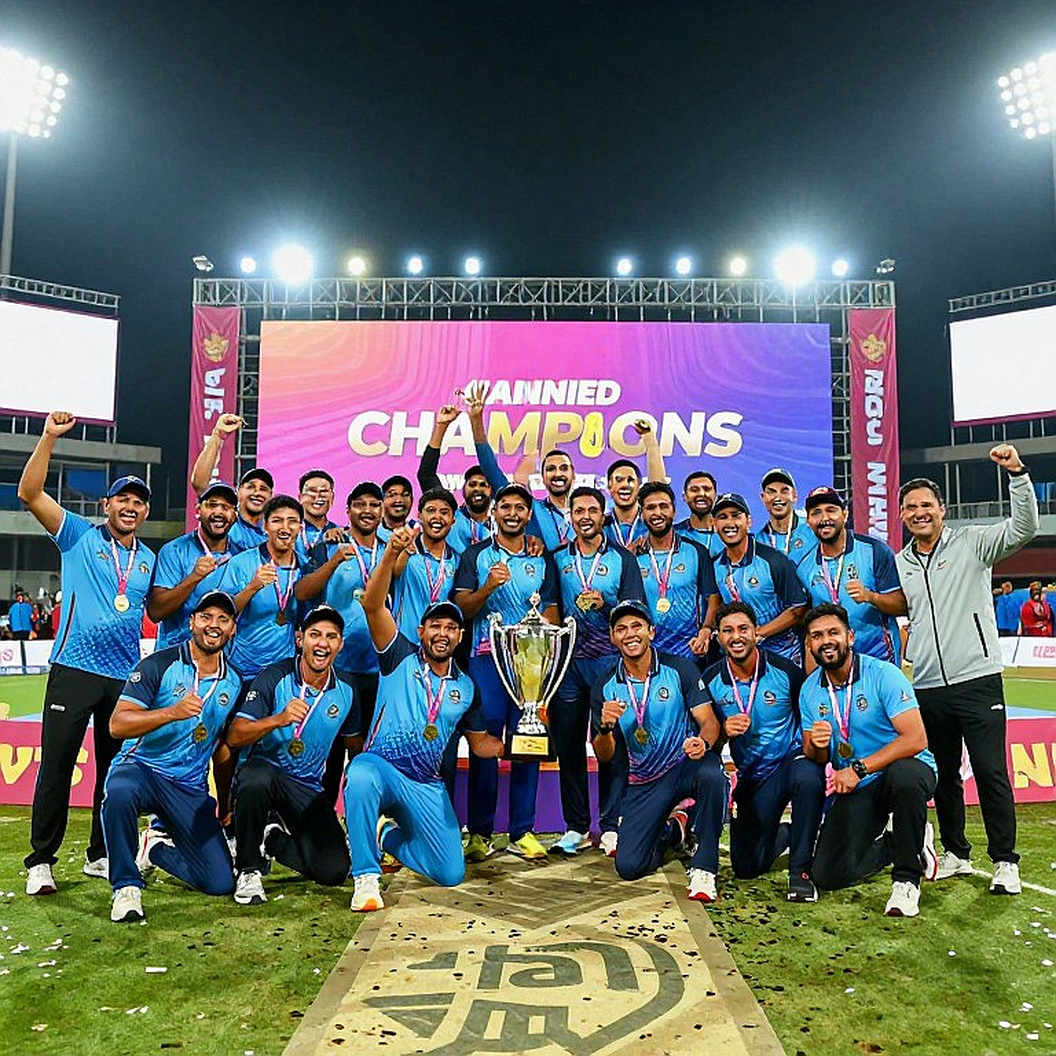
My ritual is simple: baseline, deviation, reconciliation, then conclusion. The baseline is absent here. Until the source is recovered, this should be treated as a pipeline diagnostic rather than a cricket report. The next useful question is not who won, but which fact the source sent and where the extraction system lost it.