
होमWorld CricketThe Changing World of Cricket: How Formats, Money and Technology Are Reshaping the Game
The Changing World of Cricket: How Formats, Money and Technology Are Reshaping the Game
क्रिकेट की दुनिया में बदलाव के तीन मुख्य कारण हैं: प्रारूपों की बहुलता (टेस्ट, एकदिवसीय, टी20), फ्रेंचाइजी लीगों का आर्थिक विस्तार, और निर्णय-प्रक्रिया में तकनीक की बढ़ती भूमिका। इनके कारण अंतरराष्ट्रीय कैलेंडर घना हो गया है, खिलाड़ियों पर कार्यभार बढ़ा है, और राजस्व कुछ बड़े बाज़ारों पर केंद्रित हो गया है। सबसे बड़ी चुनौती आय और खेल की गुणवत्ता के बीच संतुलन बनाना है — विशेष रूप से टेस्ट क्रिकेट की आर्थिक व्यवहार्यता, छोटे क्रिकेट देशों तक संसाधन पहुँचाना, और महिला क्रिकेट में वित्तीय समानता सुनिश्चित करना। समाधान के तीन सिद्धांत: साझा कैलेंडर प्राथमिकता, विकास-आधारित राजस्व वितरण, और खेल को सरल बनाने वाली तकनीक।
The world of cricket has changed over the past two decades more rapidly than almost any other team sport. This change is not merely about rules or technology; it is about how cricket is watched, sold, played and governed. Today cricket is three things at once — a sport, an entertainment product and a global market. The tension between these three definitions is the central story of contemporary cricket.
Three engines drive this change: the proliferation of formats, the economic expansion of franchise leagues, and the growing role of technology in decision-making. Together they have altered the cricket calendar, the player's career, the spectator's experience and the priorities of national boards. The purpose of this analysis is not to report on a specific match or series, but to understand where the game's structural framework is heading and where its pressure points lie.
The most visible face of this change is format plurality. Cricket is perhaps the only major sport in which three full international formats with entirely different durations and characters run side by side — Test, One-Day and T20. Each has its own logic, its own audience and its own economics. The problem is not that there are three formats; it is that time, players and audience attention are finite, and their interests collide.
Test cricket is the technical and historical spine of the game. It is the format in which fast bowling, spin, batting temperament and five days of strategic patience are tested together. But Test cricket's economic utility is unequal. Where audiences exist, it delivers both prestige and revenue; where they do not, it becomes a burden on the calendar. That inequality is the biggest question mark over the future of Test cricket.
One-Day cricket carried the game's global expansion for decades. It is the format that turned cricket into a mass movement in the subcontinent, Australia and southern Africa. But since the rise of T20, ODI cricket's identity has been in crisis — it offers neither the depth of Test cricket nor the pace of T20. This middle format is having to redefine its place, which is why the relevance of bilateral ODI series squeezed between major tournaments is repeatedly questioned.
T20 is the format that changed cricket's economic arithmetic most. Its duration is short, its product is easy to package, and its audience is one that wants three hours of limited, fast and predictable entertainment. T20 not only added new audiences, it made cricket suitable for both prime-time television and digital streaming. It is this format that proved cricket's value can be measured not only on the field but in broadcast rights, sponsorship and franchise brand value.
Franchise leagues have transformed cricket's organisational structure. In the traditional model, the national board was regulator, organiser and revenue recipient all at once. In the franchise model the board becomes a regulator while teams pass into private hands. This brought capital, professional management and alternative income streams for players. But the same model created a new problem — teams and leagues operate by their own interests, which may diverge from the interests of the national side.
A parallel ecosystem of domestic T20 leagues now exists worldwide. India's IPL, Australia's Big Bash, Pakistan's PSL, the Caribbean Premier League, South Africa's SA20, the UAE's ILT20 and England's The Hundred each have their own market specificities, but their basic architecture is the same: franchise ownership, auction-based player recruitment and a broadcast-centred revenue model. This parallel structure has added a new layer to the cricket calendar that is driven entirely by market demand.
This is where calendar pressure begins. The international calendar is already dense, and the domestic league calendar sits on top of it. The result is that a top-level player moves through multiple countries, multiple formats and multiple teams across a year. Two things collide here — the player's right to maximise income and career opportunity, and the limits of his or her physical and mental capacity.
Workload management has become the most contentious subject in cricket administration. Coaches and medical staff argue that continuous play raises injury risk and lowers performance quality; organisers argue that audiences come to see the stars and their absence damages the product; players' associations argue that decisions must have player consent. There is no easy solution to this debate, because it is not merely a medical question but an economic one.
Technology has also penetrated deep inside the game. Ball tracking, UltraEdge, Hot Spot and Snickometer-type systems are now part of decision-making in major matches. The technology's premise is straightforward — reduce human error and increase fairness. In practice that premise has largely held, but it has created three new challenges.
The first is that technology is not infallible either; predictive ball-tracking models and frame-by-frame UltraEdge analysis have repeatedly been questioned. The second is that technology is not equally available at all levels — the precision available in international matches does not exist in domestic or local cricket, creating inequality within the game. The third and largest challenge is that technology has made decisions longer and more complex, affecting the natural pace of play.
Broadcast rights are now the financial spine of cricket. The arrival of digital streaming alongside traditional television has changed the routes to audiences and the sources of revenue. One important aspect of this shift is that the value of broadcast rights is no longer determined solely by a match's popularity but by the size of the market in which it is sold. This makes revenue generation harder for smaller cricket nations.
The question of revenue distribution is linked to this. The International Cricket Council's financial structure rests mainly on income from a few large markets, while the number of member nations is larger. This imbalance has repeatedly raised questions about whether smaller members receive enough for development. This debate is not mere accounting; it connects directly to whether cricket's global expansion is genuinely happening or merely deepening in a few markets.
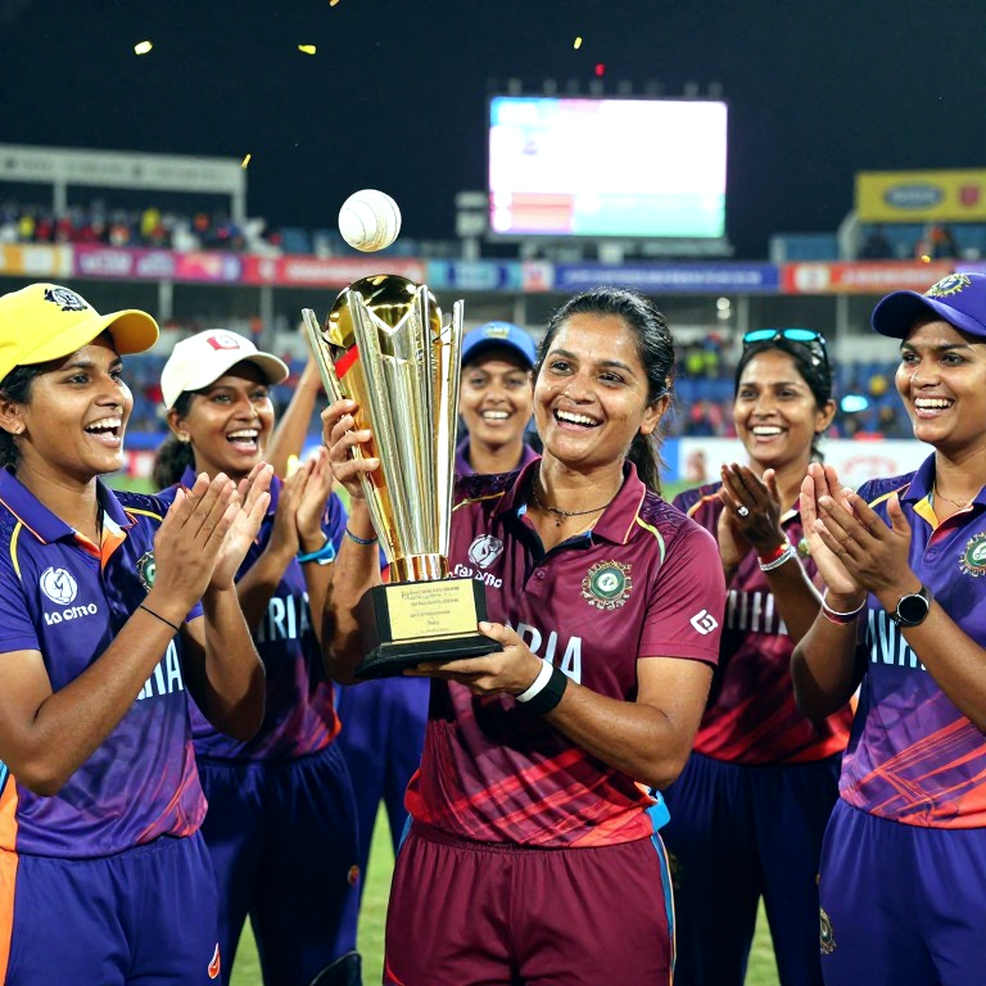
Women's cricket is the most positive chapter of this change. In recent years women's cricket has gained separate broadcast deals, separate franchise leagues and a growing audience base. This shift is not merely symbolic; it has opened professional career possibilities for players and justified investment. But it is also true that financial and structural equality remains distant, and in many places women's cricket still receives only a fraction of men's cricket's income.
The future of Test cricket is the most delicate part of this whole debate. The argument is that Test cricket is the purest examination of the sport and must be preserved. The practical difficulty is that Test cricket's economic viability is not equal everywhere. One route could be to bring Test matches into a structured championship framework and play them only at centres where both audience and revenue exist; but the risk is that this may shrink Test cricket's footprint.
The position of emerging cricket nations is the other side of this picture. Several countries where cricket is a subject of enthusiasm lack structure, pitches, coaching and finance. For these nations the biggest challenge is not discovering talent but sustaining it. Until domestic structures are strong, international performance will remain inconsistent, and inconsistent performance will keep revenue inconsistent. This is a cycle that requires investment to break, and investment that requires performance.
The level of governance and regulation is also changing. Greater attention has been paid in recent years to anti-corruption mechanisms, codes of conduct, standardisation of player contracts and transparency in auction processes. This is necessary, because as money grows, so does risk. Transparency is not only a moral demand but a market demand — investors and broadcasters both want stable and predictable rules.
The fan experience has also changed fundamentally. Once the spectator watched a match; now the spectator consumes scores, statistics, analysis, clips and discussion simultaneously. This shift is an opportunity for cricket because it deepens engagement, but also a challenge because it makes attention shorter and more volatile. When attention spans shrink, the sport must constantly re-present itself — and that pressure falls hardest on the shortest formats.
The essence of all this is that cricket's crisis is not one of deficit but of balance. The game has money, audiences, talent and technology. The problem is that there is no shared framework that holds all four together. National boards, franchise leagues, broadcasters, players' associations and the global regulator all pull in different directions, and decisions are often determined by short-term revenue rather than long-term health.
The way forward rests on three principles. First, the calendar needs a shared order of priority in which international commitments and domestic leagues sit in sequence rather than colliding. Second, revenue distribution must be linked not only to market size but to growth potential. Third, technology and data must be used to simplify the game rather than complicate it.
Cricket's strength has been its ability to change itself — in duration, rules, formats, broadcasting and now in investment. That flexibility will sustain it in the future as well, provided the purpose of change is not revenue alone but also the game's competitive quality and its global reach. The day that balance breaks, cricket will remain a big market, but its claim to being a big sport will weaken.

संबंधित खिलाड़ी
अनुशंसित
Report from an Empty Payload: When the Cricket Data Pipeline Fails Silently2026-11-03
February 2027: Six Teams, Fifteen Days and an Empty Calendar — The Real Story of the Women's Champions Trophy Is the Date2026-11-07
Empty Input, Empty Margin: An Audit of a Silent Cricket Data-Pipeline Failure2026-11-10
The Empty File: Uncovering Data Failure in a Cricket Analysis Pipeline2026-11-03
One Number, Four Crickets: The Big Errors Hidden in Statistical Interpretation2026-11-02
Brook's Brief, the Noise of Four Matches, and the Real CWC27 Ledger2026-11-07
From Ireland to Australia: Kim Garth's Remarkable Journey Reaches 100 WBBL Games2026-11-09
Bassingthwaighte’s New-Ball Spell Turns the Match as Brisbane Heat Win by Four Wickets2026-11-08
अनुशंसित
Where the Camera Doesn't Go: IPL's ₹48,390-Crore Umbrella and Domestic Cricket's Invisible Year2026-11-01
Bassingthwaighte’s New-Ball Spell Turns the Match as Brisbane Heat Win by Four Wickets2026-11-08
Incomplete Source Information Prevents Reliable Cricket Analysis of Matches and Players2026-11-11
Ishan Kishan Out of Third T20I: The Scope of the Injury, the Match-Fitness Gate and a Date Nobody Wrote Down2026-10-27
Roston Chase's Message: West Indies' Test Team Is Writing Its Next Innings Amid Cuts2026-10-30
Marnus Labuschagne's Road Back to Test Cricket: Sheffield Shield Runs Hold the Key to Australia's Door2026-11-10
From Ireland to Australia: Kim Garth's Remarkable Journey Reaches 100 WBBL Games2026-11-09
The Empty Cell: Cricket Analytics' Most Expensive Mistake Is a Blank Data Field2026-11-11
अनुशंसित
The Empty Envelope: In Cricket's Transfer Market, the Most Dangerous Story Is the One Without a Number2026-11-02
Training Injury Deepens New Zealand's Woes: Devon Conway Ruled Out of First ODI Against India2026-11-04
Marufa Akter: An Aircast Boot, a December 4 Flight, and the Squad Sheet the Report Never Opened2026-11-02
Conway's Concussion: Three Empty Seats and Eden Park's Arithmetic2026-11-04
Coley Named Interim West Indies Women's Coach: What the Board Notice Says, and What It Doesn't2026-11-04
Amir's Refusal and the Silence of the Passport: What Is the Real Deal Behind Sitting Out the IPL Auction?2026-11-03
Report from an Empty Payload: When the Cricket Data Pipeline Fails Silently2026-11-03
Smith's Neck, Cummins's Hope and Australia's Selection Ledger: Auditing a Net Session2026-10-29